
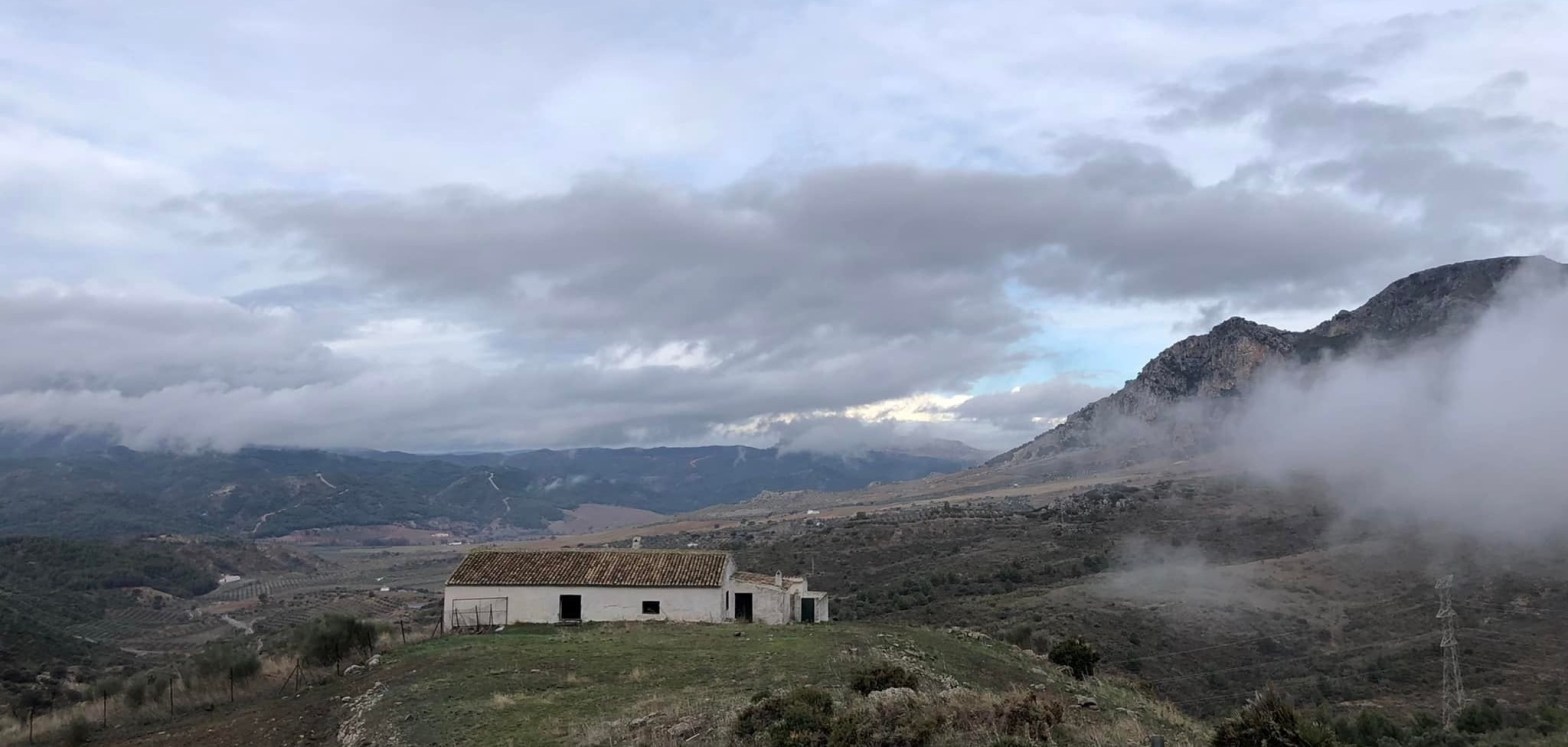
In the final two weeks of 2021, one of the Frisian bastards hiked most of the Andalusian Coast to Coast Walk in Spain — a route stretching from Nerja to Bolonia, from the Mediterranean Sea to the Atlantic Ocean. As hikers of the Frisia Coast Trail, any long-distance coast-to-coast path holds natural appeal. And hiking through the Andalusian countryside offers a chance to taste some of the spirit of the andaluces, the Andalusians. A spirit that, notably, comes without vegetables — fresh produce simply does not feature much in the local staple. In total, the bastard walked 250 kilometres in 12 days, with an average of 600 metres of climbing and descending each day. Quite doable. Besides the ongoing corona pandemic, it was also off-season. Throughout the entire walk, the bastard encountered only a handful of fellow hikers.
Preparations for the trip had been minimal. With the corona pandemic still scaring the hell out of the world — justifiably or not — planning too far ahead was not really an option. Flights could be cancelled, and sudden restrictions in the destination country might affect lodging, supermarkets, restaurants, or public transport. Still, by the end of December, the trip turned out to be possible. So, the bastard bought a last-minute ticket to Málaga and made a few accommodation reservations for the first legs of the trail. Thanks to the pandemic, finding a place to sleep during the trek was not difficult — unless a place was closed due to lack of business. Once in Andalusia, the corona restrictions turned out to be virtually non-existent.
Part of the poor planning was that the bastard had assumed the trail would be waymarked. It was not. Not even close. As always, the road to disaster is paved with assumptions. The bastard realized his oversight the night before departure, while sitting in his hotel in the old city centre of Málaga. Fortunately, the publisher Cicerone offers digital trail guides, including GPX files that you can purchase and download to your smartphone. This proved far from a luxury. Several long stretches led through forest and rough, pathless hills where GPS navigation was essential — as will become clear further below. Google Maps alone would not have gotten you far.
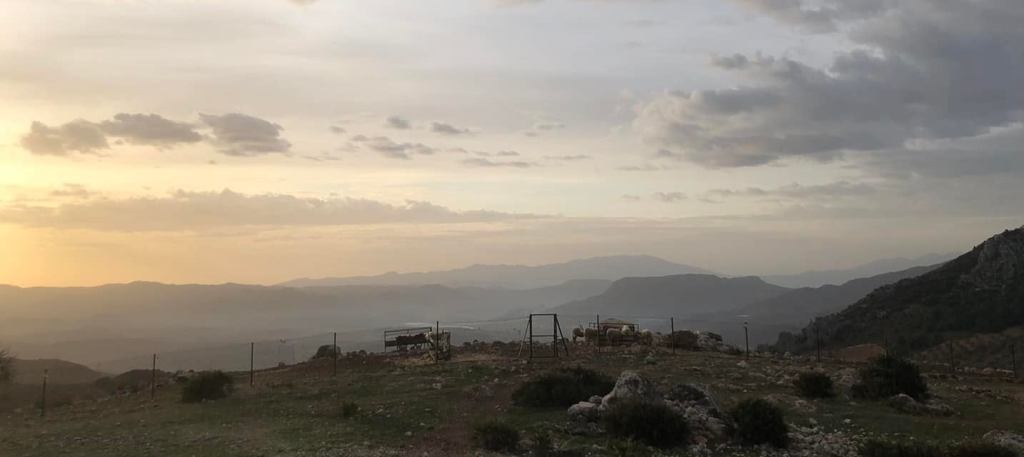
The bastard started hiking from the small village of Riogordo and finished his walk in the town of Los Barrios. That was thirteen days on the track with one day rest. A taxi from the city of Málaga dropped him in Riogordo early in the morning. Most of the trail was in rural area. That meant also, except for three occasions, there was never a possibility along the way for refreshments.
The villages one stays at during the Andalucían Coast to Coast Walk are mostly dotted in valleys, hugged against mountains, and filled with charming houses painted white. Ronda, with its amazing high bridge and its old plaza de toros ‘bullfighting arena’, was the only significant town during the hike. When visiting the plaza de toros, one can easily imagine Ernest Hemingway in the stands watching the bullfight in the Roarin’ 1920s.
INTERMEZZO
Tasting the Spirit of Mediterranean Spain — Northerners like to think they are the rougher type of Europeans. Maybe they are, but not in the morning when compared to the Andalusians and Valencians living in the countryside. In the village of Montejaque, the bastard stayed at the local inn annex bar-café. In the morning, before 08:00 o’clock already, the bar is filled with men before they go off to work. They eat maybe a sandwich, have a coffee, and, above all, have several shots of local spirits. The liquor bottles are placed on the counter by the innkeeper for his customers to help themselves. Before the men leave in their cars to go to work, they settle the bill. It is identical to the experience the bastard had when he hiked the Els Ports Loop in the province of Valencia in Spain in 2014. Well, chew on that fellow Northmen!
The landscape was varied. Stretches with hills, skirting the sierras ‘mountains’ las Cabras, del Torcal, de la Chimenea, de Huma, Blanquilla, de la Hidalga, del Palo, de Juan Diego, etc. Besides these mountains, you walk along ancient drovers, through fields with orange trees, through hills with olive trees, and through thick forests with cork trees. Some stone pine forests as well. The rougher stretches, and there was plenty of it, consisted of crossing woodlands and rugged vegetation, and sometimes a bit of steep climbing. The animals you come across are, of course cattle and many sheep, but also deer, marten (with big plumes on their tails), and really countless vultures.
Reservoir Dogs
One thing the bastard had to get used to was the sheer number of guard dogs. Nearly every house or farm in the countryside seemed to have one — often several. Almost all of them were large, watchful, and fiercely aggressive. Suddenly, the walking poles served an additional purpose. Reading dogs, understanding them, sensing their intentions—none of that had ever been a talent the bastard possessed. And, to be honest, anyone confronted with these foam-flecked hounds would feel fear.
Imagine hiking alone in the early morning, when it is still pitch-black, approaching a building, and suddenly hearing several dogs go completely berserk because they have heard or smelled you coming. Taking a detour is not an option. All you can do is hope — and pray — that the animals are kept behind sturdy, well-maintained fences, or secured with an iron chain. If not, you would not stand a chance. For that reason, the owners had almost always taken care of it, if only to avoid serious accidents. Almost always, that is.
Actually, only a few times the bastard was confronted with dogs running loose. Two of these encounters were threatening but went without incidents at the end. Both happened very early in the morning, and in a village. When maybe the owners thought nobody would be on the street yet. His walking poles helped to keep these stray dogs at bay.
One other encounter started with anxiety, but turned out to be friendly:
It happened on the stretch between the village of El Burgo and the town of Ronda — a cloudy, fog-laden day that would end in rain. After following the Río (river) Turón for a long time through forested mountains, and after crossing the Puerto de Lifa at 1,100 metres, the bastard had to make his way across an open grassland belonging to a farm.
Because of the low-hanging clouds, visibility was no more than fifteen metres at best. And yes—the bastard heard a dog barking somewhere in the distance. The sound came closer. Closer. Closer still.
“It’s running loose. No doubt about it,” the bastard thought.
Only, he could not see a thing. Then, all at once, a large white hound with long hair burst out of the fog. But its tail was raised, sweeping happily from side to side, its ears perked up.
“It’s friendly! ” the bastard said to himself with a deep sigh.
The dog came up, sniffed at the bastard for a moment, and then happily ran off again — back into the clouds. It left the bastard standing there, relieved and feeling a few years older, before he continued on his way, his heartbeat gradually settling into a gentler rhythm once more.
Naranja & Arancia
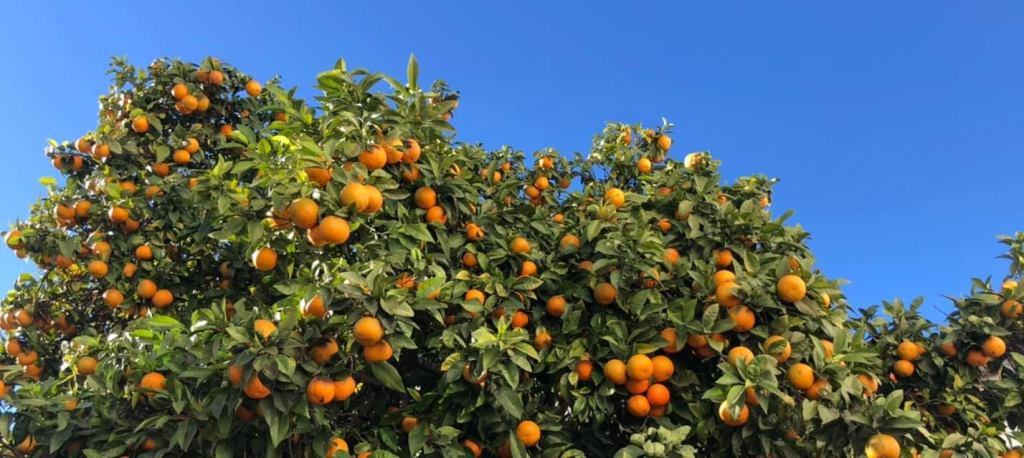
Somehow, oranges became another recurring theme during the two-week hike.
It started as early as the third day, on the stretch between the villages of Villanueva de la Concepción and Valle de Abdalajís. The bastard had grown thirsty — because, naturally, he had carried too little water (… ) — when, as if conjured out of nowhere, he found a perfect, juicy orange lying on the ground. It rested in the water gutter beside the track. Hikers have a saying: the path will provide. It did. Quite literally.
From that moment on, the bastard developed a mysterious and seemingly insatiable appetite for oranges that lasted the entire trek. Whenever the opportunity arose to get his hands on a few, he did.
“Una arancia, por favor,” he would ask, day after day.
Until, one day, a polite shopkeeper gently explained that in Spanish he might want to ask for a naranja instead of an arancia, which was, in fact, Italian. “Rude Northerner,” everyone must have thought on all those previous occasions.
It was amidst muchísimas naranjas, on the final day of the hike, that things truly began to get tricky.
This was the stretch between the village of Castillo de Castellar and the town of Los Barrios. That day, the bastard had no GPX files on his smartphone, as none had been provided on the Cicerone website. Still, after consulting the map in the guidebook the evening before, he had judged the route to be straightforward enough. So, no worries. The guide map and Google Maps would surely suffice this time.
Only, they did not.
The entire situation on this stretch of the trail had changed dramatically, and the guide had become outdated. The old route through the orange orchards had, in the meantime, been closed off to hikers. A fence had been erected and, naturally, two large guard dogs on chains were put behind it — barking, of course, with furious aggression. The bastard decided to try and bypass the orchards altogether by cutting through the forest beside them. But the orchards were enormous, the forest paths bewilderingly confusing, and the smartphone reception poor to non-existent.
After an hour of endless back-and-forth through the forest, trying to find a route roughly in a south-westerly direction, the bastard had to admit defeat. He was not able to circumvent the orchard and decided to illegally climb the fence of the orchard — well away from the entrance where the guard dogs were — and slip through the orange trees to the other side, where the trail had to be somewhere.
It was genuinely unnerving. All around him were workers in small vehicles, moving between the rows, while the bastard crept silently from one line of trees to the next, almost on tiptoe so as not to make a sound. He could hear voices clearly now — men talking, laughing — unaware of the intruder moving through their orchard. Every rustle of leaves felt like it might give him away. At any moment, he expected the barking to start, the dogs to appear, the whole situation to unravel.
But it did not. After about fifteen tense minutes of slow, careful movement through the orange trees, the bastard reached the far side and climbed another fence to get out. He was safe again.
However, yet another obstacle lay ahead.
At the railway line, the bastard was confronted by a very high fence topped with barbed wire. It quickly became clear that this was the real reason the coast-to-coast trail had been rerouted. There had once been a proper crossing here, but it had since been closed off and sealed with fencing. Apparently, the farmstead had also shut off its orchard, to prevent hikers from wandering aimlessly through the orchard without any way of rejoining the trail beyond the barriers.
A large sign on the fence made it explicit: crossing the railway was strictly forbidden. Yet there was, in practice, only one option left. Going back through the orchard was not one of them. So the bastard was left with no choice but to cross the two high fences flanking the railway track — despite all the warning signs stating that doing so was against the law. With some difficulty, because of his heavy backpack, the bastard managed to climb over both high fences.
And then, after a wandering journey through the forest, sneaking between the orange trees, and climbing over railway fences, the bastard was finally, finally back on the trail.
Soon after the illegal railway crossing, a reward appeared along the trail. Once again, the path provided. It was, in fact, one of the few times the bastard found a restaurant en route. Venta Juan Carlos was the name of the place, and it served hot tortilla sandwiches — and, even better, cold beer. The waiters wore traditional black-and-white attire. They did not speak a word of English, yet they were keen to know where the bastard came from.
“Los Países Bajos,” he explained.
At that, the men in black immediately responded with the name Johan Cruijff, followed by a very serious question, delivered with equally serious faces: whether the bastard preferred Barcelona or Madrid. The bastard doubted for a second but chose Madrid. Both men erupted in approval. That was the right answer!
Now the bastard could enjoy his food and drinks. Finally.
Note 1 — In (pre-) early-medieval Frisia, there were dogs everywhere, too. From big war dogs to small dogs ‘that sit on your lap’. Go to our blog post How to Bury Your Mother-in-Law for more. No ancient records of oranges in early-medieval Frisia…
Note 2 — This hike fits a series of semi long-distance walks in the territories of Europe’s autochthonous minorities in an effort to experience, understand their landscape and culture. Exactly where the Frisia Coast Trail is all about. For this reason bastards hiked in northern Scotland (see our blog posts “My God, the Germans bought all the bread!” cried Moira — Hiking the Cape Wrath Trail and A Horsewoman from Harlingen in the Highlands — Hiking the Cape Wrath Trail), on the island of Corsica (see our blog post Support for the Corsican Cause in Jeopardy — Hiking the GR20), in Wales (see our blog post Croeso i Gerddwyr — Hiking the Pembrokeshire Coast Path), and along the Atlantic coast in the southwest of Portugal (see our blog post Surf on Someone Else’s Turf — Hiking the Rota Vicentina).
Note 3 — For more pictures of this trip, check this link.
Suggested music
- Beach Boys, Help Me Ronda (1965)
- George Baker Selection, Little Green Bag (1970)
Further reading
- Butler, S., Hiking in Spain (2010)
- Hemingway, E., The Sun Also Rises (1926)
- Hunter-Watts, G., The Andalucían Coast to Coast Walk. From the Mediterranean to the Atlantic through Spain’s Baetic Mountains (2018)
- Nichols, F., Andalusië (2000)
- Noble, J. & Forsyth, S., Andalucía (1999)

