

It was not the city of Parisius (‘Paris’). Nor that of Londinium (‘London’). Believe it or not, the early-medieval center for expensive cloth and chic clothing in the northwest of Europe was the muddy Wadden Sea coast. Here the highly sought-after pallia Fresonica (‘Frisian cloth’) was fabricated and distributed to the wider world. It possessed a quality good enough for red capes of handsome superheroes like Superman and Thor, and for the heklu blá (‘blue capes’) which Odin wore. Moreover, it was used as palm grease for international diplomatic endeavours of early-medieval rulers. As far as the Middle East.
We tend to think of medieval Frisians as a Viking-like people with rough faces, long beards, braids, wearing bearskins, furs, sheepskins, and black leather. Oh, and silver Thor hammers around their necks and lots of tattoos. No such thing. Not by far! Okay, the Northmen were a kind of distant cousins. And yes, probably Frisians were tall too, given the fact people from the coast of former Frisia are probably the tallest people on earth today. If the reader has any doubt about that, go to our blog post The Giants of Twilight Land. Creatures of the Rim. Contrary to the black-fur image, these tall men of the semi-north were not insensitive to fashion. And that is an understatement. Rather, they were dressed in fancy, colourful, and fine fabrics. In fact, it would be no exaggeration to say they were the dandy predecessors of Karl Lagerfeld and of Viktor and Rolf. Although, probably a bit less refined in their manners.
So, let’s dig into their art of cloth-making, especially into this famous pallia Fresonica where everyone was bragging about in the Early Middle Ages, and see who these Frisian sissy-boys with swag were.
1. Linen
The feel for fashion of the Germanic/Celtic people and the quality of the cloth they produced was already noticed by the Romans, not the most backward of peoples. It is the over-frequently cited Roman historian Plinius (ca. AD 23-79) who wrote in the first century that the most distant tribes — the Cadurci, Caleti, Ruteni, Bituriges, and the Morini — produced linen. He also wrote specifically that the enemies of the Romans across the River Rhine wove cloth, and their women were dressed in the most beautiful (linen) garments.
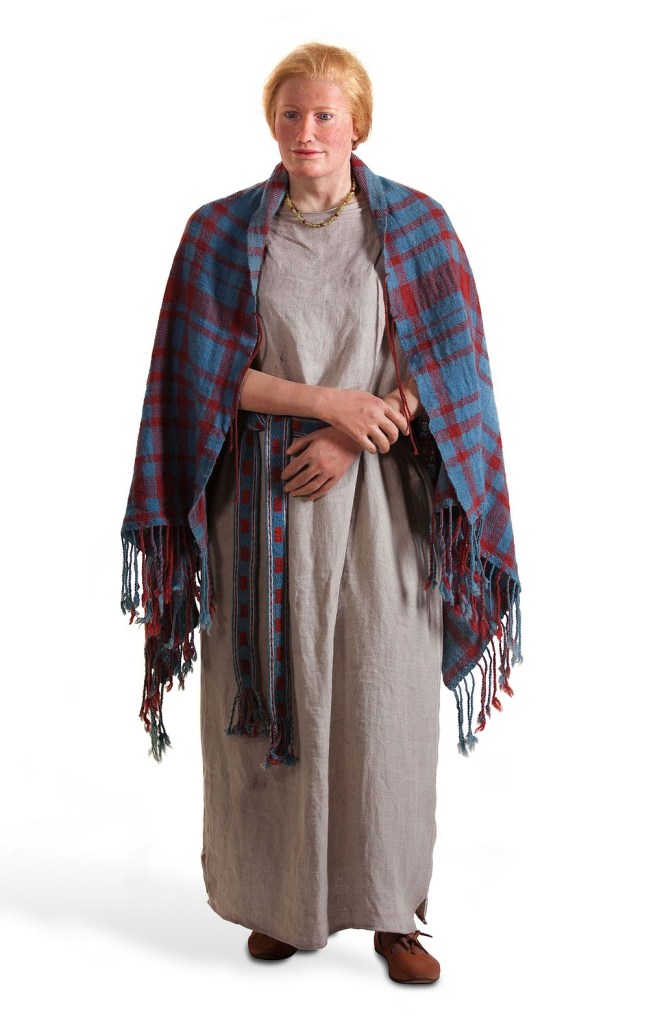
Archaeological research has been carried out concerning the production of linen in the coastal zone of the Wadden Sea. Linen is made from the fibers of the flax plant, Linum usitatissimum, consisting mainly of cellulose. Cellulose degrades easily in wet conditions; therefore, hardly any Roman or early medieval remains of linen cloth have been found along the southern coastal area of the North Sea.
Nevertheless, products of flax, especially linseed and threshing remains, have been found in the terp region quite abundantly. A terp, by the way, is an artificial settlement mound; check out our blog post Between Leffinge and Misthusum — Understanding the Basics of Terps for more about these earthworks that are part of the material culture of the southern North Sea coast. Archaeological research confirms the cultivation of flax and production of linen from ca. 500 BC, which continued up to the 1980s until synthetics came onto the market (Dijkstra & Herrema 2024).
Straight flax stems have been found at the archaeological site of Ezinge in the province of Groningen, indicating the cultivation of the plant not only for seeds and oil but also for fibers. Furthermore, a pit was discovered that is one meter wide and 1.65 meters deep, which was probably used for retting flax (Nieuwhof 2020). Another example is that during the excavations of the terp of the village of Usquert, also in the province of Groningen, flax seeds were found dating to the Roman period. During the Early Middle Ages, the abbeys of Fulda and Werden in Germany received flax from their monasteries in Frisia.
Thanks to experimental research, it has also been proven in practice that flax does grow on the higher parts of salt marshes, albeit less enthusiastically and abundantly than on its preferred, more calcareous, porous, and thus better-drained soil. Flax cultivated on the salt marsh simply grows less tall and becomes more branched (Dijkstra & Herrema 2024).
In addition, the early-medieval items one will certainly find on his/her spade when randomly turning over a clay sod in the northwest of Germany and in the north of the Netherlands are, besides boring golden jewellery and silver coins or sceattas, countless weights and spindle whorls. These weights and spindle whorls, which look like little American donuts, all have unique shapes and were produced at the dwelling itself. With these finds, together with finds of, among other things, tools used for scutching, it is safe to assume that the flax plant was also grown for weaving production from ca. 500 BC onward.
Linen can be produced in different colours, depending on the technique of retting one applies. Retting is the process of rotting away cellular tissues and pectin with moisture, mostly with a water bath. Whether using running water from the river, shallow basins filled with fresh water, deeper basins filled with fresh water, or basins filled with salty sea water, each technique will result in a different colour. For example, dew or field retting gives a grey colour. Retting in running water makes the flax blond. Retting in pits with brackish water creates an almost white colour (Dijkstra & Herrema 2024) — it’s a kinda of magic.
According to a local legend from the hamlet of Firdgum in the northwest of the province of Friesland, an area where before the potato was introduced in the seventeenth century mainly flax was grown, even the pope in Rome walked in cloths made in Firdgum. Just so the reader knows. See also our blog post Know Where to Find Your Sweet Potato. The Cradle of Home Nursing Too, and get familiar with the area where potatoes were commercially produced in Europe for the first time ever.
2. Wool
The woollen clothing of the Celts was of interest to the Romans when they arrived in the northwest of Europe. The Celts kept sheep, too. According to the Greek scholar Strabo (ca. 64 BC – AD 24), the wool of the local sheep breed was rough and thin at the end. From this wool, the Celts produced coats. Because of the wet and cold climate, the Celtic garments came in quite handy for the Romans. Especially the birrus Britannicus, a kind of duffle coat with a hood, was popular among the Romans (Coulthard 2020). We may assume the Celtic-Germanic Frisians in a similar climate had similar fabrics to stay warm and dry. The proportion of sheep in the Frisian livestock sharply increased with the arrival of the Romans at the beginning of the Common Era (see further below). We can only speculate it was to meet the new demand for woollen clothing from the Romans.
Things really took off in Frisia with wool in the seventh century AD. It is from this century onward that pallia Fresonica was produced with great craftsmanship and in large quantities. And it is the internationally renowned, Frisia-coast-based wool-textile artist Claudy Jongstra who fully stands within this local tradition 1,400 years later. As hikers, we appreciate woollen products because they prevent us from starting to smell badly for a while longer when on the track. Although some hikers say when you start to smell bad, it means you are having a good time.
Frieze fabric today, by the way, is a heavy, durable, coarse wool fabric — a fabric with a rough surface. If the reader thinks the name Frieze points to being a Frisian descendant, think again. Study our blog posts From Patriot to Insurgent: John Fries and the First Tax Rebellions and A Severe Case of Inattentional Blindness: The Frisian Tribe’s Name and know where it did come from.
Poet Ermoldus Niggelus, when he was in exile in Strasbourg during the reign of Louis the Pious in the beginning of the ninth century AD, wrote that the people of the Vosges were receiving from the Frisians cloaks of diverse colours such as they had not known hitherto. These cloaks were exchanged for goods like wine, wood, and corn, which the Frisian traders, the early Rhine Skippers, transported down the River Rhine. By the way, if the reader wants to have an impression of the magnitude of the trading networks of these selfish Frisian merchants of free trade, see our blog posts Porcupines Bore U.S. Bucks. The Birth of Economic Liberalism and Merciless Medieval Merchants and Slavers.
Later that ninth century AD, Notker Balbulus monk of Saint Gall in present-day Switzerland, also known as Notker the Stammerer, wrote that at the Carolingian court pallia Fresonica of (again) various colours were given to the lower orders serving the palace. Notker also described how the Franks imitated Gaul warriors. The latter were dressed in new Frisian fashionable short, striped cloaks. When Charlemagne found out that Frisian merchants sold these fashionable, albeit shorter cloaks for the same price as the traditional bigger ones, he forbade buying the smaller pallia Fresonica for the same price. The great strategic Charlemagne motivated his decree in a very intellectual manner:
What is the good of those little napkins? In bed I cannot have sex with it. And, when I am on horseback, I cannot protect myself from wind and rain. And, when I have to relief myself, I suffer because my willy freezes off.
Charlemagne
Charlemagne, apparently, was not yet ready to embrace the latest trends in fashion. Or perhaps he simply treasured his moments of sex and relief too much. Alternatively, were the clever Frisian merchants merely trying to maximize their profits? (Van der Tuuk 2011). Whatever the explanation, Charlemagne seems to have had something of an obsession with cloaks — and, more specifically, with their size. He even complained to King Offa of Mercia about the dimensions of the cloaks Offa had sent him. Aij, Charlemagne was a big man in more ways than one.
The Frisians did not merely produce fashion for big markets and mass consumption. They produced different qualities, also suitable for high-end markets. As mentioned at the beginning of this blog post, pallia Fresonica could be one of the gifts presented during diplomatic missions abroad, part of easing relations between the world of the Christians and that of the Saracens. One of the rulers who received from Charlemagne the highly prized cloaks from Frisia was none other than the fifth Abbasid caliph of Baghdad, Harun al-Rashid. He received pallia Fresonica in the colours white, grey, red, and blue.
The gift Charlemagne received from the caliph, was a single elephant. Sounds impressive maybe, but better give the wool than the sheep, as the saying goes in the cold, wet and capitalist world of the Northwest.
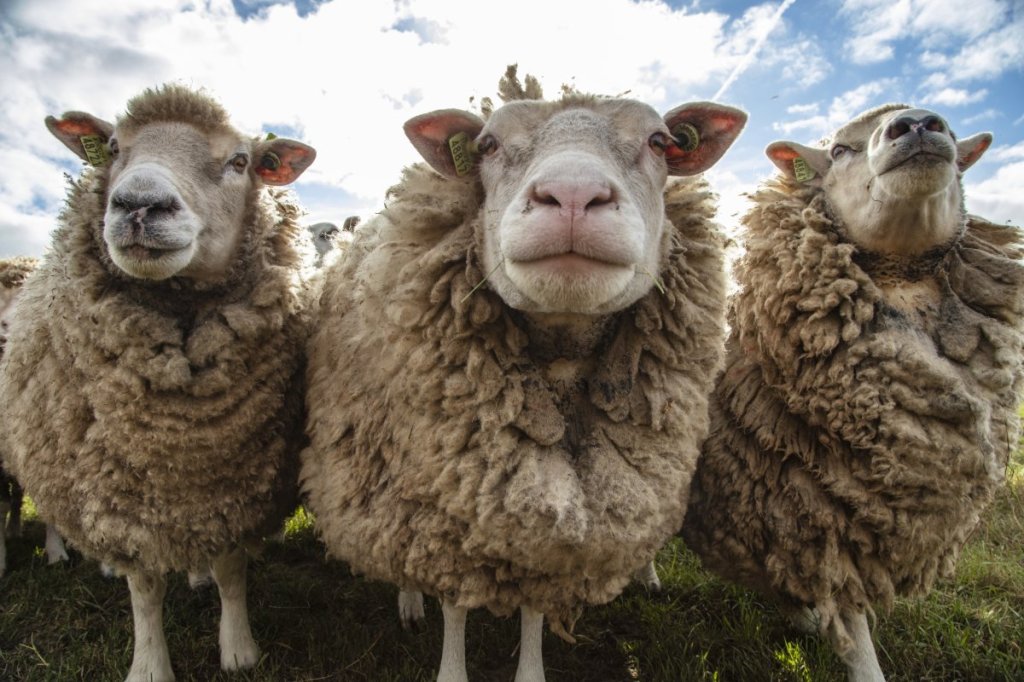
The one thing needed to produce pallia Fresonica is sheep. Heaps of sheep. Archaeological research suggests that, during the Roman period, the proportion of sheep within the overall livestock population increased, perhaps in response to growing Roman demand for woollen products. As mentioned above, in Roman Britannia we find evidence of a similar appetite for woollen goods, most famously the birrus Britannicus.
At the salt marshes of the Wadden Sea, the proportion of sheep roughly doubled during the Roman period, from around one-fifth to approximately one-third of the total livestock. During the Merovingian (ca. AD 450–750) and Carolingian (ca. AD 750–900) periods, this trend continued, with sheep eventually accounting for as much as three-quarters of the total stock. From around AD 900 onwards, however, their proportion declined again, settling at roughly half of the livestock population.
To this day, sheep are everywhere along the Wadden Sea coast. They are even the mascot of the Frisians living in the region of Ostfriesland. Please study carefully our blog post Come to the Rescue ‘The Rolling Sheep’ to learn how to rescue pregnant sheep that are lying on their backs when hiking the Frisia Coast Trail. This blog post also contains many more interesting facts about the coastal sheep.
Not only in the former terp region of northern Netherlands and the region of Ostfriesland in Germany was there sheep and wool; also, of course, in the northeast of England, Wales, and Scotland. Here, woollen cloaks were produced too, and these areas are famous for their woollen cloaks to this day. Indeed, tweed. However, there is no direct proof of wool export from England until the early twelfth century AD. Only the place name Woolwich might indicate wool was traded from there (Ekwall 1964). Or, dear Ekwall, was it traded there from Frisia? Bias is always such a funny thing.
About four centuries after the heyday of the pallia Fresonica, the south-westernmost part of Frisia — the area of Sincfala, today part of Flanders — became famous for its own version of the Frisian cloth. From the eleventh century AD onward, however, the product was effectively rebranded as Flemish laken, or broadcloth.
Flanders became Europe’s leading region for broadcloth production, thanks in part to its abundant supply of wool and the emergence of large-scale, increasingly industrialised cloth production. The abundance of wool was itself an indirect consequence of the storm floods of AD 1012 and 1042. These inundations left the soils of the Flemish coastal region so saline that arable farming became difficult, if not impossible, in many areas. Sheep husbandry, by contrast, was one of the few economic activities that remained viable (Nieuwenhuijsen 2022). Storm floods that turned out to be a blessing in disguise. Or, as the modern saying goes: never waste a good crisis.
Once the Flemings took the lead, the name pallia Fresonica — and, with it, the identity of its original makers — seems to have faded into oblivion. But did Flemish laken really represent a new beginning, or was it in fact a continuation of the pallia Fresonica tradition? After all, the Flemish coast, where much of the wool production took place, had been part of Frisia during the Early Middle Ages. Perhaps the label changed, while the underlying tradition continued. Bias, as it turns out, is always a funny thing — and in this case, the finger points straight back at us.
See our blog post The Frontier Known as Watery Mess: The Coast of Flanders to learn more about, among other things, sheep husbandry, wool production on the salt marshes of Flanders, and the presence of Frisians along the coast.
Besides wool, of course, one also needs paint — or, more precisely, dye. The plant common madder, Rubia tinctorum, was used to dye cloaks red, while woad, Isatis tinctoria, was used to dye them blue. All very environmentally friendly production techniques, and ones that are making something of a comeback today.
If the reader wonders why sheep are mostly white, there is a simple reason: white wool is much easier to dye than naturally black or brown wool (Coulthard 2020). In other words, black wool was, in a way, a loss. This also helps explain the Dutch expression het zwarte schaap van de familie zijn, literally ‘to be the black sheep of the family,’ referring to a family member who does not quite live up to the expectations and standards of the family. Every child of previous generations will recognise this. Perhaps this also explains why so many people in the Netherlands have such low self-esteem. 😉
It is ill shaving against the wool, and several scholars, especially in the Netherlands, had to overcome their general uneasiness that exquisite things can originate from the barren salt-marsh cultures, too. Quite recently, they reached a consensus that pallia Fresonica was not only distributed and sold by Frisian merchants in the wider North Sea region, but also that it was actually being produced in Frisia. Duh. ‘Made in Frisia’, therefore, might have been on the label. Frisia then, an area covering more or less the southern coast of the North Sea, from the northwest of the region of Flanders to the region of Ostfriesland.
Excavations and archaeological finds of textiles in both Germany and the Netherlands provide convincing evidence for the local production of broadcloth. At the terp of Ezinge, a village sometimes nicknamed the ‘Pompeii of the North’, archaeological research has shown that people were certainly producing clothing from both wool and linen (Nieuwhof 2020). As mentioned earlier, broadcloth was also produced in early medieval northeast England, as well as in Iceland.
Research into the isotopic composition of wool has added another interesting piece to the puzzle. It shows that in the different regions around the North Sea, both local and non-local wool was used to produce textiles. This points to a lively exchange of raw materials and people, and provides further evidence for the interaction and connectivity that characterised the wider North Sea material culture.
Early-medieval production of Frisian broadcloth in what is now the region of Flanders receives little support from archaeology to this day. This might also have to do with the fact that very little archaeological research in terps has been carried out in western Flanders thus far. One observation from archaeological research on the terp settlement of the village of Leffinge in Flanders is that sheep were kept (Loveluck & Tys 2006). Furthermore, in written resources from the early eighth century AD, the settlement of Leffinge is mentioned as being a mariscus, that is, a place where sheep farms existed on the tidal marshlands of Flanders and Zeeland for wool production (Ervinck et al 2016).
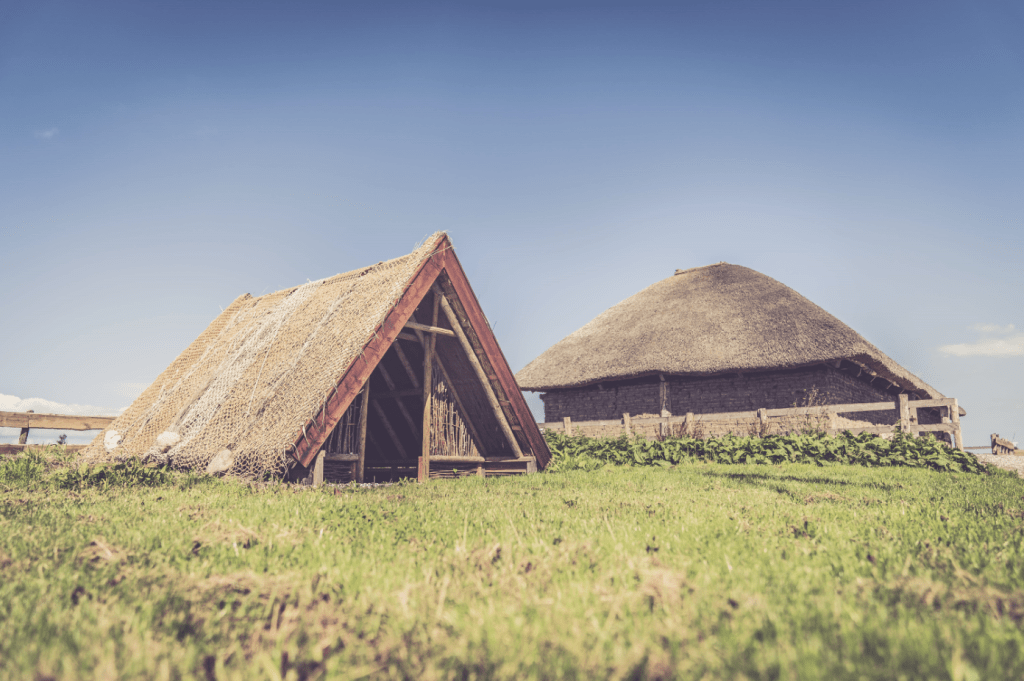
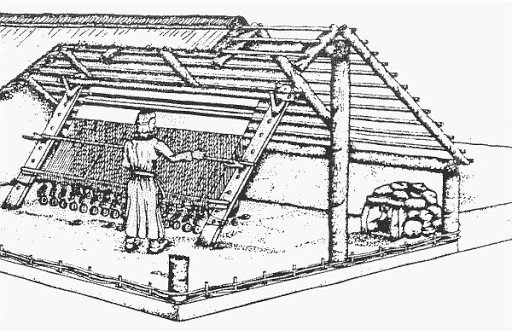
The commercial importance of the production of pallia Fresonica in Frisia is also clear from the severe penalties for destroying a barn for weaving, being mostly a small pit house called a screona. In the German language, these are called a Grubenhaus, and in the Dutch language, a hutkom. It is also called a sunken-featured building (SFB) in historians’ speech. Another early-medieval penalty existed specifically for hitting the hand of a woman weaving fresum, i.e., broadcloth. These penalties are codified in the Lex Frisionum written around AD 795. Destroying a screona meant the perpetrator even had to face the death penalty. We, therefore, can safely conclude that fresum or pallia Fresonica was truly a key commodity for the population of Frisia and its economy.
Below the relevant article of the Lex Frisionum, protecting craftsmanship vigorously:
Qui harpatorem, qui cum circulo harpare potest, in manum percusserit, componat illud quarta parte maiore compositione, quam alteri eiusdem conditionis homini. Aurfici similiter. Feminae fresum facienti similiter.
Who hits the hand of a harp-player, who can play harp in a circle [i.e. audience], pays with a fourth bigger fine, as with another man of the same status. Goldsmiths likewise. Women making fresum likewise.
By the way, there is another interesting detail: the fact that pit houses, or SFBs, were sunk partly into the wet ground meant that humidity inside them remained high and relatively constant — just what is needed for producing woollen broadcloth. Combined with the rain and generally humid climate of the coastal zone, this created pretty much an ideal environment for making woollen cloth. If the reader does not believe us, just ask the artist Claudy Jongstra.
An SFB had a floor area of around sixteen square metres. The number of SFBs increased on the tidal marshlands, or terp region, during the fifth century AD, with the arrival of new Anglo-Saxon-Scandinavian settlers: the new Frisians. The terp dwellers who lived in the region before the Migration Age also used pit houses, but these are mainly known from the higher, sandy soils of what is now the province of Drenthe, where they date to the Roman period.
Below a reconstructed SFB at the terp of the hamlet of Firdgum in the province of Friesland. Convenient slam bam along the Frisia Coast Trail. Check out the website of the nice little museum in Firdgum to read more about this project. Further below a reconstruction drawing (Van Gorp 1986).
Pallia Fresonica also had its own characteristic weaving pattern: the standard diamond twill. In fact, from as early as the first century AD, diamond twill appears to have been the standard weave for woollen cloth around the North Sea. The pallia Fresonica therefore had a rather different texture from the Flemish laken that became famous centuries later. The Frisian cloth was thinner and, among other things, had a more complex weave.
A similar difference can be seen in the use of textiles during the Early Middle Ages. At least when we look at textiles found in graves, a striking contrast emerges between the regions north and south of the major rivers of the Netherlands. In the north, the traditional diamond twill remained popular. This may reflect different cultural backgrounds within the wider North Sea cultural world and on the Continent. In other words, the way people wove and wore their woollen cloth may have been a marker of cultural identity.
This fits with other cultural divisions between north and south of the River Rhine (Arnold 2024). For example, the different house-building traditions, as well as in legal systems. North of the River Rhine, all the way into Scandinavia, the asega jurisdiction was the prevailing legal system, whereas south of the river, this was the schepen jurisdiction. The latter, schepen, being, let’s say, a government official, and the former, asega, being a commoner who specialized in the law and proceedings of judgment, but who had no higher authority and was not the judge.
See our blog post Well, the Thing Is… Speaking From the Moral High Ground for more information about how justice was dispensed.
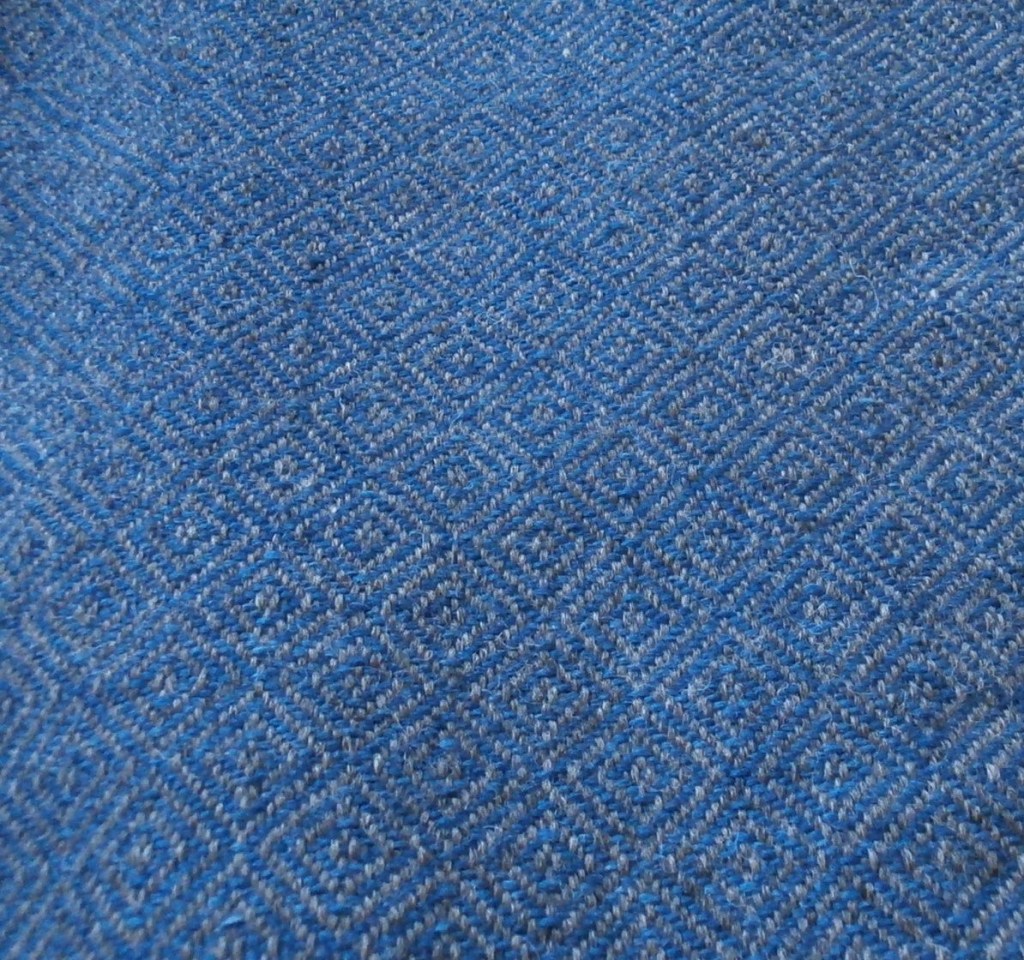
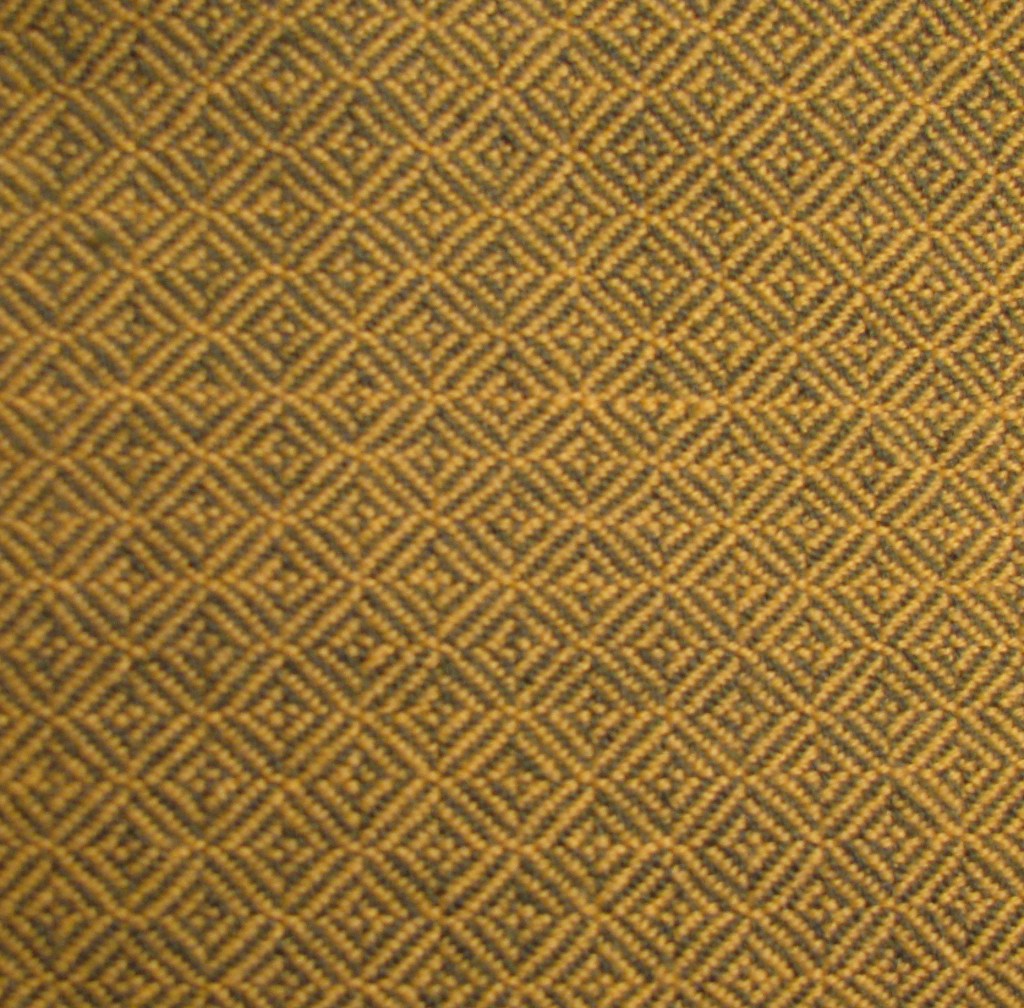
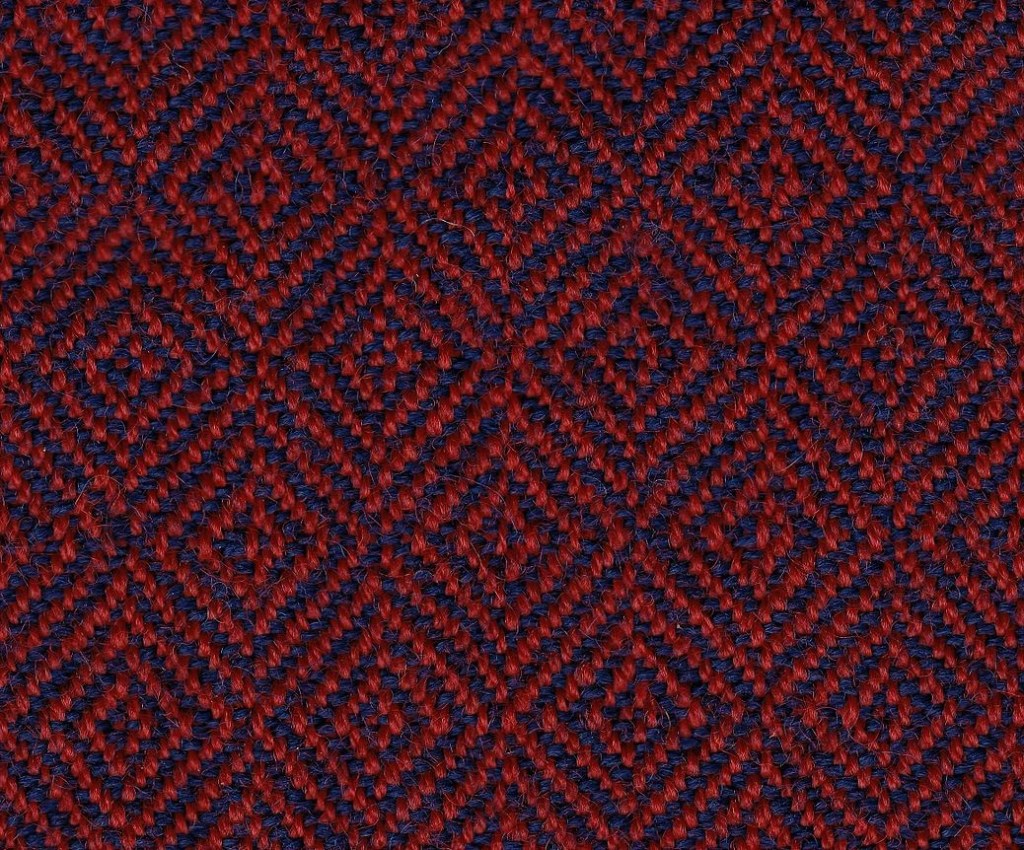
Lastly, it is interesting to mention that in the year AD 830, ten sheep farmers in Frisia were to deliver 855 pallia Fresonica each year to the Abbey of Fulda, which possessed these farms (Lebecq 1983). When the production of at least eighty or more woollen coats per sheep farm per year can be extrapolated, the quantity of these coats produced by the coastal inhabitants of Frisia, including western Flanders, must have been impressive (Ervynck et al 2016).
Although we have implicitly focused on clothing so far, wool had another economically important use: outfitting cargo ships and warships with woollen rugs, clothing, and sails. The amount of wool required for a single cargo ship in the Early Middle Ages may have been between 200 and 400 kilograms, and producing all these woollen goods may have required as much as ten years of labour.
Interestingly, it was also during the eighth century AD that Scandinavian seafarers began using sails on their boats on a larger scale. This was, of course, a major technological development for seafaring — and, incidentally, one with rather disastrous consequences for the security of many parts of Europe.
Sailcloth and waterproof fabrics must have offered additional economic opportunities for the sheep-breeding and wool-producing Frisians. It has been calculated that around two million sheep would have been needed to provide the Viking fleet with sails. A single warship sail may have required as much as 200 kilograms of wool and, as mentioned above, perhaps ten years of labour to produce (Bender Jørgensen 2012).
The Scandinavians did not simply manufacture their sails themselves. They also bought woollen cloth and sheep’s tallow in the North Sea region, using the tallow to make the cloth waterproof (Coulthard 2020). So, in a rather striking twist, the sheep-breeding Frisians may have been helping to fuel the war industry of the Scandinavian raiders.
For the record, some UK-based scholars have argued that Frisian broadcloth was not actually produced in Frisia, but was instead produced elsewhere and merely distributed by Frisian merchants (Campbell 2003; Schuuring 2014). Apparently, without a sophisticated court culture, the Frisians could not have been capable of producing such high-quality textiles themselves. It is a little like arguing that a mountain people such as the Kurds is not possibly to produce highly sophisticated carpets.
There is, however, a rather important problem with this interpretation: it does not engage with the evidence discussed above, including the livestock record, archaeological finds, isotopic research, and even early medieval Frisian law. Taken together, these sources provide a rather different picture — one in which the Frisians were not simply middlemen, but were also directly involved in the production of woollen textiles.
The argument sometimes seems to boil down to something like this: if King Offa of Mercia gave cloth to Charlemagne, then other cloth, including the pallia Fresonica, must have originated in Great Britain as well. Great Britain, one might stress, keeping national histories nice and tidy.
Furthermore, this rather bold claim leaves a rather obvious question unanswered: why would a trading commodity be named after the merchants who sold it rather than the people or place where it was produced? Neither Campbell nor this interpretation really explains that either. In fact, from a buyer’s perspective, knowing who made a product and where it came from is surely more useful than simply knowing who sold it. A merchant’s name tells you very little about the origin of the goods. That was true in historical trade, presumably, just as it is today.
Did we already mention that bias is such a funny thing in the ‘science’ of history?
3. Leather
The fancy, fashion-forward Frisians also had a taste for elegant shoes. Especially in the terp region in the north of the Netherlands a very elegant type of leather shoe has been found, dating from the fifth century AD. The shoes were made out of one piece of leather, and had no separate sole. Find more about (these) shoes in our blog post Boots Made for Walkin’.
4. Conclusion
So, now it is time to present the idle Frisians:
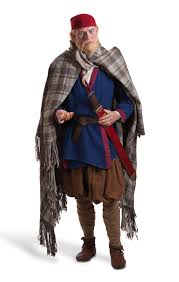
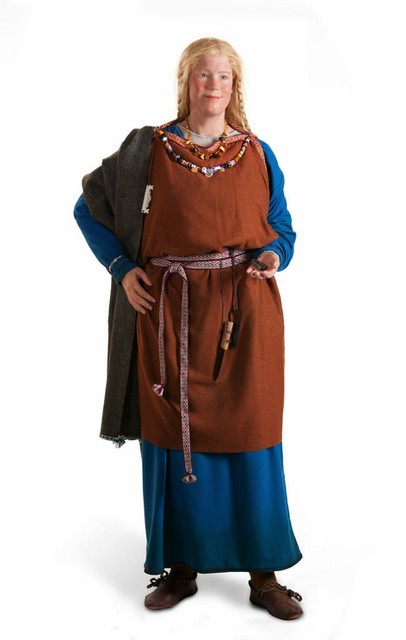
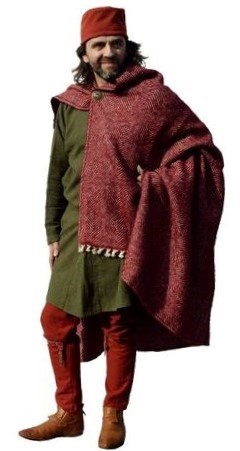
Well, that must be a shock! Quite a different appearance from the TV series The Last Kingdom, or from Vikings (2013), or from the truly horrible movie Redbad (2018). The men may even have had more in common with the contemporary detectives Sonny Crockett and Ricardo Tubbs from the 1980s TV series Miami Vice. Just imagine them wearing sunglasses with their outfits, and the comparison is complete.
These were sharp-dressed men, dressed in colourful, almost Burberry-like outfits made from some of the most expensive cloth available in the wider region at the time. One can imagine them being constantly terrified that their immaculate clothes might get covered in the smelly mud of the salt marshes, soaked by the sea, or ruined by the seemingly endless rain. And, of course, they would need a different hat for every occasion. Naturally.
And we should not forget their hair. Frisians always carried their combs with them — even when they joined their Viking neighbours on raids as far as western France (Bolle et al 2025). The Frisians even possessed a remarkable variety of locally made combs (Rijkelijkhuizen 2024). See for more on these combs our blog post Comb as You Are, as You Were. The Early Medieval ‘Friesische Friseure.’
Oh, vanity of vanities, all is vanity!
But, their fabrics and products were a big success for all levels of societies around the globe. And the money they earned with it, correspondingly. Even against the will of the illustrious Charlemagne. Yes, even handsome superheroes like Thor and Superman were inspired by the ruby-red cloaks of high quality. Haute couture from the salt marshes, indeed.
S W A G!
If the reader thinks swag is todays slang, she/he is mistaken. Swâg in the Old Frisian language meant ‘enclosed pasture’. Think of all the modern toponyms in the province of Friesland ending with –zwaag like Langezwaag, Kortezwaag, Schoterlandse Zwaag (today De Knipe), Lippenhuisterzwaag (today Lippenhuizen), and Hemrikerzwaag (today Hemrik).
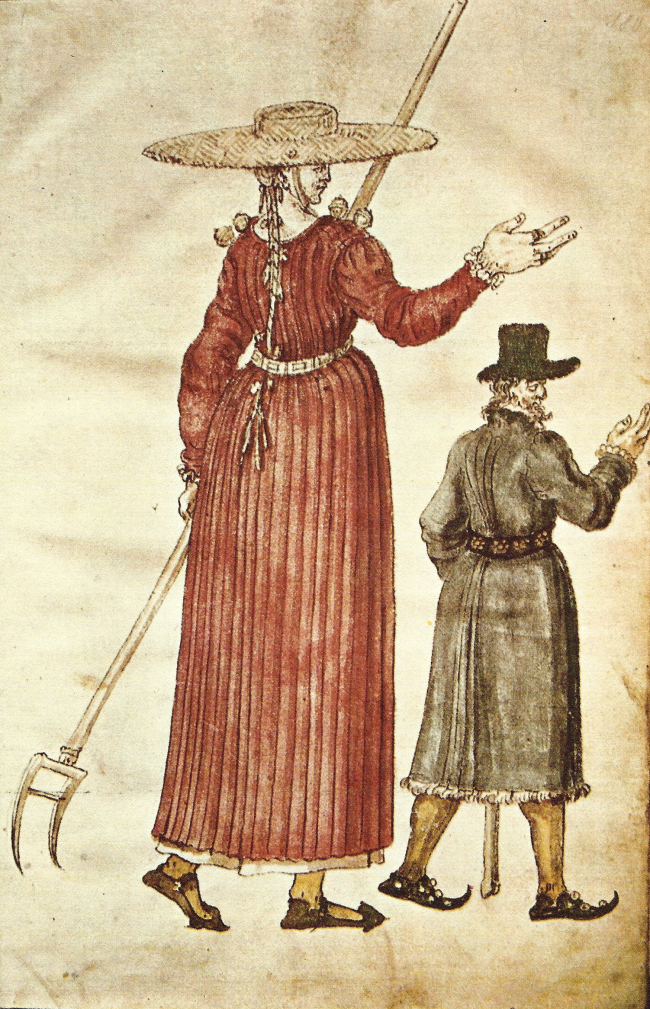
Note 1 — The fashion tradition of the Frisians did not end in the Early Middle Ages. The Hausbuch manuscript of the Frisian chieftain (called Häuptling, haadling, or hoofdeling) Unico Manninga from the region of Ostfriesland of ca. 1560, contains many coloured representations of the well-known, very exuberant Frisian costume. Again, different hats for different occasions, and all that. If these women and men below were not proud, stiff Frisians, we do not know what is.
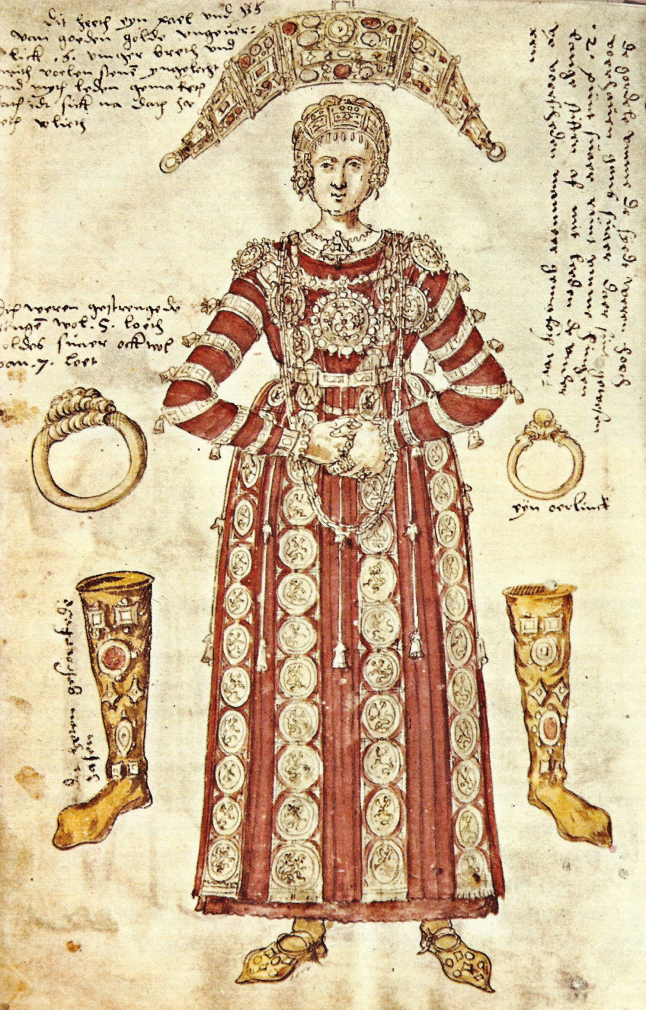
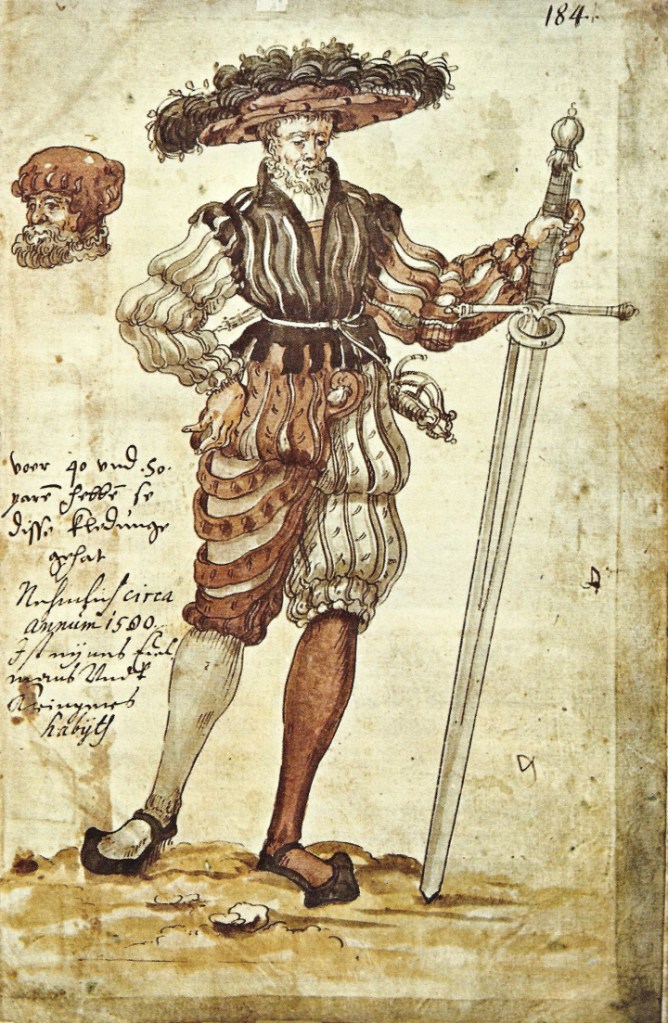
Note 2 — Of course, less elegant examples of Frisian dress existed as well. In 1907, during peat cutting in the moors of Hogehahn, near the town of Aurich in Ostfriesland, a bog body was unearthed. The remains were dated to the seventh or eighth century AD. The tunic worn by this individual, the so-called Bernuthsfeld Man, was made from a remarkable patchwork of cloth: no fewer than forty-three patches, comprising nineteen different types of fabric, had been stitched together. A true Coat of Many Colors. The best-educated guesses suggest that this cloth Frankenstein was some kind of tramp or wandering vagrant, unless made by his mama, as Dolly Parton’s mam has done too (see suggested music below).
If the reader is interested in graves of this period, check out our blog post Notre Dame of Grou to learn about a very misshapen woman buried in a coffin made of boat remains.
Note 3 — If interested in reproductions of pallia Fresonica, or friesischen Tuch in the German language, check the work of Kjarni Willison, the blog farolfvus me fecit and their blog post 9th century Frisia Kit, or check the re-enactment groups Eniwulufu, Frisia Historica, Monetarii Dorestatti, and — although primarily Vikings and Franks — Dorestatus.
Suggested music
- ZZ Top, Sharp Dressed Man (1985)
- David Bowie, Fashion (1980)
- Dolly Parton, Coat Of Many Colors (1971)
Further reading
- Arnold, E.F., Medieval Riverscapes. Environment and Memory in Northwest Europe, c. 300-1100 (2024)
- Barreveld, J., Beards and Barbarians: Hair and identity in the Early Medieval West (2020)
- Bender Jørgensen, L., The Introduction of Sails to Scandinavia: Raw materials, Labour and Land (2012)
- Bolle, A., Ciesielski, E. & Torchut, J.S., Des tombes inattendues à l’île de Ré témoignent d’échanges avec le monde nordique (2025)
- Brandenburgh, C.R., Early medieval textile remains from settlements in the Netherlands. An evaluation of textile production (2009)
- Brandenburgh, C.R., Clothes make the man. Early medieval textiles from the Netherlands (2016)
- Campenhout, van C., Dutch historian finds medieval treasure using metal detector (2023)
- Coulthard, S., A Short History of the World According to Sheep (2020)
- Dijkstra, M.F.P., Rondom de mondingen van Rijn en Maas. Landschap en bewoning tussen de 3e en 9e eeuw in Zuid-Holland, in het bijzonder de Oude Rijnstreek (2011)
- Dijkstra, H. & Herrema, G., Fries vlas (2024)
- Doorn, van F., De Friezen. Een geschiedenis (2021)
- Dräger, P., Conflictus ovis et lini. Der Streit zwischen Schaf und Lein (2010)
- Driel-Murray, D. van & Plicht, van der H., Het gelijk van Boeles: schoenvondsten uit de Friese terpen (2016)
- Ervynck, A., Deckers, P.J., Lentacker, A., Tys, D. & Neer, van M., ‘Leffinge — Oude Werf’: the first archaeozoological collection from a terp settlement in coastal Flanders (2016)
- Farolfvs me fecit, 9th century Frisian Kit (2022)
- Fjárfelli, à E., Reconstructing the Princess of Zweeloo Wardrobe (2019)
- Gorp, van P.J.M., Friese mantels, een wolnijverheid van voor Christus tot in de 11de eeuw (1986)
- Goscinny, R. & Uderzo, A., Obelix & Co (1976)
- Heeren, S. & Willemsen, A., Fibula’s. Vondsten, vormen & mode (2017)
- Holstein, von I.C.C. & Rogers, P.W. & Craig, O.E. & Penkman, K.E.H. & Newton, J., Provenancing archaeological wool textiles from medieval northern Europe by light stable isotope analysis δ13C, δ15N, δ2H (2016)
- Hullegie A. & Prummel, W., Dieren op en rond de Achlumer terp (2015)
- Jørgensen, L., Manor and Market at Lake Tissø in the Sixth to Eleventh Centuries: The Danish ‘Productive’ Sites (2003)
- Keijser, D., Cloth as Currency: Clothing and the Naked in Old Frisian Law (2015)
- Kolladottir, L., Viking Age Home Goods: Frisian Cap (2025)
- Lebecq, S., Marchands et navigateurs frisons du haut Moyen Âge (Vol. 1). Essai (1983)
- Leyser, H., A short history of the Anglo-Saxons (2017)
- Loveluck, C.P. & Tys, D., Coastal societies, exchange and identity along the Channel and southern North Sea shores of Europe, AD 600-1000 (2006)
- Makin, A., Early Medieval (mostly) Textiles #8 (2021)
- Nicolay, J.A.H., Nieuwe bewoners van het terpengebied en hun rol bij de opkomst van Fries koningschap. De betekenis van gouden bracteaten en bracteaatachtige hangers uit Friesland (vijfde-zevende eeuw na Chr.) (2005)
- Nieuwenhuijsen, K., Robrecht de Fries. Graaf van Vlaanderen, held van Holland (2022)
- Nieuwhof, A., Ezinge Revisited. The Ancient Roots of a Terp Settlement. Volume I: Excavation — Environment and Economy — Catalogue of Plans and Finds (2020)
- Nieuwhof, A., Vlas in Ezinge: de herkenbaarheid van linnenproductie in het terpengebied (2017)
- Pestell, T. & Ulmschneider, K., Markets in Early Medieval Europe. Trading and ‘Productive’ Sites, 650-850 (2003)
- Postan, M.M., The Cambridge Economic History of Europe: agrarian life in the Middle Ages (1966)
- Prummel, W., Lezing: Terpenarcheologie op het archeologiecongres de Reuvensdagen in Groningen (2013)
- Prummel, W. & Küchelmann, H.C., The use of animals in settlements on the Dutch and German Wadden Sea coast, 600 BC-AD 1500 (2022)
- Rijkelijkhuizen, M., Op zoek naar de Friese kam. Een kammentypologie voor het Nederlandse grondgebied (2024)
- Scheenstra, N., Kleding en accessoires (2018)
- Schepers, M., Gebruiksplanten in het terpen- en wierdengebied (2016)
- Schokker, J., Insigne van een kruisvaarder? Over een pronkfibula gevonden nabij Uithuizen (2018)
- Schuuring, M.P., The Circulation and Use of Coins in the Carolingian Era of the Netherlands: A distribution analysis (2014)
- Stracke, J.C., Altfriesische Trachten nach dem Hausbuch des Unico Manninga (1967)
- Tuuk, van L., De eerste Gouden Eeuw. Handel en scheepvaart in de vroege middeleeuwen (2011)
- Tys, D., De inrichting van een getijdenlandschap. De problematiek van de vroegmiddeleeuwse nederzettingsstructuur en de aanwezigheid van terpen in de kustvlakte: het voorbeeld van Leffinge (2002)
- Wochnik, P., Einfach königlich; Der kostbare Goldschmuck der Osfriesinnen (2019)

