
According to medieval legend, around the year 800, Charlemagne and Pope Leo clashed with the citizens of Rome. The Pope was attacked and forced to flee the city. It was an army of ‘naked’ Frisians, led by Magnus, that stormed back in, retaking the citadel and the Urbs Aeterna — the Eternal City. In gratitude, Charlemagne offered the Frisians wealth, weapons, treasure, and more. But Magnus made a different choice: that all Frisians should be free, beholden to no one — except, of course, the Holy Roman Emperor himself. Charlemagne agreed, and thus the Charlemagne Privileges were born, also known as the Magnuskerren, or ‘Magnus’s choices.’ Choices that, remarkably, still echo today — determining who must pay taxes, and who, perhaps, can find a clever way not to. A legend, therefore, as relevant as ever for Frisians seeking exemption.
The Magnuskerren are known by a variety of names in different languages, including Magnuskeuren, Karelsprivileges, Karlsprivileg, Friesische Freiheit, libertas Frisonica, and Privilegii Frisiorum Caroli Magni. It is instructive to note that ker in Magnuskerren is related to the modern West Frisian noun kar, meaning ‘choice.’ Kerren is the plural, ‘choices.’ Compare also the Old English cyre, meaning “choice,” and the verb cēosan, ‘to choose.’ Traces of the same word are also preserved in modern Dutch keur, meaning ‘choice’ or ‘selection,’ as in the saying te kust en te keur (‘a wide choice’), and the words willekeur (‘arbitrariness’), keurmerk (‘seal of approval’), etc.
For the Frisians, these privileges formed the foundation of their free-farmer republics, legitimizing their refusal to acknowledge any lord. Frisia tota, as it was often called, stretched in the High Middle Ages from the region of Westfriesland, in what is now the province of Noord Holland in the Netherlands, eastward to the region of Butjadingen und Stadland and to Land Wursten on the banks of the Lower Weser in north-western Germany. At times, even the non-Frisian but likewise more or less lord-free region of Dithmarschen was counted among them. In other words, the Frisians claimed to have been Reichsunmittelbar since the days of Charlemagne.
The Saxons who lived along the Wadden Sea, most notably the Ditmarsians, likewise claimed to be a free people, although de jure they acknowledged the authority of the bishop of Bremen and Hamburg.
So, the Wadden Sea area was a mundus sine Caesaribus, a world without ceasars.
And kas, that Fresan friheren were, thi berna and thi onberna, also lange so thi wind fan tha olcnum we, and thio wrald stode, and wellat wasa mith tha kere thes koninges hacha heranatan.
And [he] chose that Frisians freemen were, the born and the unborn, as long as the wind blows from the clouds, and the world stands, and with this choice they want to be the king’s high men.
At the beginning of the High Middle Ages, the southern coastal zone of the North Sea had undergone an opposite development compared to the rest of Europe. Instead of developing feudal structures with government institutions, Frisia ‘returned’ to the Germanic tribal social structures, you could say. Around 1100, this defragmentation process was completed in Frisia between the River Lauwers and the River Weser, the area what is today the province of Groningen, the region of Ostfriesland, and the region of Land Wursten combined. Besides Frisia, also the neighbouring Saxon region of Dithmarschen, between the rivers Elbe and Eider, underwent a similar development.
A factor that might have facilitated the regional autonomy of Mid Frisia, between the rivers Vlie and Lauwers, was a decision made by Holy Roman Emperor Frederick Barbarossa in 1165. Both the Bishop of Utrecht and the Count of Holland claimed hegemony over Frisia. Yet, contrary to the approach attributed to King Solomon a millennium earlier, Barbarossa decided that they should rule Mid Frisia — roughly corresponding to the present-day province of Friesland — jointly. This arrangement became known as the condominium. In practice, this meant that neither the bishop nor the count could exercise exclusive authority over Frisia, limiting their influence in the region. Moreover, Barbarossa himself showed little interest in Frisia afterward. Thus, the famous Frisian Freedom could flourish even better (Janse 1993).
It cannot be said, however, that the condominium was decisive for the development of the lordless republic of Frisia. Rather, this was part of a broader development that occurred throughout the Wadden Sea region of present-day Germany and the Netherlands, as said, encompassing both the Frisian and neighbouring Saxon territories. Moreover, the ruling powers did not establish condominia everywhere, suggesting that this arrangement was not in itself the decisive factor behind the emergence of lordless societies in Mid Frisia and other lands along the Wadden Sea coast.
By the middle of the thirteenth century, the condominium had come to an end. This marked, more or less, the formal beginning of the Frisian Freedom, which would last until the end of the fifteenth century. It is therefore no coincidence that the seal of the town of Franeker, dating from the early fourteenth century, depicts Charlemagne handing the laws down to the Frisians, symbolizing their Reichsunmittelbarkeit.
In the year 1100, the Saxon Henry of Nordheim, nicknamed Henry the Fat, became margrave of Frisia. When a year later he and his wife Gertrude of Brunswick visited the town of Stavoren in Mid Frisia to claim his right as count, he was immediately killed by the Frisians. Gertrude just could make it out alive (Henstra 2012). Another version is that Henry was killed in East Frisia, that is, the region of Ostfriesland, in 1101 in an attempt to claim his right. Anyhow, it was a clear statement of the Frisians that no foreign domination was accepted anymore.
By the way, 1101 is the same year Count Floris the Fat of West Frisia, that is, the combined provinces of Holland, Zeeland, and partly Utrecht, renamed himself count of Holland.
The process of defragmentation and the shrinking external influence, in particular that of the bishopric Utrecht, over the part of Frisia, which is the province of Friesland today, took about one and a half centuries longer than the rest of Frisia. Therefore, halfway through the twelfth century, the whole of Frisia was a lord-free area.
Note that the title ‘margrave’ highlighted that these counts of the mark protected the external borders of the kingdom. “What news from The Mark?” to quote Aragorn in the movie series Lord of the Rings. Baldwin II of Flanders, also known as Baldwin the Bald, was another a margrave who had to protect the borders against a flood of Vikings during the decennia around the year AD 900. Quite a challenge, but he managed. Hence, being a margrave was a bold and cool title (De Maesschalck 2012).
The result, among others, of having no feudal lord, was that in the High Middle Ages every terp (artificial settlement mound), every village, an every farmer was basically free. There was no obligation to fight for any (over)lord other than the emperor. And in the case they were to defend the realm, then only limited to defend the border territory of Frisia from external threats. Nor did Frisians have any obligation to pay taxes to counts, dukes, margraves, and bishops alike. Furthermore, the Frisians were granted the right to have property too. In the view of Frisians, land property belonged to the individual, not to a count or something similar bossy. Lastly, and most importantly, the Frisians also had the right to uphold their own laws and, moreover, to choose their own redjevas ‘judges.’
Concerning these elected judges, the title used in the sagas surrounding the Charlemagne Privileges is potestas frisae. This title and office were unknown elsewhere in north-western Europe, but they bear a striking resemblance to the thirteenth-century office of the podestà in Italy. In the Italian city republics, the podestà was an elected judicial official who also served as military commander in times of war. It would therefore be interesting to learn how this institutional cross-pollination between Frisia and Italy might have taken place.
Of course, the feudal and religious powers surrounding Frisia, both close and from afar, thought quite the opposite regarding the so-called self-proclaimed Frisian Freedom. It was, for example, the thirteenth-century writers Melis Stoke from the province of Zeeland, and especially Jacob van Maerlant from the region of Flanders, see our blog post A Frontier Known as Watery Mess: The Coast of Flanders, who were openly annoyed by this arrogant and complacent freedom. Needless to say, they fully supported the — also self-proclaimed and not less complacent — legitimate claims of the counts of Holland to rule over Frisia and its people. In general, in the Late Middle Ages, outside Frisia, this lord-free status was considered contrary to the divine world order, of which authority was an inherent part (Janse 1993).
INTERMEZZO 1
Frisian and Free Trade — From the late eighth up to the eleventh centuries, the Frisians were leading in the supra-regional trade in north-western Europe. These merchants traded for personal benefit and on individual basis mainly. Not under the authority of an ecclesiastical or a worldly power. All very much evolving from the fully decentralized structure of the Frisian society. A genuine free trade. The connotation ‘Frisian trade’ even became synonymous to ‘overseas free trade’. See our blog post Porcupines Bore U.S. Bucks. The Birth of Economic Liberalism to get an idea of the volume of this free trade avant la lettre. You can argue, in this regard the Frisian Freedom of the High Middle Ages built upon an old tradition.
But how much truth is there in these Magnuskerren?
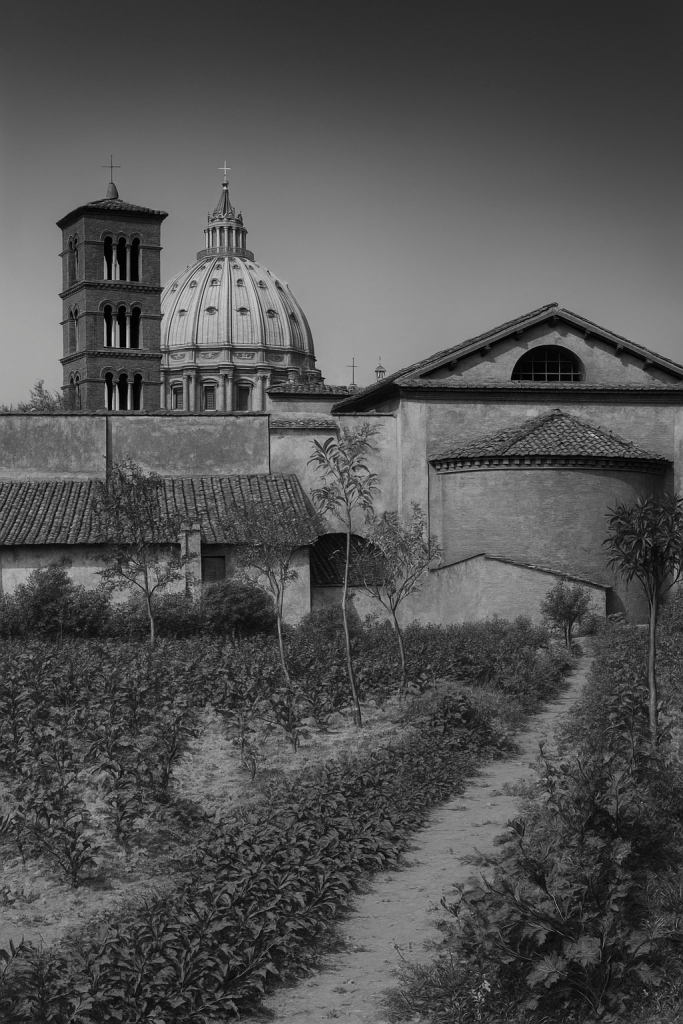
Let’s start where it all began: the eternal city. We take you to one of the old churches in Rome, the Church of the Frisians, also knowns as Friezenkerk, Friesenkirche, and chiesa Frison. Only a stone’s throw from the also magnificent Saint Peter’s Basilica. From the threshold of the church less than sixty meters to the Saint Peter’s Square.
The presence of Frisians in Rome can indeed be traced back to the early Middle Ages, as the sagas suggest. The earliest known reference to a Frisian schola dates to AD 799, when the Frisian schola, together with the scholae of other peoples, welcomed Pope Leo III back to Rome following his six-month exile at the Carolingian royal residence of Paderborn.
Scholae existed for the Greeks and the Iudaei (‘Jews’) on the eastern bank of the River Tiber, within the city walls, and for the Saxons (schola Saxonum), Franks (schola Francorum), Lombards (schola Langobardorum), and Frisians (schola Frisonum) on the western bank, outside the city walls (De Boer 2011). These scholae were associated with Christian communities from these regions and served as places of residence and worship for pilgrims, merchants, and other travellers.
The schola Frisonum appears to have been the last of these four Germanic scholae to be established. Before its foundation, Frisians may have stayed at the schola Saxonum, reflecting the close geographical and cultural ties between the two peoples. The schola Frisonum is also mentioned in the Liber Pontificalis (‘Book of the Popes’). Its exact date of foundation remains uncertain, although it has been suggested that it may have been established during the lifetime of the missionary Willibrord (ca. AD 658–739), who maintained close connections with both the Frisian region and Rome.
A schola was an enclosed settlement where pilgrims could stay and where they had access to their own church, hospital, and cemetery. The Saxons were an exception in that they used their own word, burg, to refer to their schola. The medieval Roman district of Borgo, also known as I Borghi, is thought to preserve this old Saxon designation.
The Frisian schola was located on the Janiculum Hill, approximately 500 metres from the River Tiber, overlooking the tomb of Saint Peter in the Vatican. Vaticanum was the name given to the low-lying area between the Vatican Hill and the River Tiber, which was also known as Nero’s Plain.
INTERMEZZO 2
Janus Head — The name Janiculum Hill is a reference to the pagan god Janus that was once worshiped. Janus had two faces. One looking to the past, and one looking to future. The god of all beginnings and of passage. Hence the month January. Images of Janus must have been present on this hill.
There is a Janus head to be seen in former Frisia as well. No kidding. Not on a hill top but — what else? — on top of a dyke, at the port town of Harlingen in the province of Friesland. Erected in 1576, it is the landmark to mark the end of long disputes between five districts concerning the (costs of the) maintenance of the sea dykes. On top of the stone pillar a two-faced Janus head is placed. The monument is dedicated to the Spanish governor of Friesland, Caspar de Robles, because the story goed it was he who ended the twists between the five districts. This, however, is not true. De Robles only had limited interference in dyke maintenance. Only in the year 1574 he had, but that was because of the construction of fortifications of the port of Harlingen (Draaisma 2017).
Nickname of the monument is De Stenen Man ‘the man of stone’. Now we would name it ‘The Thing‘, after the super-hero. Harlingen will appear again in this blog post, see further below.
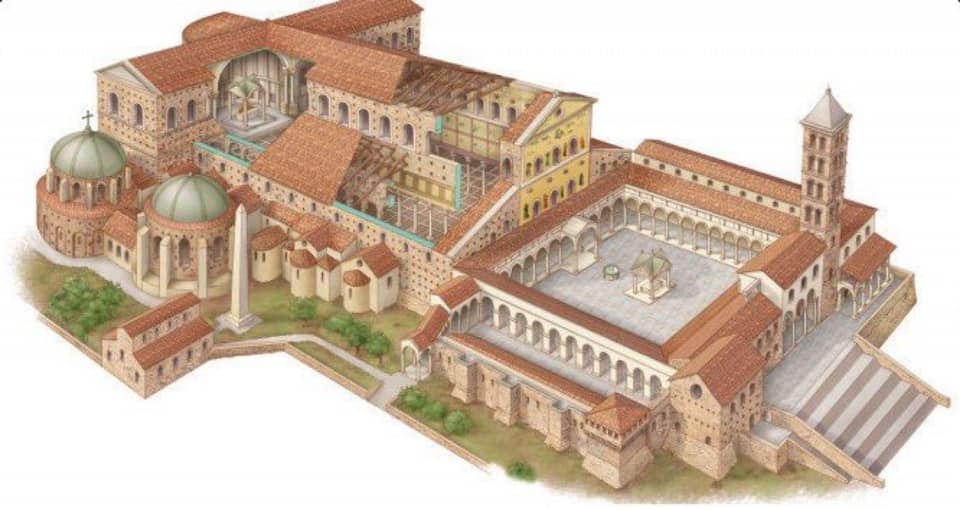
Back then, the Janiculum Hill could be reached via a street known as the Vicus Frisonum, later also referred to as the Borgo dei Frisoni. The Germanic scholae were all located outside Rome’s medieval city walls — at least until AD 848, when the Vatican plain was incorporated within the newly constructed fortifications. Centuries later, in the sixteenth century, the magnificent St Peter’s Basilica as we know it today was built on the Vatican Hill. Construction began in 1506 and was completed in 1626. Today, therefore, the Church of the Frisians overlooks the impressive St Peter’s Square — a prime location indeed.
Furthermore, each schola had its own militia to defend its members and property, and pilgrims could join these militias. It was these militias that welcomed Pope Leo III back to Rome in AD 799. For pilgrims or soldiers, another option was to settle in Italy as farmers. Frisians and Saxons settled in the valley of Crepacore and around Mount Capricore, about 40 kilometres north of Rome as the crow flies. The villages there also maintained their own militias, known as the militiae rurales Sancti Petri.
INTERMEZZO 3
Frisian Kings Try to Meet Emperor Nero in Rome — The name Nero’s Plain (Vaticanum) for the level area outside the old city of Rome, stems from Emperor Nero. It is also this emperor who had a visit of two Frisian kings in the year AD 58.
Both kings had travelled to Rome to plead with Nero for the continuous use of arable land adjacent to the limes (that is, Roman border fortifications) along the River Rhine, where young Frisians had illegally settled. It took some time before Emperor Nero had time to look at their case, if at all, so the men visited the impressive Theatre of Pompeius in Rome, more or less where the modern square Largo del Pallaro is today. The two kings received Roman citizenship from Nero but their request concerning the use of land was denied.
Read more about these two Frisian kings (heroes or traitors?!) in our blog posts Barbarians Riding to the Capital to Claim Rights on Farmland and There Is No Dealing With the Wheels of Fortune — A Celtic-Frisian Heritage.
Because of the Investiture Controversy, Holy Roman Emperor Henry IV besieged Rome in 1084 and installed antipope Clement III. Desperate Pope Gregory VII, the original pope, asked the Norman, or Viking if you like, Robert Guiscard to help him out. He cordially did. Henry IV had to retreat and Pope Gregory was back in the saddle. It came with a very hefty price, though. Consistent with Viking traditions, Guiscard’s army sacked most of the city, including the scholae of the Frisians, the Franks, etc. All Frisians were killed as well.
Today, only two traces of the schola Frisonum survive. The first is a Latin funerary inscription commemorating Hebi, a Frisian who died there in AD 899. The inscription reads HEBI GENE FRISONO, ‘Hebi of the Frisians’ (Stellingwerf 2007). The complete inscription consists of two fragments, and its full text can be translated as follows:
“This is the grave where rests in peace the body of Hebi of the Frisians, God rest his soul (..) who lived almost a year and four months in Porto. He was buried in the era of Lord [pope] John during the second year [of his pontificate] on 19 July of the second indiction [i.e., the year AD 899]. I ask you who reads this always to pray for me in divine matters. And who violates my grave shall be excommunicated (…).”
Possibly Hebi, in his own language perhaps Hebe or Hebo, was a knight. He must have been a confident personality considering his warning not to violate his grave.
The second thing that is still there in the Vatican to be admired is the fresh water well. It is behind the Church of the Frisians, in the garden of the Jesuit fathers.
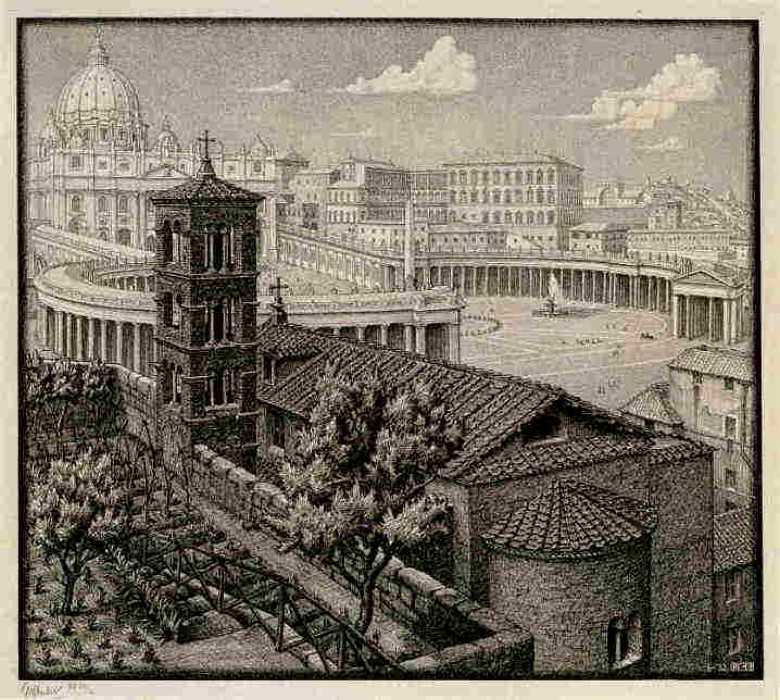
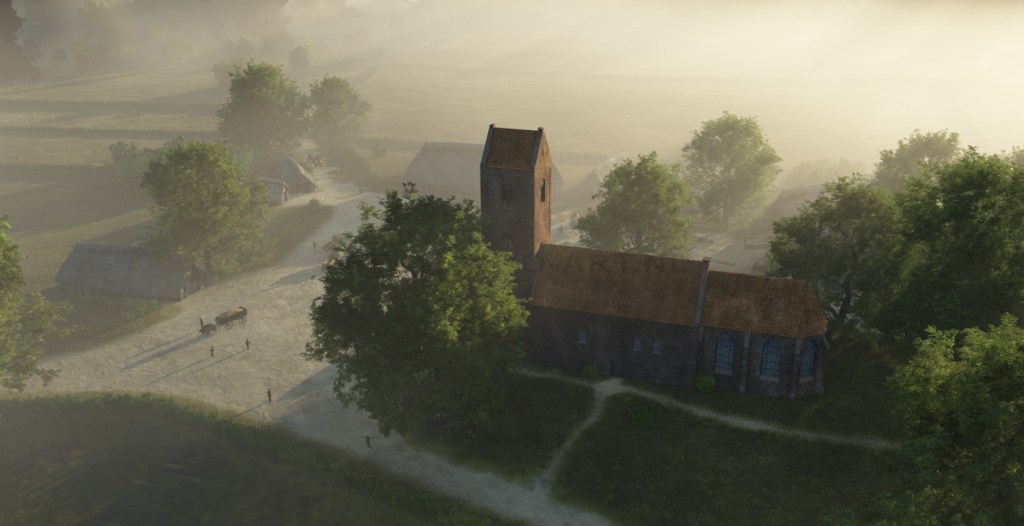
On the site of the former schola and church, the Frisians built the Church of the Frisians, which was consecrated in 1141. Its Romanesque bell tower, which has remained largely unchanged ever since, is the oldest surviving Romanesque church tower in Rome. For several decades, however, the tower stood silent. Since the summer of 2019, the tower bells, cast in the eighteenth century, have been restored, allowing the Frisian church to cheerfully rejoin the cacophony of ringing towers in Vatican City and across Rome. In the mid-eighteenth century, the church underwent extensive renovations and acquired its present appearance, a fusion of Rococo and Classicism. The Church of the Frisians is also known as San Michele dei Frisoni, San Michele in Sassia, and Santi Michele e Magno.
There is a tradition that, at the end of the sixth century, Pope Gregory I founded nine churches — some accounts say eight — dedicated to the Archangel Michael after witnessing the angel above the Mausoleum of Hadrian in Rome (Stellingwerf 2007). This was during a period when plague was sweeping through the region. According to the tradition, the archangel sheathed his sword, signalling that the plague had come to an end. The Church of the Frisians is therefore considered to have been one of these nine sacred churches, and the only one believed to have survived the ravages of time.
With the construction of St Peter’s Basilica in the sixteenth century, the church narrowly escaped demolition. Thanks to its location on the hill, it was spared its fate. More recently, just before the Second World War, the Borghi — the neighbourhoods immediately surrounding St Peter’s Square — were cleared. This was the very area that, as explained earlier, had once housed the Saxon schola. Fearing that the Church of the Frisians might be ‘cleaned up’ as well, the Nederlands Historisch Instituut in Rome asked the Frisian artist M.C. Escher (1898–1972), fittingly a native of Leeuwarden, to make a lithograph of the church. Miraculously, the church survived once again. Panic for nothing, perhaps — but at least we got a lithograph by Mauk Escher out of it.
patron number 1: Archangel Michael
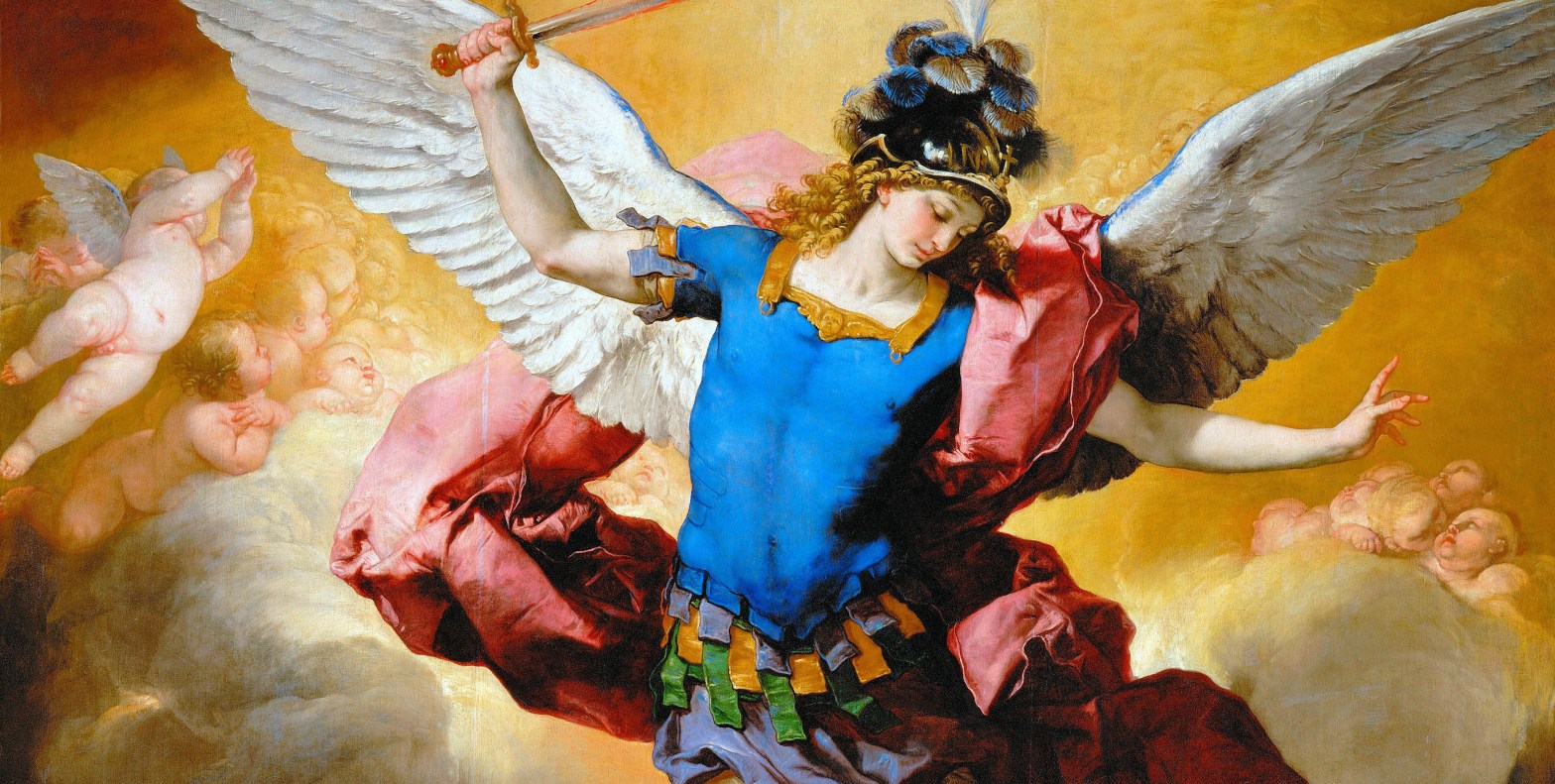
The church was thus dedicated to the Archangel Michael, its first patrocinium (see also the featured image of this blog post). Appropriately, the great artist and architect Michelangelo was also named after the archangel. Among many other achievements, he is famous for painting the ceiling of the Sistine Chapel in the nearby St Peter’s Basilica. The Archangel Michael was believed to lead God’s army against evil, serve as the angel of death, and weigh souls after death. He therefore also came to be associated with justice and righteousness.
By the way, financing this impressive, second-largest church in the world required enormous sums of money. To raise the necessary funds, the Catholic Church promoted the massive sale of indulgences and imposed specific taxes, including the so-called pieterpenning, or ‘Peter’s Pence’. The paradox was that the sale of indulgences to finance St Peter’s Basilica helped fuel the rise of Protestantism. Imposing additional taxes to build a house of God is always a delicate matter. Around the same period, it also contributed to a revolt in the Faroe Islands, as recounted in a Faroese saga about Frisian settlers, in which pagan Frisians killed a bishop. For more bloody details, see our blog post Latið Meg Ei á Frísaland Fordervast! And the Murder of a Bishop.
An important cleric entrusted with collecting funds for St Peter’s Basilica was the papal collector generalis Idzardus Grauius Phrisius Agricola. His name suggests that he may have originated from the village of Grou in the province of Friesland, while agricola means ‘farmer’. Idzardus served as collector generalis for the kingdoms of Denmark, Norway, and Sweden, as well as for the ecclesiastical provinces of Bremen and Cologne, and the diocese of Schleswig. Besides being an important cleric, he is particularly relevant to this blog post because he claimed to have made a copy of the Magnuskerren himself in the library of the Basilica of Santa Maria sopra Minerva in Rome, near the Pantheon. He also lamented that Phrisia liberrima gentium — ‘Frisia, the freest among the peoples’ — had surrendered its freedom so easily (Vries 2009).
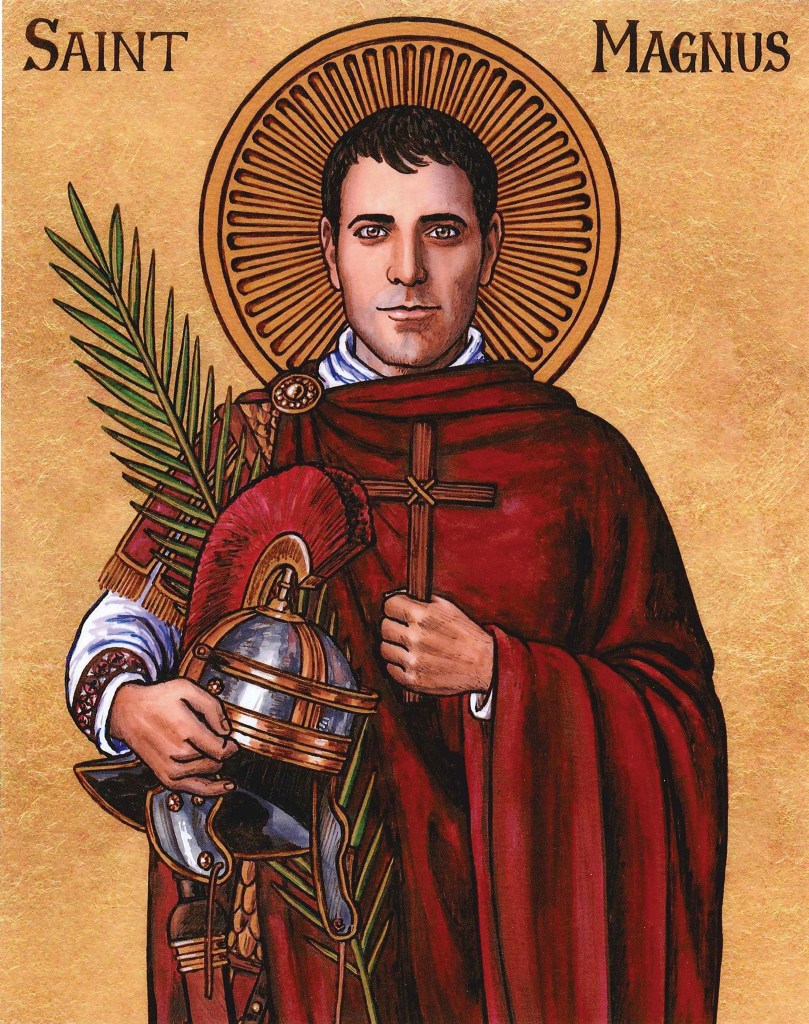
But alongside the Archangel Michael, a second patron of the Church of the Frisians was coming up: Saint Magnus.
patron number 2: Saint Magnus of Cuneo
Today, Saint Magnus is still venerated in the towns of Fondi and Anagni in the Italian region of Latium (modern Lazio), where churches are dedicated to him. Interestingly, other churches dedicated to Saint Magnus are found much farther north. The first is in Esens, in the district of Harlingerland in Ostfriesland. Others are found in the villages of Bellingwolde in the province of Groningen, and Hollum and Hoornsterzwaag in the province of Friesland. Finally, the church in the village of Anloo, in the north of the province of Drenthe, is also dedicated to Saint Magnus. In short: Frisia and Italy. Now, how did that all come about (again)?
For this, we turn to another, more extensive inscription preserved in the Church of the Frisians in the Vatican. To find it, go to the back of the church and look above the door on the left. The inscription tells the story of three Frisian soldiers serving in Charlemagne’s army who, together with a nun, were making their way back to Frisia after a military campaign against the Saracens — that is, Muslims from North Africa — in Apulia, in south-eastern Italy. Their names were Ilderado from the town of Groningen, Leomot from the town of Stavoren, and Hiaro from the village of Slinga. The nun was named Celdui. It is undisputed where Slinga was located, but it was very probably the village of Esens (see further below).
It is on their journey back to Frisia that the three men and the nun encounter the dead body of Saint Magnus of Cuneo. Magnus had been a soldier in the Theban Legion during the Roman period, in the third century AD. He later became bishop of Fondi and Trani and was martyred in AD 252. He was a saint under the protection of the Archangel Michael (Noomen 1989). The narrative gives no explanation as to why his body is suddenly lying on the road. The three soldiers and the nun decide to take the body with them to Frisia. However, when they reach the town of Sutri, north of Rome, the body refuses to be carried any further. That night, the men dream that they are instructed to bring the body to their church in Rome. They follow this instruction and take the body there.
And so, the Church of the Frisians got its second patrocinium, and hence its double name, Michael and Magnus. Of course, that the three men and the nun tried to steal relics and got remorse or were caught in the act, is a too rational explanation we thus must dismiss.
Because of the three man’s and the nun’s devotion, they were allowed to remove a part of the arm of Saint Magnus to serve as a relic back home in Frisia. Pieces of Magnus’s arm were apparently spread over the villages of Anloo, Bellingwoude, Esens, Hollum on the island of Ameland (ecclesia sancti Magni in Hollum insuIa ab Aemlandt), and Hoornsterzwaag. How relics, if they did, ended up from the Church of the Frisians in Rome in the churches of Anagni and Fondi, is not told. By the way, the church of Anloo in the province of Drenthe, when it was renovated, turned out to have been built over a building dating to the Roman Period. A pattern of stone column supports have been found, originally supporting a wooden structure. Maybe a pagan temple.
Because the full text of the inscription is not very easily accessible on the web, it is presented below for the non-believer or simply for the connoisseur, with a translation (Verweij 2014). The best hard copy of the text is provided by Stellingwerf (2007). The text is full of abbreviations so hard to read.
IN NO DNI TEMPORE LEONIS IIII PP IPATE CARVLO MAGNO IPATORE EO TEPORE QVO PETRI BASILICA A SARRACENIS CAPTA FUERAT, TVNC DENIQ P TOTIVS MVNDI CAPITE TVRBATO TOTVS MVNDVS TVRBATVS OMIS GALLIA CV REGE CARVLO AD TVENDV ILLA VENERVNT. VNDE CNTRA INIMICOS DNI BELLA DNI DECERTANDO QDAM MORTVI S ET IN CRIPTA IVXTA NERONIS PALATIVM SEPVLTI, EODD TEPORE A LEONE PP ET REGE K AD HONORE MICHAELIS ARCGLI SUP ILLOS FACTA EST ECCLA. HIS ITA PACTIS REX APVLIA ABIIT EAQ BEATO PETRO ET ROME SVBIVGAVIT. P IDE TEPVS EXERCITV GALLIA REVERTENTE TRES ILLORV MILITES DE FRISIA ILDERADO DE GRONINGA ET LEOMOT DE STAVERA ET HIARO ET CELDVI ANCILLA DEIDE SLINGA. HI BEATI MAGNI CORPVS IN LOCO Q DICIT FVNDI INVENER. QVO INVENTO IN ILLORV PVINCIA PORTARE ET CDIRE DECREVER SED DIVINA GRA COHOPANTE POSTQVA AD SVTRINAS PARTES VENT E APLIVS DEFERRE N PVALVER QA BIS ET TER TERRITI ET P SONIV MONITI ROMA REVERTENTES SCVM CORP SECV TVLER VNDE FACTV E QVOD ILLORV DEVOTIONIS CAVSA PARTE BRACHII A SE SEGREGARI AB ILLIS PMISIT. PARTES AVTE CETERE IN CRIPTA PFATA REMANSER SUP QVA SICUT DICTV EST ECCLA IA FVERAT FACTA DEINDE OMNI ANNO SIMVL BENEFICIV OPTIMV DARI IBI DECREVER SCILICET TRECENTAS MARCAS ARGENTI P ILLORV ET VBIQ REQESCENTIV REDEPTIONE ET IM PERPETVV SEV DIVITES SIVE PAVPERES IN EADE SVPRA DICTI ARCHANGELI BASILICA ET BEATI MAGNI ECCLA IVXTA EA AB EISDE CONSTRVCTA HOSPITALIA QVANDO A SVIS PARTIBVS VENIRENT AGERENT. IDCIRCO NROR ALIORVQ OMIB PATEAT SI IPSI VEL QCVQ HOC DECRETV RVPE TEPTAVERINT SCIANT SE PPETVO DAPNATOS ET MALEDICTOS ET PREDICTI PONTIFICIS ANATHEMATIS VINCVLIS IN INFERNO NISI RESIPVERINT CV DIABOLO CLIGATOS, IN HAC AVTE VITA MISEROS PAVPES ET DISPSOS ET ITERV DE LIBRO VITE CELESTIS DELETOS ET DE REGNO XRI DEIECTOS. CONFIRMATORIB FAVTORIB HVI DECRETI EC TR SIT BENEDIC XRI ET FRVANT VTRIVSQ VITE GAVDIIS AM
In the name of the Lord. In the time of pope Leo IV when emperor Charlemagne was emperor, at that time when Saint Peter’s Basilica was taken by the Saracens, when finally, the whole world was confused, all of Gaul came with king Charles to protect her. When a few died fighting with the Lord’s war against the Lord’s enemies and were buried in a crypt next to Nero’s palace, pope Leo and Charlemagne in honor of archangel Michael built a church above them. When all this was done, the king went to Apulia and submitted it to Saint Peter and Rome. At the same time, when the army returned to Gaul, three soldiers from Frisia, Ilderado from Groningen, Leomot from Stavoren and Hiaro and the maidservant of the lord Celdui from Slinga, found the body of Saint Magnus in the place called Fondi. When they found this, they decided to carry it to their region and bury it there, but with the help of God’s will they could not carry [the body] any further after they had come close to Sutri. They were frightened two or three times and warned in a dream, they returned to Rome and brought the body with them. Because of their devotion [the pope] allowed them to separate part of his arm from the body. The other parts, however, remained in the above crypt above which, as stated, a church was already built. Then they decided that every year a very great gift would be given, namely three hundred marks of silver for the redemption of themselves and for those who rested there, so that for ever rich or poor would stay in the aforementioned basilica of the archangel and church of Saint Magnus in the hospital they built next to it, if they came from their regions. That is why it is clear to all of us and to everyone else that if they try to break this decision, they must know that they will be condemned and cursed forever and will be bound by the anathema of the aforementioned pope with shackles in hell and sit together with the devil unless they come to their senses, and will be miserable, poor and scattered in this life, and will be nullified from the book of heavenly life and expelled from the Kingdom of Christ. For those who confirm and favor this decree, etc. blessed by Christ and may they enjoy the joys of both lives. Amen.
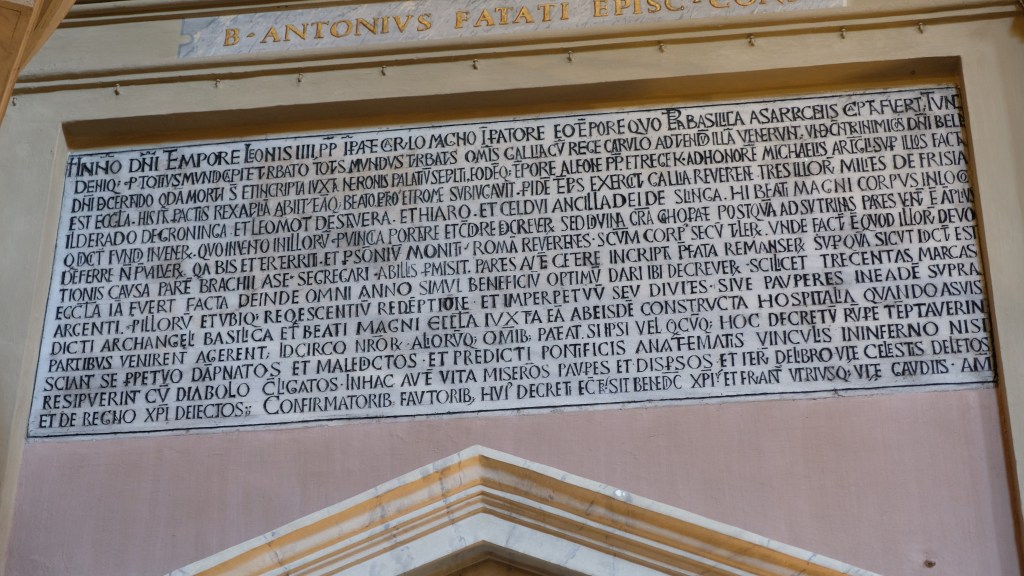
The dating of the inscription is not entirely precise. The inscription refers to Charlemagne, Pope Leo IV, and the time when Saint Peter’s Basilica was sacked by the Saracens. These references point to the year AD 848, when the Saraceni attacked Rome and were defeated by Germanic forces, including Frisians. In the same year, the Saracens were pursued as far south as Apulia. However, the reference to Charlemagne (AD 747–814) presents a chronological problem, since he had already died by the time Leo IV became pope (AD 847–855). Moreover, if AD 848 is indeed the intended date of the events described in the story, then Pope Leo IV would also still have been alive, as his pontificate lasted until AD 855.
In any case, based on the ‘financial’ passages of the inscription, which describe annual payments intended to prevent the dead from eternal damnation, scholars generally date the inscription itself to the first quarter of the eleventh century (Noomen 1989). This would mean that the inscription records events that supposedly took place at least two centuries earlier. Other scholars, however, date the inscription to around 1300, based on linguistic features (Stellingwerf 2007).
So, now we have all the ingredients: Saint Magnus, Frisians in Rome, Charlemagne, battles against the Saracens, and the Archangel Michael. Toss them into a blender, press button 3, and out comes the saga of Frisian Freedom. Or, as they put it back then: fry ende freesk (‘free and Frisian’), or simply fry freesk (‘free Frisian’), a slogan already in use in the eleventh century (Vries 2012). It is, in fact, a motto with a remarkably universal ring to it. The State of New Hampshire in the United States still declares: ‘Live free or die.’ And in 1901, Dutch propaganda plays staged in support of the Boers during the Second Boer War in South Africa bore the title Vrij of Dood, of de Hollanders in Zuid-Afrika (‘Free or Dead, or the Dutch in South Africa’).
Note that, besides Saint Magnus and the Archangel Michael, another Catholic figure was associated with Frisian freedom and the struggle against the counts of Holland in the Late Middle Ages: Mary, Queen of Heaven and Lady of Distress. Especially in the Frisian sealand of Westergo, in the province of Friesland, the Virgin Mary came to symbolize an independent Frisia tota (Mulder-Bakker & Van Beek 2021). This association was not limited to the Frisian lands along the Wadden Sea coast, however; it was also found among the Saxons living at the Wadden Sea. The peasant republic of Dithmarschen, for example, likewise attributed its freedom to Mary — or at least that was the prevailing belief at the time.
For more on the role of Mary in Frisian history, see our blog post The Abbey of Egmond and the Rise of the Gerulfing Dynasty. Lady Mary also appears on the great seal associated with the Treaty of the Upstalsboom, a seal believed to have been created by the monastery of Ihlow near Aurich in the region of Ostfriesland (Dirks 2023). For the history of Dithmarschen and its association with Saint Mary, see our blog post When the Withered Linden Tree of Dithmarschen Reawakens.
This is the smoothie you get
Across the different versions of the Magnus saga, the Frisians fight the citizens of Rome, the Saxons, and the Saracens — or some combination of the three. Their purpose is always the same: to liberate Rome on behalf of Charlemagne and the pope. Moreover, the Frisians supposedly fought like true biblical Uriahs, standing in the front line under the command of their leader Magnus, who carried a red banner. In the course of the saga, then, Saint Magnus appears to have been transformed from an Italian bishop into a Frisian warrior.
In addition, the Frisian warriors are described as ‘naked’ in the sagas, which means that they did not wear (heavy) armour and helmets. This corresponds with the images preserved of high-medieval, barefooted Frisian warriors. See our blog post Terrorist Fighters From the Wadden Sea. The Era of the Crusades where we elaborate on their eccentric appearances. That they walked barefoot might have been the norm in the salt-marsh culture of the Frisians. It is even a tradition that survived on the Hallig islands in the region of Ostfriesland until the nineteenth century (Knol 2021). The key was that they were lightly armed and fast in charging at the enemy, even having their hair shaved off for aerodynamic effect.
The saga further relates that, from that time onward, the Frisians preferred death to the loss of their freedom: Friso pro libertate mortem appetit! — ‘the Frisian seeks death for the sake of liberty’ (Muuß 1933). Across the various Frisian lands, this sentiment has been rendered in local forms, such as Lieber töt, als unfrei, Liewer duad as slaaf, Ljauer dood as Sklove, and Leaver dea as slaef. A qualification is in order, however: this battle cry belongs to the realm of invented tradition. It was only introduced in the mid-nineteenth century (Knottnerus 2024), much like the kilt of the similarly freedom-minded Scots — another emblem often taken as ancient, but in fact largely shaped around 1700. See also the note at the end of this blog post.
All versions of the saga also have in common that the Frisians were rewarded for their heroic deeds and achievements by Charlemagne himself. Sometimes the freedom was pro-actively given to them, although mostly it was chosen by their leader Magnus: the Magnuskerren. The Magnuskerren were laid down in a charter together with a seal of Charlemagne and brought to Frisia by Magnus, together with the red banner.
INTERMEZZO 4
Sources of the Sagas — The saga of the Frisian Freedom, with different accents, has been codified in several Old Frisians law books: Codex Unia (U), ca. 1650; Scripture of Fivelgo (F), ca. 1450; Jus Municipale Frisonum (J), ca. 1530; Druk (D), ca. 1485; First Hunsingo Codex (H), early-fourteenth century; Codex Aysma (A), sixteenth century.
To make the freedom saga more credible, a suitably impressive pedigree for Magnus was also constructed over time. He was given the entirely fictional family name Forteman and even received his own seal. Magnus Forteman was also supposedly the first duke of Frisia. And while they were at it — and why not? — his father, Gustavus, was said to have founded the first church in Frisia, at the village of Almenum, now part of the town of Harlingen. The church in Harlingen, originally built around 1200, is dedicated to Saint Michael, who also appears on the town’s coat of arms.
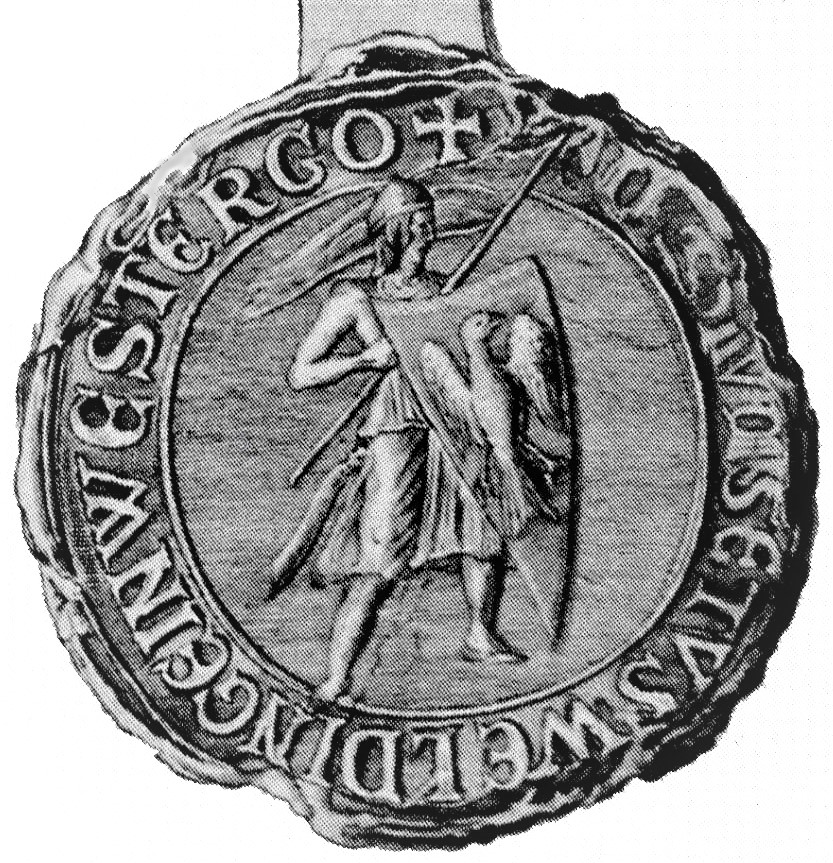
There is a theory that Hiaro of Slinga, one of the three soldiers who find the body of Saint Magnus (see above, the inscription in the Church of the Frisians), is actually from the settlement of Hlinga. The ‘S’ of Slinga would be a slip of the chisel concerning the ‘H’, and Hlinga would stem from H(er)linga and H(ar)linga, thus modern Harlingen. Together with a thirteenth-century seal from district Wonseradeel in the province of Friesland, which depicts a warrior with the eagle of Charlemagne (possibly indeed Hiara from Slinga) and bearing the text Sanctus Magnus dux Frisonum ‘Saint Magnus duke of Frisia’, a fusion was made of the historic persons Hiaro and Magnus (Van Buijtenen 1953, Dekker & Nielsen 1984). We are, however, not sure simply another saga has been created with this ‘theory’. It needs quite a lot brain gymnastics, to be frank. And how to incorporate the placename Almenum into this creative outburst of Van Buijtenen, we do not know either.
In fact, the name Slinga very probably refers to Esens. The older name of Esens was Es(e)linge, and the town is located in the northern part of Ostfriesland. And guess what? Its church is dedicated to Saint Magnus too (Noomen 1989, Stellingwerf 2007).
So, yes, the Dutch and Frisian flags that decorate the Church of the Frisians today are all very nice and jolly — but if we really want to honour the people who brought the relics of Saint Magnus to the church, the flag of Ostfriesland might actually be more appropriate. After all, the rather thick layer of Dutch and province of Friesland nationalism covering the Church of the Frisians could perhaps be regarded as a little insulting by the Ostfriesen.
INTERMEZZO 5
Almenum Settlement — The present-day port town of Harlingen at the Wadden Sea coast developed near the terp settlement of Almenum. On this terp stands the church of Saint Michael. The name Almenum — still being used — might indicate a pre-Christian origin of a temple or sanctuary at this spot. The morpheme ‘al’ stems from ‘al(a)h’ meaning temple, and ‘alhist’ meaning ‘dwelling near the temple’. Other place names in the Netherlands with a similar origin are the towns of Aalst and Elst (Van Eijnatten 2005).
Other morphemes pointing towards a spot of pre-Christian sacral relevance are the word ‘harg’, meaning temple or hilltop sanctuary, like the villages of Hargen in the province of Noord Holland, of Harich in the province of Friesland, of Harga (later Kethel) in the province of Zuid Holland, and the word ‘wîha’, meaning holy place, idol, or altar, like the village of Wehe-Den Hoorn in the province of Groningen, or the towns of Wijhe in the province of Overijssel, and of Wije in the province of Gelderland. During the Middle Ages, at Harich (before written as Harch), there stood a chapel and grangia ‘monastic grange’ belonging to the Saint Odulf Abbey at Stavoren in the province of Friesland. When the grange was plundered and burned down by haadling ‘headman’ Ige Galema during a local conflict at the end of the fifteenth century, many miraculous healings happened at this spiritual spot. The spot is located on a slightly elevated Pleistocene height (De Langen & Mol 2023).
Lastly, the place named Herwen in the province of Gelderland also has a similar holy origin. It is composed of “harh-wiha” which means ‘temple’ or ‘consecrated sanctuary’ (Kerkhof 2022). At Herwen, a complete Roman temple complex was found, dedicated to the god Magusanus, which was popular among the Batavians living in the area.
The Old English language also has similar toponyms, namely ‘hearg’ and ‘wēoh’ which can be found in the epic poem Beowulf (Mees 2019, Van Renswoude 2021). But also think of the German word “Weihnacht” which means ‘holy night’ for Christmas.
For an overview of toponyms in the Low Countries referring to former sacred places, check the blog of Taaldacht.
Of course, the whole early-medieval story about the Magnuskerren and Magnus is fake news. Still, it constituted a crucial part of high-medieval Frisian society to withstand the claims of non-Frisian, feudal and ecclesiastical rulers to incorporate Frisia into their jurisdiction.
The legend of the Magnuskerren must be dated in the thirteenth century. As said earlier, Frisia was a collection of countless free-farmer republics and its defense fully relied on people, on citizens, on farmer’s or people’s militias. These legends and sagas helped to motivate and organize themselves. Nowadays, the Mid Frisians would call that mienskip.
The many little republics were loosely united within the almost mythical but beautiful named saun zelanden ‘seven sealands’. Later, at the beginning of the thirteenth century, the small republics tried to strengthen their alliance with the Treaty of the Upstalsboom. The Upstalsboom had its own seal (too) with an image of two Frisians warriors. When the Frisians and their chosen judges gathered during the thing on the hill Upstalsboom once a year on the Tuesday after Pentecost, their motto spoken was eala Frya Fresena ‘hail free Frisians’.
The alliance of Upstalsboom failed ingloriously, however. See our blog post The Treaty of the Upstalsboom. Why Solidarity Is Not the Core of a Collective to know why and how. Parallel to the decline of Frisia, the Church of the Frisians in Rome fell into disuse in the Late Middle Ages, and the Chapter of Saint Peter took possession of the church. In the year 1989, the Netherlands received the user rights of the church based on the historic ties. Although, we add once again, that could have just as well been the State of Niedersachsen since it was part of Frisia too. The church council of the Church of the Frisians is called the Willibrord Council, named after the early-medieval missionary of Frisia. In 1995, Pope John Paul II consecrated the altar of the renovated church.
Whatever the user right for Frisia, Niedersachsen, or the Netherlands, when you are in Rome to visit the Church of the Frisians, do not forget to take a quick look at Saint Peter’s Basilica. It is worth a visit, too!
There might be some truth in it after all
All we have to do now, is take these lies, and make them true somehow! (George Michael, 1990)
In 1234, William II, son of Count Floris IV of Holland, became the new count of Holland and Zeeland — that is, of most of what was then considered West Frisia. In 1248, Count William fought against the excommunicated Emperor Frederick II and, among other things, conquered the city of Aachen. Curiously, Frisians fought under his banner. After all, Frederick’s followers were considered heretics, while the pious Frisians were apparently always up for some jolly Crusade action.
That same year, William II was crowned Holy Roman Emperor. Just two days after his coronation in Aachen Cathedral, he granted privileges to the Frisians who were gathered there as well. In fact, Emperor William II reconfirmed in a charter the rights, freedoms, and privileges that Charlemagne was allegedly said to have granted to the Frisians centuries earlier. Once again, William was drawing a direct connection between the Frisians and the age of Charlemagne.
William II’s act also coincided with the end of the condominium mentioned earlier, although its precise date cannot be established.
Whatever the privileges for the Frisians, the Westfriezen of the current region of Westfriesland in the province of Noord Holland, who were in a bitter conflict with the sutherna here ‘southern lords’, that is, the counts of West Frisia/Holland, for centuries already, slaughtered Emperor William II without hesitation in the cold winter of 1256. This was during a military expedition of William II in the region of Westfriesland. See also our blog posts Guerrilla in the Polder. The Battle of Vroonen in 1297 and In Debt to the Beastly Westfriesland about the history of the free-farmer republic Westfriesland, the First Sealand, and their struggle with the counts of Holland.
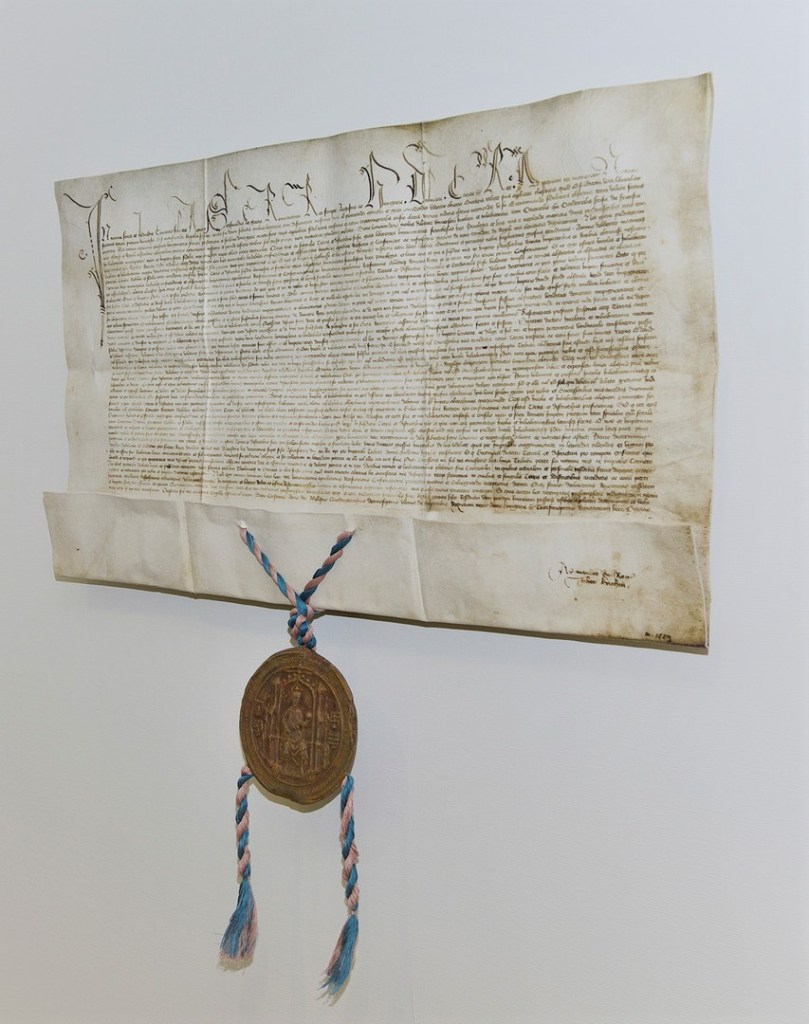
Then, in the winter of 1417, King (later to become Holy Roman Emperor) Sigismund of Luxembourg extended, yet again, to universorum Incolarum et inhabitantium tam Orientalis quam Occidentalis frisie ‘all people and inhabitants of East and West Frisia’ the freedom privileges for real. Although not from Charlemagne, still granted by an emperor. The charter with a big seal has been preserved. Despite Sigismund’s generous ruling, the Frisians do pay taxes to the German and Dutch governments today. Maybe they should make a case at court with Sigmund’s charter as their inalienable right.
Another royal recognition of the Frisian Freedom came from Philip VI of Valois, king of France. In October 1337, he tried to kiss up with the Frisian districts through letters he send among other to the districts of Oostergo, via the Abbey of Klaarkamp, and of Wangerland. In it he recalled how the Frisians got their freedom privileges from Charlemagne after they fought to free the city of Rome from Roman insurgents (Kern 1910, Vries 2009).
It is worth noting that the Frisians were not unique in receiving such privileges. Not long after the Frisian privileges of 1417, the Ditmarsians also secured rights of self-governance, defence, and taxation. These were formalised in the treaty of 1456 between Dithmarschen and Duke Adolf VIII, which acknowledged the free peasant republic that had gradually emerged in the region of the Wadden Sea following the Battle of Bornhöved in 1227, in which the King of Denmark was defeated (Bünz & Missfeldt 2025).
Variations on the theme
The Ostfriesen
The Ostfriesen, or East Frisians of the region of Ostfriesland, have a different legend as to how they received their freedom. That was after the battle of Norditi in 884, also known in Germany as the Normannenschlacht. It was a battle, some argue several battles, between the Frisians and the Danes who had occupied the coastal zone of Ostfriesland. As a sign of gratitude for pushing out the Vikings, King Charles the Bald gave the Frisians their freedom. See our blog post A Theel-Acht. What a Great Idea! for more details on this great battle.
The Wurstfriesen
The Wurstfriesen, or Wurst-Frisians, of Land Wursten, east of Ostfriesland, have a similar saga, entitled Das Adlerwappen (‘the eagle’s coat of arms’). It tells how the Frisians of Land Wursten asked Emperor Frederick Barbarossa for permission to fight under his banner against Rome. Permission was granted, and they proved so bold and courageous that they were incorporated into the emperor’s personal guard. The guard subsequently thwarted every conspiracy against the emperor in Rome.
When Frederick Barbarossa wished to make the Wurstfriesen knights, they declined the honour. The Frisians said that they already considered themselves superior to any knight in rank and renown, having wrested their land from the sea and claimed it without anyone having granted it to them. The emperor replied that the only honour he could bestow upon them was the right to bear the Imperial Eagle in their coat of arms from then on.
That Frisian were body guards of emperors in Rome is not a strange thought. Even names of two Frisian corpore custos ‘body guard’ in the Roman army have been preserved, namely Bassus and Hilarus. Both served in the army to protect general Germanicus Julius Caesar and Emperor Nero in the first century AD. Of course, they have been indicted by the ICTF post-mortem for serving in a foreign army.
Check also our blog post Make Way for the Homesick Dead Frisians! A Saga From the Swiss Alps to learn that besides the Frisians also the Swiss carry the imperial eagle in their coat of arms. This right to wear the half, black imperial eagle was also granted to the Frisians by Charlemagne after they had freed Rome (Muuß 1933).
The Hadlers
The Hadlers of Land Hadeln, east of Land Wursten, also have their own account of the events in Rome. After being subjugated by the Franks following bitter fighting, the Hadlers became loyal subjects. In 799, when the Romans turned against Pope Leo, the pope appealed to Charlemagne for assistance. Charlemagne immediately ordered an army to be assembled, including a contingent of Frisians and Hadlers.
When the army arrived before the formidable walls of Rome, on the banks of the River Tiber, the soldiers hesitated. Charlemagne nevertheless ordered them to attack. After a brief but fierce battle, the Franks emerged victorious, with the Frisians and Hadlers distinguishing themselves in the fighting and earning considerable renown.
As a gesture of gratitude, Charlemagne is said to have ordered the removal of the wooden collars worn by the Frisians, which, according to the tradition, symbolised their subjugation by the rulers of Norway and Denmark. The Hadlers, too, retained the distinction of having contributed to the establishment of the German Empire.
Note 1 — There are two holy stairs in Rome and one of them is part of the Church of the Frisians; the Scala Sancta. Penitents and pilgrims must pray and climb on their knees the thirty-three stairs. Never you may descend a holy stair! The one who follows Jesus must continue to do so, and never reverse his or her steps (Stellingwerf 2007). The Scala Sancta is possibly the former entrance of the original Church of the Frisians built in the Early Middle Ages (De Boer 2011).
Note 2 — There is an early-medieval saint in the south of France who has many parallels with Saint Magnus. He is Saint Fris, a Frisian cavalry commander of the Frankish army who died during the Battle of l’Étendard (‘battle of the standard’) on 24 June 732 against the Saracens. Interestingly, according to legend Fris is the son of the heathen King Radbod as well. Saint Fris is being worshiped in southern France to this day. See our blog post Like Father, Unlike Son. Un Saint Frison en France.
In medieval Frisia another soldier saint was very popular, namely Saint Martin of Tours (AD 316-397), in Dutch language known as Sint Martinus or Sint Maarten. Think of the Martin churches in Bolsward, Franeker, Groningen, and Sneek. His feast day is on the 11th of November. Martin originated from present-day Hungary. He was a cavalryman in the Roman army who shared a piece of his cloak with a beggar, lived as a hermit for a while, and performed all kinds of miracles. Saint Martin is buried in Tours what became an important place of pilgrimage in France and beyond. It was Bishop Radbod of Utrecht, born mid-nineteenth century and who had studied in Tours, who propagated Saint Martin as patron of the bishopric of Utrecht (Mulder-Bakker 2021).
Note 3 — Banners/standards and standard-bearers were very important elements in war and heroism in the Middle Ages and long after. As became clear, Magnus was the early-medieval leader and standard-bearer who brought the red banner from Rome to Frisia. Saint Fris, too, was a famous early-medieval leader and standard-bearer (see note above). Yet another famous standard-bearer was Tjede Peckes. A young woman of seventeen years who fought in Land Wursten against an army of the bishop of Bremen in the year 1517. She carried the white banner of death. See our blog post Joan of Arc, an Inspiration for Land Wursten Too.
The red banner of Magnus Forteman possessed wonder powers. It provided protection against storms and thunder, and against evil spirits and sorcery. It also helped to be freed from evil spirts or magic. And, of course, it secured victory in battle. The banner had been passed down generations of founding fathers of the Frisians. King Friso had the banner, together with an iron crown, taken with him from India. Friso had received the banner from his father Adel, who got it from his father Ragau, who got it from his father Sem. After the death of Friso, the banner and crown were kept at the temple Tamfane. During the rule of the Danes, the iron crown was robbed but the banner was not. The Frisians had buried it deep under the ground, but, after time had passed, forgotten where. When Saint Willibrord came to Frisia, the whereabouts of the banner was revealed to him in a dream and he gave it to Magnus. From then on, the banner is also known as the Magnusfane (Dykstra 1966).
Note 4 — Throughout history, as this blog post makes clear, Frisians were passionate about their freedom to govern themselves. Think of the quote of cleric Enea Silvio Piccolomini and later Pope Pius II (1405-1464): “Haud invitus Phriso pro Libertate mortem appetit“, which translates to ‘without reluctance Frisians are prepared to die for freedom’ (transl. after Knottnerus 2024). To this day, Frisians use the expressions vrij ende freesch (‘free and Frisian’), Frysk en frij (‘Frisian and free’), leaver dea as slaef or lewer Duad üs Slav (‘better dead than slave’), etc. There is also the famous quote of statesman Gemme van Burmania (ca. 1523-1602) who refused to kneel before King Philip II of Spain. He allegedly said: “Wy Friezen knibbelje allinne foar God” (‘we Frisians only knee before God’). Bit like how the Irish put their hands in their pockets in front of English royals.
I would rather be a rebel than a slave
Emmeline Pankhurst (1913)
Suggested music
- Franklin, A., Think 1968
- Sting, If You Love Somebody Set Them Free (1985)
- George Michael, Freedom! (1990)
Further reading
- Abernethy, S., The schola Saxonum and the Borgo in Rome (2019)
- Blok, P.J., De Friezen te Rome (1902)
- Bodar, A., Romeins verblijf (2024)
- Boer, de D.E.H., Emo’s reis. Een historisch culturele ontdekkingstocht door Europa in 1212 (2011)
- Bremmer, R.H., “Thi Wilde Witsing”: Vikings and Otherness in the Old Frisian Laws (2020)
- Broome, R., Radbod from the Middle Ages to Modernity (2026)
- Bolhuis van Zeeburgh, J., Kritiek der Friesche geschiedschrijving (1873)
- Buijtenen, van M.P., De grondslag van de Friese vrijheid (1953)
- Bünz, E. & Missfeldt, J., Dithmarschen im mittelalter. Geschichte der Bauernrepublik und ihre Folgen (2025)
- Dekker, T.W. & Nielsen, C., Kastelen, kerken en kloosters. Kerkgeschiedenis van Harlingen en Midlum (1984)
- De Maesschalck, E., De graven van Vlaanderen (861-1384) (2012)
- Dirks, C.H., Geschichte Ostfrieslands. Von der Freiheit der Friesen bis zu Deutschlands witzigstem Otto (2023)
- Donati, G., Latium. Photographic Guide-Book (1986)
- Draaisma, K., Een nieuwe kijk op Caspars dijk (2017)
- Dykstra, W., Uit Frieslands volksleven. Van vroeger en later (1966)
- Eijnatten, van J. & Lieburg, van F., De Nederlandse religie geschiedenis (2005)
- Folkerts, R., Die Theelacht zu Norden. Ein seit 1100 Jahren auf genossenschaftlicher Basis geführter Familienverband (1986)
- Hees, van R., De grote kerkrestauratie in de periode 2007-2012. Il grande restauro della chiesa dei Santi Michele e Magno nei periodo 2007-2012 (2013)
- Henstra, J.H., Friese graafschappen tussen Zwin en Wezer. Een overzicht van de grafelijkheid in middeleeuws Frisia (ca. 700-1200) (2012)
- Iba, E.M., Hake Betken siene Duven. Das grosse Sagenbuch aus dem Land an Elb- und Wesermündung (1993)
- Israel, J., Friesland and the Rise of Democratic Republicanism in the Western World (1572-1800) (2019)
- Janse, A., Grenzen aan de macht. De Friese oorlog van de graven van Holland omstreeks 1400 (1993)
- Jensma, G., Vrijheid als innerlijke deugd. De paradox van de ‘Friese vrijheid’ in de negentiende eeuw (2019)
- Jongstra, A., Friezen in Rome (2024)
- Keijser, D., Cloth as Currency: Clothing and the Naked in Old Frisian Law (2015)
- Kern, F., Analekten zur Geschichte des 13. und 14. Jahrhunderts. Frankreich und die Friesen (1910)
- Kieckens, E., Lazio en het beste van Rome (2017)
- Kleyboldt, S., Heilige Treppe und Gestühl vom Zweiten Vatikanischen Konzil (2025)
- Knol, E., For Daily Use and Special Moments: Material Culture in Frisia, AD 400-1000 (2021)
- Knottnerus, O.S., Liever dood dan Fries? De ongemakkelijke geschiedenis van een vermeend spreekwoord (2024)
- Langen, de G. & Mol, J.H., Vroege benedictijner kloosterboerderijen in Zuidwest-Friesland (2023)
- Malcolm, E., Magnus the walrus makes yet another Moray stop (2026)
- Mees, K., Burial, Landscape and Identity in Early Medieval Wessex (2019)
- Molen, van der S., Oorsprong en geschiedenis van de Friezen (1981)
- Mulder-Bakker, A.B., Heiligen en relieken. Geloofspraktijk van boeren en burgers (2021)
- Mulder-Bakker, A.B. & Beek, van L., Maria, Onze Lieve Vrouw. Hemelkoningin en Redder in Alle Nood (2021)
- Muskens, M.P.M., De Kerk van de Friezen bij het Graf van Petrus. De geschiedenis van de kerk. De kerk in de geschiedenis (1989)
- Muuß, R., Nordfriesische Sagen (1933)
- Noomen, P.N., St. Magnus van Hollum en Celdui van Esens. Bijdrage tot de chronologie van de Magnustraditie (1989)
- Renswoude, van O., Heidense oordnamen in de Lage Landen (website)
- Renswoude, van O, Hof, harg en hal: het heten van heiligdommen (2021)
- Schuur, J.R.G., De Friese hoofdeling opnieuw bekeken (1987)
- Schuyf, J., Heidense heiligdommen. Zichtbare sporen van een verloren verleden (2019)
- Siebs, B.E., Die Sagen der Heimat aus Volkes Mund, III. Land Hadeln (1926)
- Siefkes, W., Ostfriesische Sagen und sagenhafte Geschichten (1963)
- Spiekhout, D., Brugge, ter A. & Stoter, M.(eds), Vrijheid, Vetes, Vagevuur. De middeleeuwen in het noorden; Nijdam, H., De middeleeuwse Friese samenleving. Vrijheid en recht (2022)
- Steensen, T., Die Friesen. Menschen am Meer (2020)
- Stellingwerf, I (ed.), HH. Michaël en Magnus. De Kerk van de Friezen in Rome (2007)
- Teetied & Rosinenbrot (podcast), Du friesische Freiheit, sei gegrüßt! (2024)
- Tuuk, van der L., De eerste Gouden Eeuw. Handel en scheepvaart in de vroege middeleeuwen (2011)
- Verweij, M., De zusterkerk van Anloo: de SS. Michele e Magno te Rome, Magnuslezing (2014)
- Vries, O., Asega, is het dingtijd? De hoogtepunten van de oudfriese tekstoverlevering (2007)
- Vries, O., Bernardus Bucho Aytta van Swichum. Vorstendienaar in priesterhabijt (2009)
- Vries, O., De taal van recht en vrijheid. Studies over middeleeuws Friesland; Die Friesische Freiheit; ein Randproblem des Reiches; De Aldfryske pearformule fry ende freesk (2012)
- Vries, O., Het Heilige Roomse Rijk en de Friese vrijheid (2026)
- Waterbolk, H.T., Profane en sacrale houten gebouwen uit de Middeleeuwen in Noord-Nederland (2002)
- Wyler, W., Roman Holiday (1953)

