
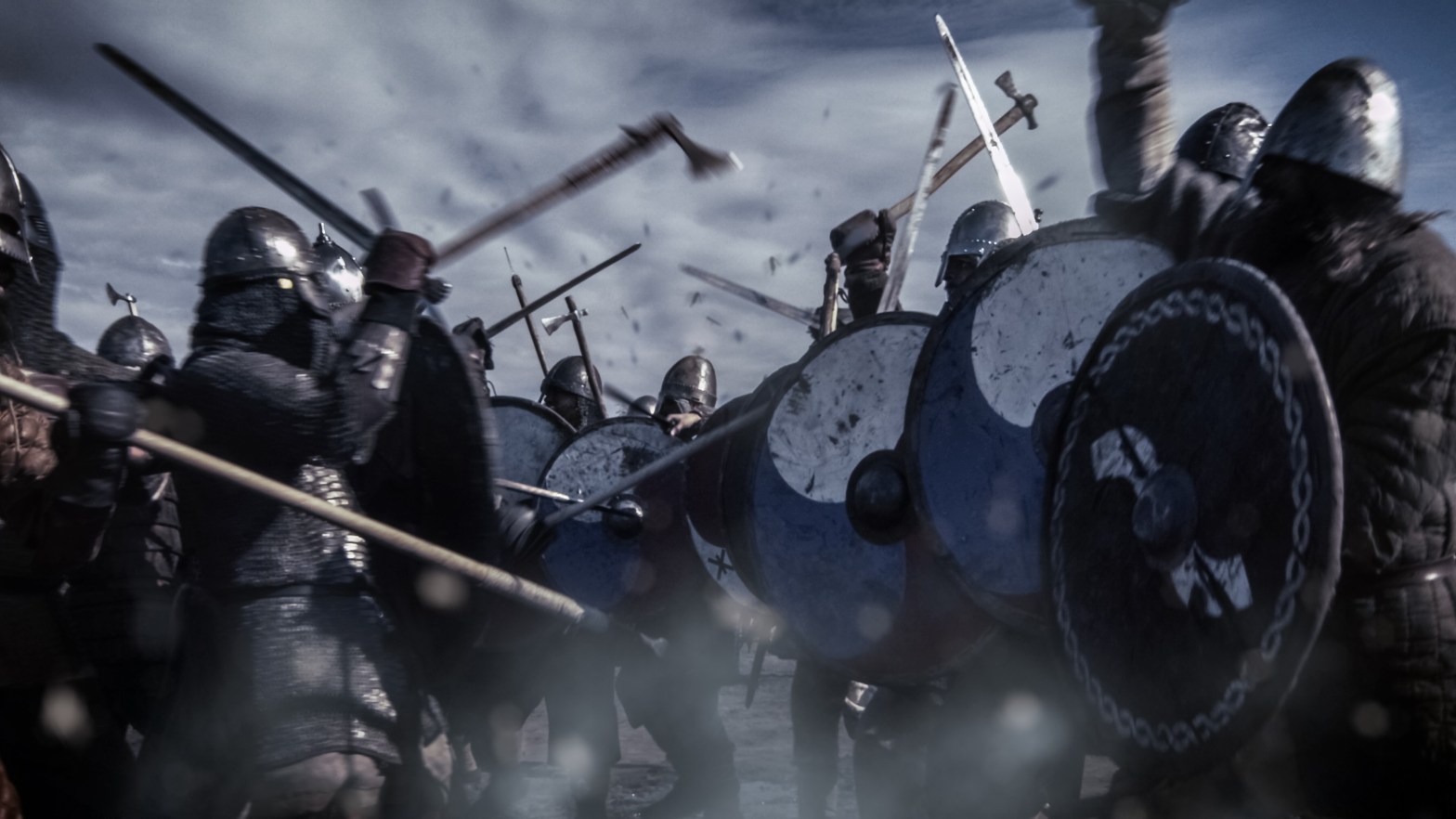
In contrast to today’s Sunday rest, for centuries the island of Walcheren was a pagan stronghold and a safe haven for Vikings with their slightly aggressive business model. Heathen beliefs were deeply rooted on the island. Even in the eleventh century, the Roman Catholic Church feared that its inhabitants might revert to their former pagan gods and rituals. Walcheren also served as a bridgehead for the Scaldingi — literally ‘Scheldt people’ — a term for the Vikings inhabiting the watery region at the mouth of the River Scheldt. This chapter was led by the feared Ubba the Frisian, one of the commanders of the legendary Great Heathen Army that ravaged the Anglo-Saxon world in the Early Middle Ages. Indeed, part of this dreaded army sailed from the shores of Walcheren in Frisia.
The result of its pagan history is that the beaches, dunes, and soil of the island of Walcheren are soaked with pagan remains, both stones and bones. Because of the ever-changing sea and coastline, sometimes these remains literally emerge as zombies from their graves. Below, the reader will receive some tips in case of an encounter with these spooky remains, for example, when swimming in the North Sea at the wide sandy beaches of Walcheren.
This blog post concerns the peninsula of Walcheren, once an island, situated in the wider region known in the Middle Ages as loca maritima (‘sea lands’) or Scaldimariland (‘land at the mouth of the Scheldt’). In earlier times it belonged to Frisia, though today it forms part of the province of Zeeland — and the namesake of New Zealand. Bartholomeus Angelicus (1203–1272) described the area as quoad arbores est quasi nuda — ‘as for trees, it is almost bare.’
Yet despite its sparse woodland, Walcheren was long prized for its grain production, something the peaty soils of Holland could not provide and which therefore attracted the covetous attention of its counts (De Graaf 2004). In the Middle Ages, the island was equally celebrated for its fine horses, likely owing to its fertile tidal marshlands too — excellent breeding grounds for strong stock, much as the former marshlands of Friesland in the north of the country still are today.
And, as with many islands across the world, Walcheren’s inhabitants were by nature self-willed and independent — a trait still characteristic of the former islands of Zeeland, and most certainly of Walcheren itself.
In the Early Middle Ages, when the island of Walcheren still formed part of Frisia, the region long served as a free haven for poorly-shaven Viking warriors, raiders, and other sea-scavengers. From 1012 onward, the part of Frisia west of the River Scheldt — roughly today’s region of Zeelandic Flanders together with the island of Walcheren — fell under the authority of the county of Flanders. The Frisians, however, felt neither urge nor obligation to pay taxes to the Flemish margraves. Their refusal soon led to armed conflict with Flanders (Nieuwenhuijsen 2022), as we shall see further on in this post.
This blog post also explores how the island of Walcheren, situated at the mouth of the River Scheldt, was a strategic hub from the Roman Period through the Early Middle Ages, both commercially and militarily. Under the Roman Empire, seaports near the present-day towns of Domburg and Colijnsplaat served as vital maritime links for direct crossings of the North Sea to and from Britannia (Dhaeze 2019). In the Early Middle Ages, when Walcheren was known as pagus (‘territory’) Walacria, the settlement of Walichrum — near modern Domburg — emerged as an important trading post and garrison. At that time, the island stood at the crossroads of Frankish politics, the looting of piratae danorum (‘Danish pirates’), and Frisian commercial interests.
Centuries went by, and little by little the settlement of Walichrum was swallowed by the sea, as has happened to so much more land in Frisia. Yet who knows — one day Walichrum might rear its ugly head again from the depths of the cold, brown waters.
Read below to find out what we mean.
1. The Roman Period
Early January, in the year 1647. After a heavy storm and a rough sea, the waterwolf had eaten big chunks of dune near the town of Domburg. It uncovered ancient stones, stones with images of, among others, a goddess named Nehalennia. Four years later, again fragments of altars and sculptures were disclosed. In the centuries that followed, all in all thirty-four votive altars were collected, of which twenty-seven were dedicated to the goddess Nehalennia. Other altars were dedicated to the deities Jupiter, Neptune, Hercules, Victoria, and Burorina. Like Nehalennia, goddess Burorina is a local goddess, too, but not much is known about it to date.
All these finds were part of a temple complex that existed between the years ca. 188 and 227, but possibly already in the first century AD. It was a square-shaped temple with one central room, a cella. This construction and layout was typical for the wider region and uncommon in Rome. Possibly, it concerned a continuation of Celtic sanctuaries, because these had a similar floorplan (Clerinx 2023). Reconstructions of these ‘native’ temples can be viewed at the town of Colijnsplaat in the province of Zeeland, and in the open-air museum Archeon near the town of Alphen aan den Rijn in the province of Zuid Holland.
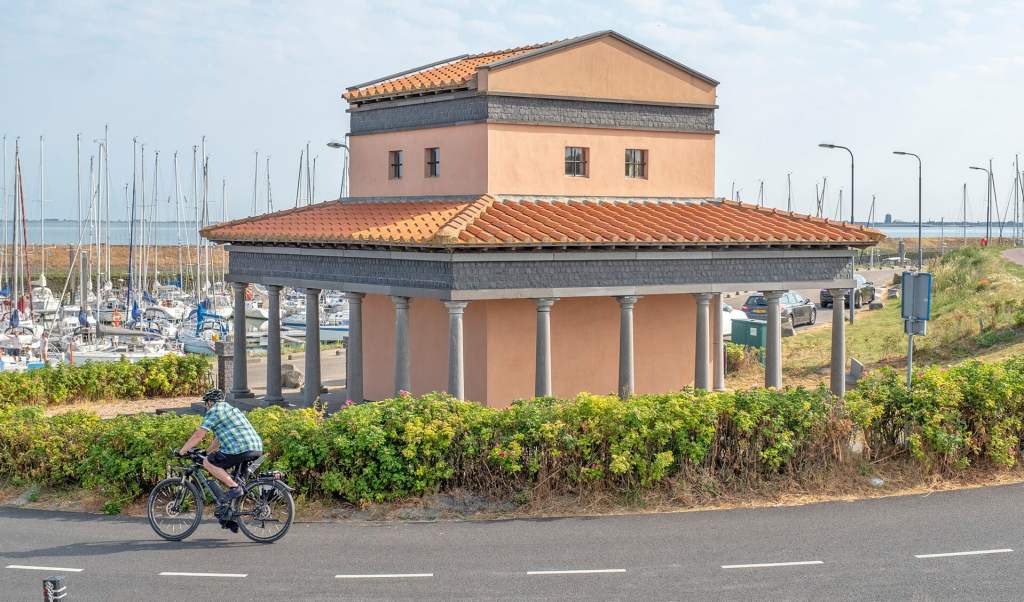
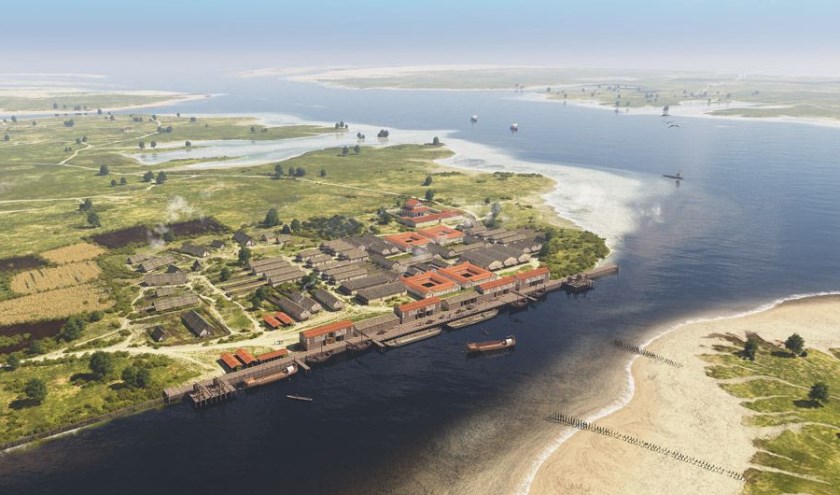
In the ’70s of the twentieth century, near the town of Colijnsplaat at the River East Scheldt, in the northeast of Walcheren, fishermen caught stone instead of fish. Again, these were votive altars dedicated to the goddess Nehalennia. In total, 330 altars and altar fragments were recovered. Perhaps this temple complex was part of the Roman port named Ganuenta. This complex, too, is dated between ca. AD 188 and 227.
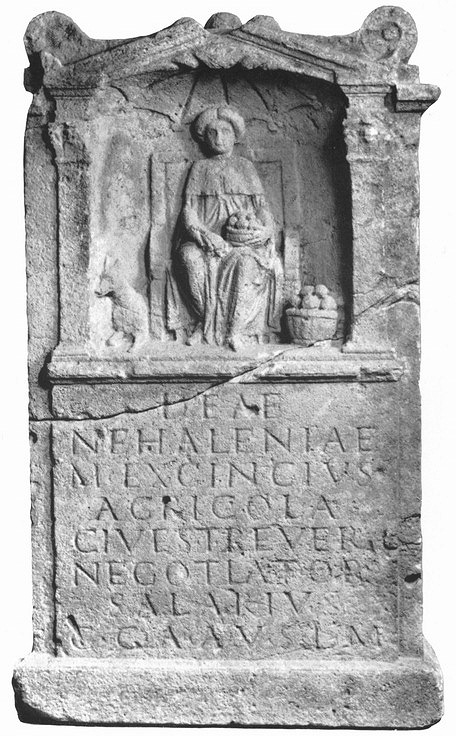
Nehalennia was worshiped in Roman times. She was perhaps a native Celtic-Germanic goddess. The name may mean ‘goddess who lives by the water.’ For sure, she was a guardian of skippers and traders who dared the sea crossing from Walcheren and Colijnsplaat to Britannia (Schuyf 2019). Nehallenia might stem from the Late Celtic word halen, meaning ‘sea’ or ‘salt water.’ Like other toponyms in the Netherlands containing the element hal or hel, such as Helevoetsluis and the former Latin Helinium for the joined mouth of the rivers Meuse and Rhine (Kerkhof 2016, Clerinx 2023). Note that alternative etymological explanations exist for the toponyms carrying the word ‘hel,’ namely ‘low’ or ‘hollow’, also a wet area connected with the ‘other world’. See our blog post When the Gate of Hell Opened at the Golden Necklace.
Another explanation for the name Nehalennia is that its first element, neha, derives from the Proto-Germanic nēhwa, meaning ‘near,’ while the second element may derive from lennōną, meaning ‘to weaken’ or ‘to stop.’ The name could therefore be interpreted as referring to a goddess who stopped or calmed stormy weather (Mees 2023). Others, however, argue that Nehalennia was not specifically a guardian of sailors, but rather a universal goddess associated with birth, death, and rebirth (Mecking 2023).
And that, indeed, is the fun of etymology: almost every scholar who takes a closer look seems to come up with a different explanation. As the discussion above illustrates, we cannot even agree on the origin of her name. Was Nehalennia a Germanic or Celtic goddess — and is her name Germanic or Celtic in origin? One thing is certain: taking a course in etymology at university can never go wrong.
Incidentally, Mees (2026) later suggested that Nehalennia may have offered safe passage not only to the living, but also to the dead. This interpretation is based on the presence of the dog at her side, which he connected with the account of dead souls being ferried across the English Channel, recorded by Procopius of Caesarea in the mid-sixth century AD.
Undoubtedly, dogs and wolves are often attributed qualities that connect the world of the living with the realm of the dead; see also our blog post How to Bury Your Mother-in-Law (Properly): Ancient Frisian Funeral Rites. Nevertheless, we believe that this may instead reflect a universal tradition, familiar from the Greek myth of Charon, the ferryman who carried the dead across the River Styx to the world of the dead. See also our blog post Rowing Souls of the Dead to Britain — The Ferryman of Solleveld.
Traders from especially Cologne, but also from present-day Nijmegen, Tongeren, Trier, and from northern and central Gallia, all offered here to the goddess Nehalennia for safe passage. Even merchants as far from Augst in modern Switzerland did. Offerings could consist of breads, dolls of dough, fruits, etc. Trading goods were, among others, locally produced salt, allec (a kind of garum or fish sauce/oil), and chalk. But also the transport of wine from the Upper Rhineland to Britannia. The Neumagen wine barge, a stone representation dated to the early third century AD, gives an idea of these traders. It is kept in Trier.
Two of the fished-up inscriptions read:
DEAE NEHALENNIAE OB MERCES RECTE CONSERVATAS M SECUND SILVANUS NEGOTIATOR CRETARIUS BRITANNICIANUS VSLM
To the goddess Nehalennia, for merchandise safely preserved, M[arcus] Secund[inius] Silvanus, a trader in pottery to Britannia, VSLM [willingly and deservedly fulfilled his vow]
DEAE NEHALENIAE M EXGINGIUS AGRICOLA CIVES TREVER NEGOTIATOR SALARIUS CCAA VSLM
To the goddess Nehalennia, M[arcus] Exgingius Agricola, a citizen of the Treveri [i.e. Trier], a salt merchant of CCAA [Colonia Claudia Ara Agrippinensium, i.e. Cologne], VSLM [willingly and deservedly fulfilled his vow]
Not solely merchants in allecarii, salarii et vinarii ‘fish sauce, salt, and wine’ made the sea crossing. Frisian tribesmen on their way to, for example, Hadrian’s Wall to join the Imperial Roman Army as mercenaries, also crossed the sea from Walcheren and Colijnsplaat to Britannia. See our blog post Frisian Mercenaries in the Roman Army. Fighting for Honour and Glory to learn more about these mercenaries.
In sum, Domburg and Colijnsplaat are a crossroads of peoples and goods from the upstream river areas of the Rhine, Meuse, and Scheldt, from the populous salt-marsh area in the north of Germany and the Netherlands, and vice versa from Britannia.
In the year 1715, extreme weather struck again. Once more, the pagan past of Walcheren revealed itself. This time it was at a very low tide that an image of the Roman goddess Victoria was presented, together with some remains of a temple. Although she is the goddess of victory, it missed her head. The decapitated image stood on the beach for some time before it was placed inside the thirteenth-century church of the town of Domburg. An act of paganism still?
In the year 1848, the church of Domburg was — understandably given the fact it had became a pagan storehouse — struck by lightning, not only destroying large parts of the church but also the remaining body of the headless goddess Victoria and many of the votive altar fragments found earlier, which were stored in the church, too. This strike of lightning proves, by the way, why we should not buy the experiments and scientific explanations of Benjamin Franklin on electricity two centuries ago. It is divine judgment, beyond any doubt. Find out in our blog post Bill Clinton: “I Did Not Have Financial Relations With that Village” why lightning strikes Frisia often.
The current province of Zeeland, including Walcheren, depopulated in third quarter of the third century AD. Mainly due to deterioration of the landscape. It is the time the Romans also retreated more inland and southward. Only at the end of fifth century AD, the area was being re-populated again, starting with Walcheren.
2. The Middle Ages
Zeelandic Frisians — Pagans as Rough as the Sea
Alcuin, chronicler at the court of Charlemagne and author of the Vita Willibrordi ‘life of Saint Willibrord’ dated ca. AD 796, described Willibrord’s missionary achievements in Frisia at the end of the seventh century AD. In his Vita, Alcuin says that when Saint Willibrord went to Frisia to convert the people, he came ashore on the island of Walcheren. Alcuin also described how Willibrord destroyed a representation of an idol on Walcheren. According to Abbot Thiofrid of the Abbey of Saint Willibrord in the town of Echternach in Luxembourg, it did not go off without a hitch. In Thiofrid’s Vita sancti Willibrordi, written in ca. AD 1103, Saint Willibrord was hit on his head by the sword of one of the guards of the temple of this idol. His blood fell on a stone.
According to local tradition, it was at the village of Westkapelle that Willibrord first set foot on Frisian soil and performed his legendary feat of strength. The eleventh-century AD chapel there was said to have preserved a piece of stone from the temple bearing a stain of Willibrord’s blood. According to the tradition, the wound was inflicted with a sword after Willibrord had destroyed and thereby desecrated the pagan sanctuary. The stone may in fact have been a reused Roman votive altar (Henderikx 2021). Further support for the local tradition was provided by the Abbey of Echternach, where Saint Willibrord is buried, which donated several bone fragments of the saint to the chapel. A freshwater spring in the nearby dunes was also traditionally named after Saint Willibrord, further strengthening the local association with his arrival.
Yet the identification of Westkapelle as the place where Willibrord came ashore is probably not justified. Scholars generally place Walichrum, the settlement where Willibrord is thought to have landed, close to the present-day town of Domburg than to Westkapelle.
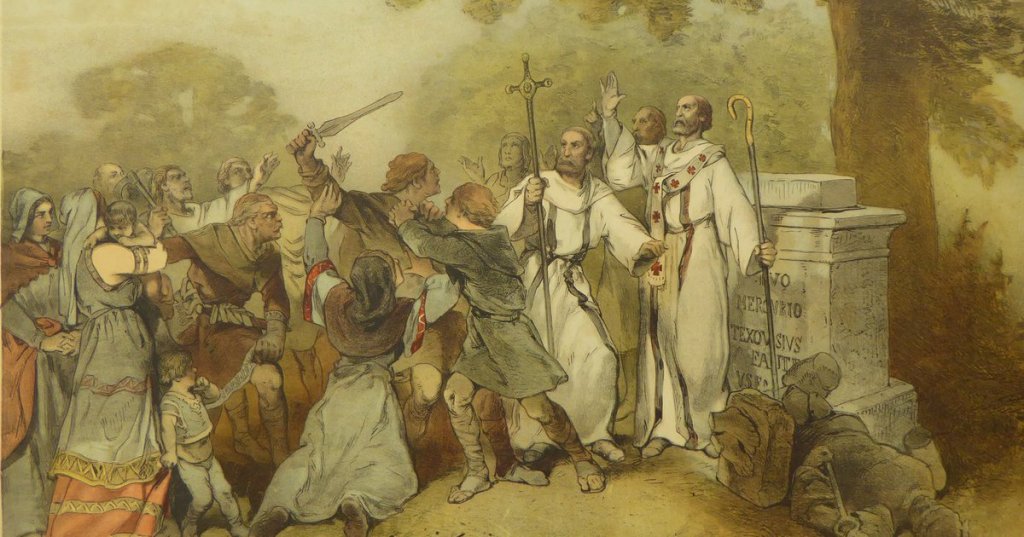
Because of the persistent heathen practices of the people on the island of Walcheren, Bishop Frederick of Utrecht (ca. AD 780–835) was ordered by Emperor Louis the Pious to travel to the island in order to refrain the people from returning to heathendom. Louis must have read the Book of Exodus and knew how susceptible the flock was to idolatry and golden calves.
Incidentally, Frederick was of Frisian descent, from the village of Sexbierum in the province of Friesland. Legend even has it that his lineage was that of the legendary King Radbod. A few centuries later, another bishop from near Sexbierum would become the bishop of Utrecht, namely Hartbert of Bierum. He held this office from AD 1139 until 1150. For more about Bishop Hartbert, check our blog post The Abbey of Egmond and the Rise of the Gerulfing Dynasty.
Anyway, when in the ninth century AD, rumour had it that men on the island of Walcheren married their nieces, or their own sisters, and even their mothers-in-law, action was urgently needed. This, according to the original mid-ninth century AD Passio Friderici ‘the passion of Frederick’, of which monk Otbert (died in AD 1119) was possibly the author of a rewritten or paraphrased version:
Est enim insula Walachran nominata, tibi, ut reor, satis nota, in qua, proch dolor! quod ad meas nuper devenit aures, quisquis neptem aut, quod peius est, sororem vel ipsam in matrimonio ducit genitricem.
How Bishop Frederick of Utrecht died is unclear, but not while peacefully enjoying his old age. One story is that he was killed by the heathen people of Walcheren during his mission trying to turn the tide of people reverting to paganism. Another story is that he was assassinated in his own church whilst celebrating Mass. This murder allegedly was ordered by Empress Judith of Bavaria because it had been Bishop Frederick who publicly criticized the empress’s incestuous way of life. Sometimes the life of a steadfast and principled clergyman was asking for trouble.
Whatever the true story was, the eleventh-century AD text of the Passio Friderici by Otbert illustrates that in the ninth century AD, Walcheren was still not deeply converted to Christianity. Another text, the early-eleventh-century AD Vita Bavonis confessoris gandavensis, ‘The Life of Saint Bavo of Ghent’, mentions that the Frisians, that is, those living in West Flanders and Zeeland, were numerous and strong but weak in their faith. In this Vita, the Frisians are also reviled because they did not seem to respect the property of the Abbey of Ghent. Instead, they simply took possession of land or used it to graze their livestock without permission.
INTERMEZZO
Veneration of Dutch-Frisian Saints in Belgium — After the Reformation of the northern Netherlands in the sixteenth century AD, many relics of Roman Catholic saints were brought into safety to the south where the believe still was dominant. This explains why a typical Dutch saint like Lidwina from the town of Schiedam, and the Frisian abbots Frederick and Siardus of Friesland are being venerated in Belgian churches (Caspers 1997).
Another, almost absurd story about the ungodly Frisians of the province of Zeeland comes from the Gesta episcoporum Cameracensium, ‘The Deeds of the Bishops of Cambrai’, written in the mid-eleventh century AD. It recounts the behaviour of Frisians living along the coast. Since the account comes from the diocese of Cambrai in northern France and concerns an event that supposedly took place in the diocese of Utrecht, referring to the Frisians living in what is now the province of Zeeland. The story tells how these Frisians hardly ever received communion at Easter. It goes as follows:
One time, when the priest urged his congregation to take communion once again, the chieftain of the village was fed up with it. He cursed the whole heavenly ceremony and exclaimed that he preferred to drink lots of beer instead. The chieftain turned his words into deeds and got very drunk. However, when he mounted his horse, he fell off it and broke his neck. The villagers buried their chieftain in the graveyard of the church. When Bishop Adalbold of Utrecht heard about what happened, he personally travelled to the place and ordered the ungodly body to be dug up and removed from the consecrated grounds of the church, even though the body had already been lying there for two weeks. With a rope around the chieftain’s feet, the body was dragged a mile outside the village. The entire way, the dead chieftain was throwing up beer as if he had just been drinking (Bremmer & Mulder-Bakker 2022).
In the early twelfth century AD, Abbot Thiofrid of Echternach, in his Vita metrica sancti Willibrordi episcopi Traiectensis, ‘The Metrical Life of Saint Willibrord, Bishop of Utrecht’, also provides a less-than-flattering description of the Zeelandic Frisians of Walcheren:
“This is a wild people who fear neither laws nor ordinances, who are unaccustomed to yoke, authority, or rein, stubborn by nature, and easily moved like the waves of the sea, which foam around the island. (…) But this people of Walcheren is happier because of these qualities, because it is stubborn, hard, and rough, because it is like the waves of the sea and the sea follows in its fickle state of mind, because it is in no way hindered by rule or laws, because there is nothing that it fears and it learns only through miracles (…)” (KZWG 1982).
A final description of the people of Zeeland comes from the twelfth century AD: maritimo agresti et indomito populo, id est Selandere, which translates as ‘the seafaring, rural, and untamed people, namely, the Zeelanders’ (De Graaf 2004).
Its Pagan History Revealed
It is the saying ‘Seagull, seagull, sit on the sand, it’s never good weather when you’re on land‘ which expresses that weatherproof seagulls only shelter on land during heavy storms while fishermen drown at sea, and their bodies will be washed up on the beach soon. The seagull as a harbinger of doom; see our blog post Rats with Wings, or Masters of the Sky? to discover more symbolic meanings of seagulls.
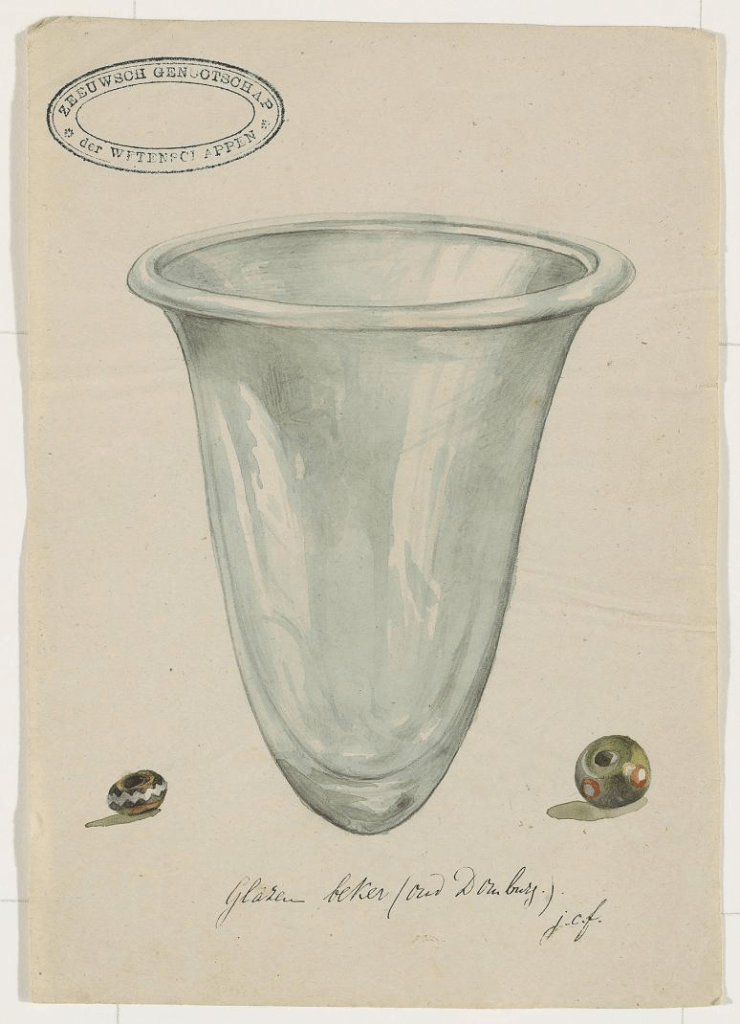
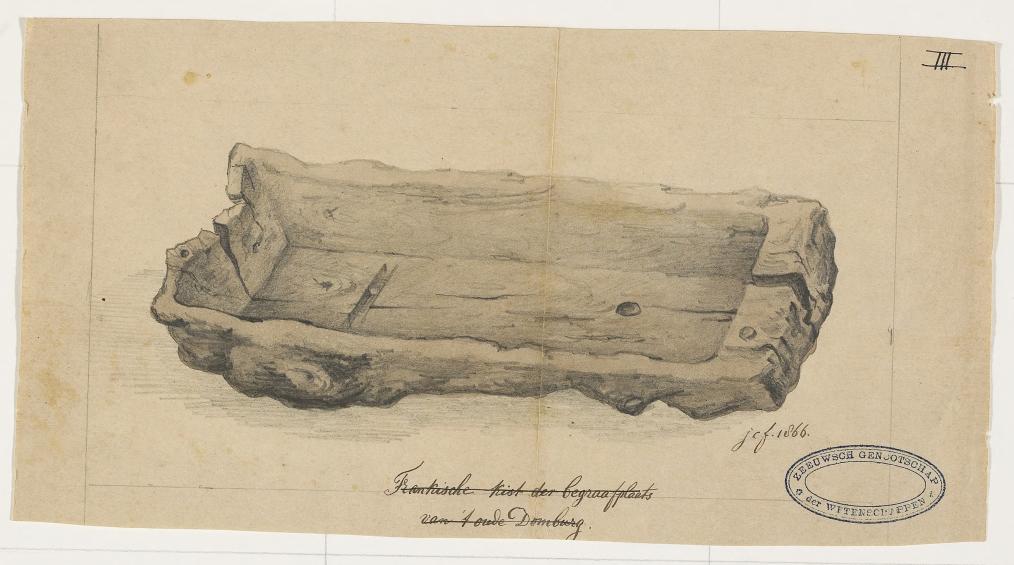
In the year 1687, after a foul storm, the heathen history of Walcheren revealed itself yet again. This time it was skeletons and coffins made of thick wood. The coffins contained grave gifts such as necklaces with coins as amulets, drinking cups, and silver knives. Grave goods are a typical pagan practice; therefore, the graves probably date before ca. AD 700. With high tide, the salty sea returned and hid the zombies and their coffins back into the depths of the dark brown water again. A few more times, the remains of these graves and the settlement emerged from the sea, namely in the years 1795, 1817, 1832, and 1866. Since then, they seemingly have disappeared forever.
More early-medieval cemeteries have been found around the town of Domburg, namely at Hooge Hil, Duinvliet, Westhove, and at Berkenbosch. These graves contained grave goods as well, like (Domburg-type) brooches, keys of women, pottery, and coins. Coins are mostly the so-called Porcupine-type sceattas ‘pennies’, a Frisian coin. See also our blog post Porcupines Bore U.S. Bucks. The Birth of Economic Liberalism to find more information on this dollar of the Early Middle Ages. Note that the word hil or hille in the toponym Hooge Hil is another word for a terp, a manmade mound. Hillen can be found on the former island of Hoeksche Waard in the province of Zuid Holland as well.
For decades now, the beaches around the town of Domburg have been a very popular holiday destination. Men dressed — the horror — in shorts, coming from Belgium, Germany, and the Netherlands, flock in large numbers to the Walcheren coast once again. But be warned. When standing in the sea and something tickles your feet, do not immediately think it is an angry lobster attacking you. It might just as well be an innocent Viking zombie raising its ugly head to say “hello.” Probably, the plankton-filled water is too brown to see what it is anyway, so you will never know what touched you.
Time to set our sights on those Vikings.
Walichrum a Viking Bridgehead
After the Romans had retreated inland and southward during the course of the third and fourth centuries AD, the new Frisians took advantage of the opportunity. From around the sixth century AD onward, they expanded their influence south of the River Rhine. This meant that the stretch of coastline from the present-day town of Rijnsburg — meaning ‘Rhine burh’ — in the Netherlands to the sea inlet of Sincfala in West Flanders also fell within the sphere of influence of Frisia. Frisian law, the Lex Frisionum of around AD 800, was the law that applied in these areas.
Sincfala is where the estuary of National Park the Zwin is located today, and it is also the starting point of the Frisia Coast Trail. For more about Flemish-Frisia, go to our blog post The Frontier Known as Watery Mess: The Coast of Flanders.
Extending their control southward should, however, not be regarded too much as a heroic achievement of the Frisians. At the time, much of the land along the North Sea coast of what is now the province of Zuid Holland was sparsely populated.
Some have argued that the Suevi tribe colonized Walcheren at the beginning of the sixth century AD. This may simply be a case of wishful thinking, based too heavily on the superficial similarity between Zeeuw, the Dutch term for the people of Zeeland, and Suevi. A more plausible, although still speculative, explanation for the origins of the Zeeuwen is that the tribes living in the southwestern Netherlands were related to the Frisii or Fresones of the north, or perhaps even belonged to the same broader tribal group as the Frisians. They may have been partly descended from the Frisiavones, who continued to inhabit the region. Perhaps this also helps explain why, after the Migration Period, Frisia emerged as a region stretching along the Dutch and German North Sea coasts.
The archipelago of what is now the province of Zeeland and the coast of West Flanders must have been a familiar habitat for medieval Frisians, comparable to the salt marshes of the terp regions of northern Germany and the northern Netherlands. Control over the mouths of the major rivers — the Rhine, Meuse, and Scheldt in the west, as well as the Ems and Weser farther north — was highly lucrative for the seafaring and trading Frisians. The island of Walcheren, situated in the estuary of the River Scheldt, was no exception. At the time, the West Scheldt was not much more than a modest stream known as the Honte. More than a thousand sceattas have been found on Walcheren, the majority of them of Frisian origin.
The magnitude of trade between the Continent and the British Isles during the Early Middle Ages, roughly between AD 600 and 900, is slowly becoming clear through archaeological research. Given the scale of Frisian-type coin production, Frisian merchants must have been central intermediaries in this free trade. Coins were minted especially at the emporium of Dorestad, in the northern terp region, and on the island of Walcheren. This money was used to finance the export of goods, among others, from England to the Continent. The number of coins in circulation is mind-boggling and may have amounted to a staggering 50 million sceattas, most of them from Frisia. See more about Frisian trade in our blog post mentioned earlier, Porcupines Bore U.S. Bucks. The Birth of Economic Liberalism.
The settlement of Walichrum was probably located between the small modern towns of Domburg and Oostkapelle, where the thirteenth-century AD castle of Westhove stands today. Walichrum means ‘wet sandy ridge’ and, although the name originally referred to the settlement, it was later applied to the entire island (Van Heeringen 1998). Walcheren had an additional strategic value compared to other trading settlements. From the island of Walcheren, the North Sea could be crossed most easily to the British Isles, as we have seen, and this had already been the case since Roman times. Moreover, whoever controlled Walcheren also controlled the mouths of the rivers Scheldt and Meuse. The island’s strategic importance had already been recognized by the Romans.
Moreover, Walcheren could be defended effectively as well. It was situated on a high ridge behind the dunes, connected to the River Scheldt by a creek, and surrounded by tidal marshes and the sea.
The Count of Flanders, Robert I, nicknamed Robert the Frisian, also experienced the island’s fierce resistance. In AD 1067, the Frisians who had remained on the island reportedly defeated his professional army. Of course, some readers may argue that the victory of the Frisians of Walcheren was achieved with the help of Saint Willibrord, whose relics were carried into battle. This is the version of events described in the Vita sancti Willibrordi by Abbot Thiofrid, which we mentioned earlier.
According to the Gesta Herwardi, ‘The Deeds of Hereward’, however, written by the monk Richard of the Abbey on the Isle of Ely between AD 1109 and 1131, it was instead Count Robert I who won the battle. Robert’s army consisted of 3,000 men, but the Frisians were more numerous.
A third possibility is that there were, in fact, two battles between the Zeelandic Frisians and the Count of Flanders, both of which were lost by the count. The first battle took place in AD 1067, followed by a second a few years later. The conflict as a whole centred on the Frisians’ refusal to pay taxes to the Count of Flanders, who had officially become their lord in AD 1012 (Nieuwenhuijsen 2016, 2022).
Hereward, by the way, was an Anglo-Saxon nobleman with the intriguing nicknames Hereward the Wake, Hereward the Outlaw, and Hereward the Exile. Kind of a Hengist type. In England, he is especially known for his battles against the Normans who invaded England in the famous year AD 1066. But many more adventures are told about this vigilante. He fought in the army of Count Robert the Frisian, Count of Flanders, during the battle of Walcheren in AD 1067.
Centuries later, in 1809, the strategic features of Walcheren were proven once again. This time, it was the British army that attempted to invade the island in order to gain control of the River Scheldt. It was an utter disaster, too, and the British were defeated by the Zeeuw ‘natives’. Even as recently as the Second World War, the German army had entrenched itself on Walcheren, controlling the River Scheldt and hindering the advance of the Allies in the autumn of 1944 during the Battle of the Scheldt. It was one of the heaviest battles fought on Dutch territory, and it was necessary to open the port of Antwerp to Allied shipping.
In other words, Walcheren has been a wanna-have island for two millennia, and it flourished especially during the seventh and eighth centuries AD. And the island is still flourishing today, earning most of its money from the hordes of beachgoers who descend on it every summer.
Back to the Middle Ages.
The area of the great rivers was an apple of discord between the Frankish kingdoms of West, Middle, and East Francia, the Frisians, and the Danes. Empires, kingdoms, Christendom, heathendom, trade, tribes, and peoples all came together in this relatively small but lucrative area. You could say it was the Balkans of Northwest Europe. And some of the biggest names of the age were involved: Charlemagne, Louis the German, Charles the Bald, Louis the Pious, Lothar, Rorik of Dorestad, Ubba the Frisian, Ivar the Boneless, Rodulf Haraldsson, Harald Klak Halfdansson, Godfrid the Sea-King, Olaf Tryggvason, Willibrord, Apostle of the Frisians, and others.
Undoubtedly — although, strictly speaking, this is again speculation — the known Frisian kings Aldgisl and Redbad may also have had some involvement in the early days. Walcheren, like the trading ports of Dorestad, Medemblik, Witla (exact location unknown, but somewhere in the estuary of the River Meuse), and Meinerswijk, was simply too important for a king of Frisia to remain indifferent to.
When Halley’s Comet Almost Hit Earth
In AD 837, Halley’s Comet, which passes by Earth every seventy-five years or so, made another appearance. This time, it may have passed as close as five million kilometres, by far its closest approach ever. It was visible for three days. And who knows, perhaps the heathen people of Walcheren associated the sighting of the comet with the Wild Hunt of Woden. But most of all, let us thank all possible gods that our planet is so tiny, and therefore so difficult for comets and large meteors to hit.
Sightings of Halley’s Comet were recorded in China, Japan, Germany, the Byzantine Empire, and the Middle East around that time. Emperor Louis the Pious feared that it was a sign of his impending death. According to the Annales Fuldenses, the ‘Annals of Fulda’, it was Astronomus, a member of Louis’ court, who advised the emperor not to be as frightened as the heathens were by signs in the heavens.
The Annals of Xanten tell us the following about this natural occurrence:
Ingens turbo ventorum frequenter erumpebat, et stella cometes visa est nimium ex se mittens fervorem in oriente coram humanis obtutibus quasi per tres cubitos, et pagani vastaverunt Walicrum multasque feminas inde abduxerunt captivas cum infinita diversi generis pecunia.
Immense whirlwinds frequently broke out, and in the east a comet was seen, emitting a great glow, seemingly three cubits long to the human eye; and the pagans laid waste to Walcheren and carried off many women as captives, along with an immense amount of goods of various kinds.
The Battle of Walcheren. It took place on 17 June 837, when a Viking army led by the two warlords Rorik and Harald Junior attacked Walcheren, by then a military stronghold of the Franks.
INTERMEZZO
What Preceded the Battle of Walcheren — After the successful Frisian expansion southward following the Migration Period and into the Early Middle Ages, the Frisians suffered multiple defeats at the hands of the Franks during the eighth century AD. Around AD 690, the Frisians had already lost the estuary of the River Scheldt to the Franks. The Frankish king, the Abbey of Saint Bavo in Ghent (Flanders), and the Abbey of Saint Willibrord in Echternach (Luxembourg) all got a piece of the pie and acquired possessions on Walcheren.
In AD 736 (or thereabouts), the heathen Frisians and their Duke or King Bubo, also Poppo, were defeated deep in their own heartland at the River Boarn (see our blog post The Boarn Supremacy). That hurt. Irritated and slightly naive, the Frisians killed the highly influential Archbishop Boniface in AD 754 near the present-day town of Dokkum. In AD 772, Charlemagne destroyed the sacred oak tree Irminsul of the neighbouring Saxons. After a decade of fighting, Charlemagne had 4,500 Saxons beheaded at Verden in AD 782. Despite, or perhaps because of, these atrocities, the Frisians stubbornly joined the large-scale uprising of their cousins, the Saxons, under the command of the famous nobleman Widukind in AD 784 and 785. In the end, the Franks were victorious over both the Saxons and the Frisians.
We can conclude that the eighth century AD was a terribly bloody mess in the northern regions, and must have given the Franks quite a reputation. Nevertheless, the Franks prevailed where the Romans had failed, conquering the lands north and east of the River Rhine, those of the Saxons and the Frisians.
The defence of Walcheren in AD 837 was the responsibility of Count Ekkehard, also written as Eggihard, and — interestingly — the Danish commander Halfdan Hemming. Both were killed, and the island of Walcheren was lost to the Franks. The Vikings would remain the de facto rulers of Walcheren for nearly the rest of the ninth century AD. This set a precedent for the Viking strategy they would soon apply at the mouths of the rivers Thames, Loire, and Seine as well.
The defeat at Walcheren was no minor detail for the Franks and their large and proud kingdom. Louis the Pious immediately postponed his travels to Italy and went to his kaiserpfalz in Nijmegen in the province of Guelders. The Frisians, specifically the skippers and their dukes, were blamed by a livid Louis for the whole disaster. They were said to have been too slow to organize the defence of the island and had failed to make their ships available to the Franks. The Frisian count of the pagus, ‘territory’, of Westergo, Gerulf the Elder, was accused of conspiring with the Danes. Louis took away his fiefs in villae Cammingehunderi, that is, the area between the present-day towns of Franeker and Berlikum in the province of Friesland.
Louis’ accusations might have been correct. Why would the pagan Frisians be disloyal to their pagan Danish cousins, with whom they had also been entangled in maritime trade for so long, and instead help the Franks, whom they had resisted and feared for so long? No, the Frisians of Walcheren were not yet fully integrated, loyal subjects of Francia, and sabotage could indeed have been their strategy.
If you are interested in how military defence against seaborne threats was organized, including the so-called heercogge, check out the intermezzo ‘Conscription in the Early Middle Ages’ in our blog post The Frontier Known as Watery Mess. The Coast of Flanders.
One year after the devastating flood of AD 838, and two years after the defeat at Walcheren, the island was transferred to the Kingdom of West Francia under Charles the Bald. King Lothar of Middle Francia did not agree with these arrangements and sought to possess all of Frisia, including the areas south of the River Rhine. Therefore, King Lothar unlawfully granted the island of Walcheren as a benefice to the Danish warlord Harald the Younger. This was against the sore feelings of the chronicler Prudentius, who was, of course, loyal to his boss. The Annals of Saint Bertin for AD 841 state the following:
To Harald who with other Danish pirates for a number of years, to his [Lothar’s] advantage, had done so much damage to Frisia and other coastal countries of the Christian world in order to harm his father [Louis the Pious], he gave for this service the Walcheren and the neighbouring places in fief […] A deed which certainly deserves every abhorrence that people who had brought evil on to Christians were placed in charge of Christian countries and people and of Christ’s Church.
Annals of Saint Bertin
It was a so-called ‘magnificent gift’, since from Walcheren an immense trade network could be protected, controlled, and exploited (Roesdahl 2016). Two years earlier, in AD 839, King Lothar had already given the emporium of Dorestad to Harald and his brother Rorik. All this was part of Lothar’s strategy to obstruct his own father, King Louis the Pious; Lothar was personally acquainted with Harald (De Maesschalck 2012).
Three years after the death of Louis the Pious, the Frankish Empire was divided into three parts by the Treaty of Verdun in AD 843. Lothar received the kingdom of Middle Francia, later also called Lotharingia. Frisia was split in two by the treaty as well: Frisia north of the River Meuse belonged to the kingdom of Middle Francia, while the territory south of the river fell to West Francia. Probably, the borders that cut Frisia in two in what is now the province of Zeeland were still based on the former Roman districts.
With the Treaty of Verdun, King Charles the Bald of West Francia gave the benefice of Walcheren to the Danish warlord Godfrid Haraldsson, who may later have been succeeded by the warlord Rodulf Haraldsson. The region of the modern province of Zeeland had become a border area where different kingdoms, interests, and powers came together. As a result, the island of Walcheren became a zone, a robber’s nest, from where the Vikings could more or less freely do their thing. Attacking the emporium of Quentovic, for example. Moreover, they could organize an invasion army and fleet to conquer most of the Anglo-Saxon kingdoms of Britannia, as we will see further below. The island of Walcheren: the medieval version of pirate lairs such as Port Royal in Jamaica and Macao on a peninsula in the Pearl River in China.
From the moment Lothar became king of Middle Francia in AD 843, he no longer honoured the agreements he had made earlier with the brothers Harald the Younger and Rorik. This led to a series of attacks by the warlord Rorik on the Frisian territories belonging to Middle Francia (De Maesschalck 2012). His brother Harald the Younger had died in the meantime. In the end, in AD 850, King Lothar had no alternative but to accept Rorik as his vassal once again. “If you can’t beat them, join them,” King Lothar might have thought. Lothar went even further. He gave West Frisia, more or less corresponding to the present-day provinces of Noord Holland and Zuid Holland, and the emporium of Dorestad to Rorik. East Frisia, the present-day region of Ostfriesland, was given in fief to the Danish warlord Harald Klak Halfdansson, who, by the way, was also known as ‘the Bile of Christianity.’ This keep-your-enemy-close strategy of the Franks turned out to be quite successful for a while.
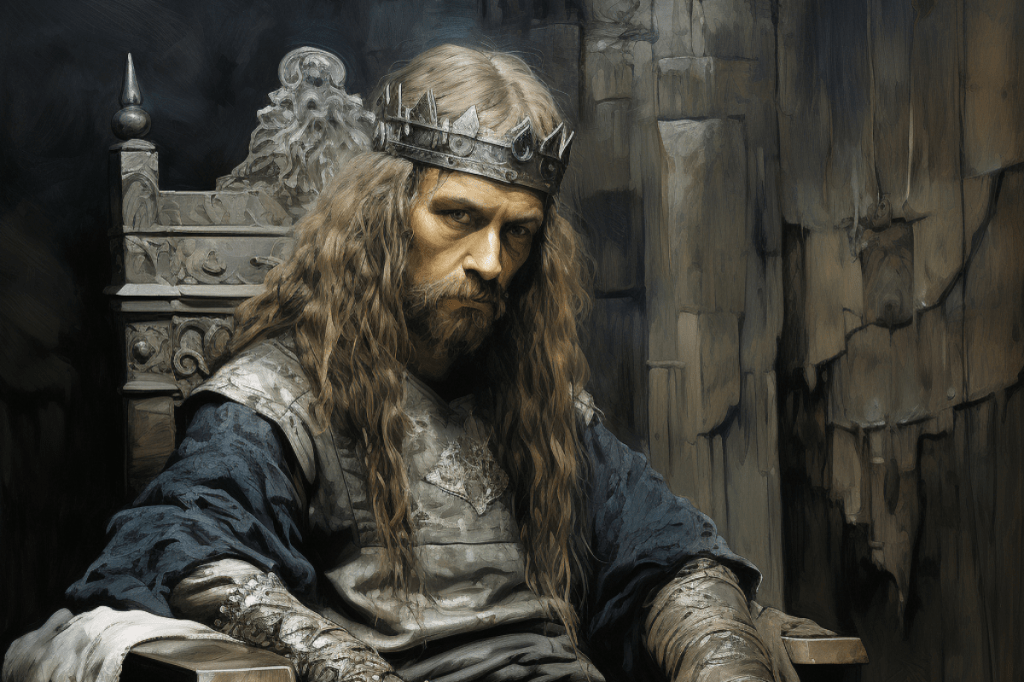
So, Viking warlords wielded axe and power over the estuaries of the rivers Scheldt, Meuse, Rhine, and Weser, under the authorization of the Frankish kingdoms of West Francia and Middle Francia. Well done. Cannot say otherwise.
After most parts of West Frisia had been given in fief to Danish warlords, almost no killings or looting took place in Middle Francia anymore. Instead, the Vikings shifted and intensified their activities towards the British Isles and West Francia, notably in the region of Flanders. Poor Flanders — it would remain a battleground for foreign powers for much of its history. The chronicles describe the Northmen attacking the region of Flanders in those years: “Day and night they did not cease from putting churches to the flames and slaughtering the Christian people, (…) and all the monks, canons, and holy women between the Scheldt and the Somme decided to flee along with the bodies of their saints and people of all ages and conditions” (Arnold 2024).
Only under the rule of Margrave Baldwin II of Flanders (ca. AD 865–918), nicknamed Boudewijn de Veroveraar, ‘Baldwin the Conqueror’, and, after his grandfather King Charles the Bald, Baldwin the Bald, were the Vikings finally pushed out of Flanders. Inspired by the Anglo-Saxon boroughs (compare burg or burcht in Dutch), Baldwin built a series of castella, or ‘ring fortresses’, along the North Sea coast at the end of the ninth century. These included Oostburg, Bruges, Veurne, Sint-Winoksbergen, and Broekburg in Flanders, and Souburg, Middelburg, and Burgh in the province of Zeeland. The already existing forts dating from Roman times, Aardenburg and Oudenburg, were reinforced as well (De Maesschalck 2012). These coastal fortifications were not waterproof, however. According to an Icelandic poem, Olaf Tryggvason, who ruled as king of Norway at the end of the tenth century AD, turned the people of Walcheren into corpses (Kuipers, Jensma & Vries 2011).
The area of the present-day provinces of Friesland and Groningen, belonging to the kingdom of Middle Francia, remained free from Danish rulers. Vikings did attempt to attack this area a couple of times, though. It was often a complete catastrophe for the Norsemen. Siegfrid, a former commander of the Great Heathen Army and responsible for the siege of the city of Paris, was killed while trying. The two warlords Björn Ironside and Rodulf Haraldsson, after having raided the British Isles and West Francia, made the same mistake and found Walhalla in the dark-blue, smelly mud of the salt marshes.
Rodulf’s attack near the town of Dokkum took place in AD 873. No fewer than five or eight hundred men — the numbers differ — from Rodulf’s warband were killed by the Frisians in the county of Albdagi, the pagus, ‘territory’, of Oostergo in the province of Friesland. The survivors of the Danish army had to pledge never to return to Frisia. They did not. Three strikes and you’re out was the clear message from the inhabitants of Mid Frisia.
Check our blog post Frisia, a Viking Graveyard for more details on these historical but lesser-known defeats of Vikings.
The Great Heathen Army
In AD 865, Norse armies gathered like an enormous thunderstorm before descending upon what is now England. This was four centuries after Hengist, the famous slayer of King Finn of Frisia — see our blog post Tolkien Pleaded in Favour of King Finn. An Immortalized Royal Tragedy — and his brother Horsa invaded the British Isles with their army of Angles, Jutes, and Saxons, very possibly departing from the coasts of Frisia. This is according to Bede’s influential eighth-century AD Ecclesiastical History of the English People.
The invasion of the Great Heathen Army took place two centuries before Britain would be invaded once again, this time by another Viking or Norseman: William the Conqueror, in the famous year AD 1066. In AD 1688, Britain was invaded yet again, and this time the invasion was staged from the province of Zeeland. Another William, William III of Orange, set sail from the Low Countries for Britain with an impressive army of more than 20,000 soldiers. King James II did raise an army to oppose William, but ultimately decided against engaging him in battle.
Poor Britain. What was left of the once-proud Kentish Invicta? Foreign armies seemed to invade at will for centuries — and we have not even mentioned the Romans yet. So, have a little compassion when it comes to Brexit and small boats with migrants crossing the English Channel. It is emotional. To be fair, however, Britain did defeat the Germans in the Battle of Britain during the Second World War.
Back to the particular invasion of AD 865. The Viking armies would unite into the much dreaded Mycel Heathen Here ‘Great Heathen Army’, and this army would ransack the Anglo-Saxon world for a stunning fourteen years. In the year AD 878, the Great Heathen Army was defeated by King Alfred of Wessex. A year later, in AD 879, the Viking chapter of the Scaldingi returned to its former base on the island of Walcheren. From here the Vikings started raiding the region of Flanders during the years between AD 879 and 892. In AD 892, they returned to England again. This was the end of Viking presence in the province of Zeeland, at last (Henderikx 2021).
It is generally accepted, including recent DNA research, that raiding was not the exclusive preserve of Norsemen, or Scandinavians. Men from other peoples also joined Viking ‘excursions’, most notably the Frisians when these trips headed west. For example, in AD 855, an army of Dani et Frisones, ‘Danes and Frisians’, landed on the island of Sheppey at the mouth of the River Thames. This is recorded in the authoritative Annales Lindisfarnenses, ‘Annals of Lindisfarne’. Recent archaeological research on Île de Ré in western France, where Viking remains have been uncovered, has also pointed to the presence of Frisians (Bolle, Ciesielski & Torchut 2025).
Evidence for Frisian participation in overseas raiding can also be found in Old Frisian codices and law books from, among others, the districts of Rüstringen in present-day Germany and Fivelgo in the Netherlands. These texts, dating from around the thirteenth century AD, still refer to Frisians participating in overseas raiding campaigns alongside their northern neighbours, although it is unclear whether these men were forced to participate or joined the expeditions as adventurers. Find out more about these Frisian fighters in our blog post Foreign Fighters Returning From Viking Warbands.
The initial three commanders of the Great Heathen Army were Hingwar, or Ivar the Boneless, Halfdan, and Ubba the Frisian, also recorded as Hubba and Ubbi fríski. Ubba was also mentioned by near-contemporary sources, namely the Annales Lindesfarnenses et Cantuarienses, around AD 1100 (Van der Tuuk 2025), as Ubba dux Frescorum, while Saxo Grammaticus referred to him as Ubbo Fresicus. Whatever his correct name was — and whether or not he was one of the sons of the legendary Viking Ragnarr Loðbrók — Ubba is said to have gathered his Scaldingi chapter in West Frisia before crossing with his enormous fleet to eastern England, using Walcheren as a ‘stepping stone.’
The Scaldingi, or Scaldi, were the Vikings associated with the Scheldt. Indeed, according to this tradition, the river itself took its name from these Vikings. Quite an achievement for a river.
Remember these facts when crossing the massive Oosterscheldekering, the storm surge barrier across the Eastern Scheldt. Visualize the ships of the Scaldingi — waiting for favourable winds before they could set sail — now sailing these waters towards England: long, narrow hulls cutting through the waves, shields lining the gunwales, armed men crowded on deck, and Ubba shouting above the wind. The tension among the crew must have been palpable as they sailed towards England.
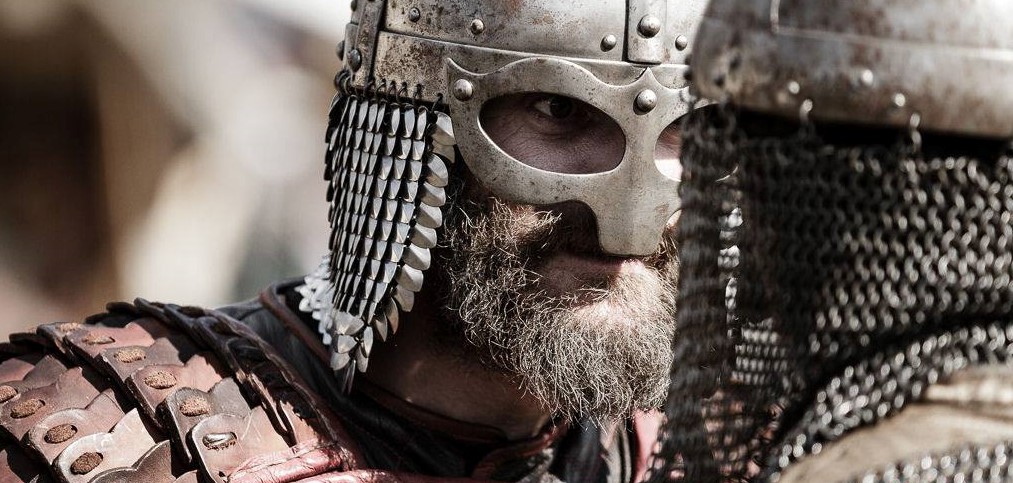
Ubba the Frisian fought during his career on both sides of the English Channel and eventually died in battle in AD 878, near Countisbury in Devon. According to the twelfth-century AD chronicler Geoffrey Gaimar, Ubba was buried in Devon in a mound called Ubbalawe, meaning ‘Ubba’s barrow.’ Local tradition likewise holds that Ubba was buried at Wind Hill near Lynmouth in Devon. Or was he instead one of the approximately 300 Vikings buried in the mass grave at Repton in Derbyshire? Could the body of a leader, found with a boar’s tusk between his legs, have been Ubba?
Anyway, no sea this time to reveal its contents. We must dig in earth. Quick!
Note 1 — More about the discussion whether Ubba was of Frisian descend in our blog post Foreign Fighters Returning From Viking Warbands.
Note 2 — Ubba the Frisian got a face with the Norwegian actor Rune Temte in the TV series The Last Kingdom, and with Scottish-Australian actor Jordan Patrick Smith in the TV series Vikings.
Further reading
- Arnold, E.F., Medieval Riverscapes. Environment and Memory in Northwest Europe, c. 300-1100 (2024)
- Bolle, A., Ciesielski, E. & Torchut, J.S., Des tombes inattendues à l’île de Ré témoignent d’échanges avec le monde nordique (2025)
- Booth, H., Which Zealand will it be? On navigable waters then and now (2026)
- Buijtendorp, T., De gouden eeuw van de Romeinen in de Lage Landen (2021)
- Buisman, J. & Engelen, A.F.V. (eds.), Duizend jaar weer, wind en water in de Lage Landen. Deel 1: tot 1300 (1995)
- Bremmer, R.H., “Thi Wilde Witsing” Vikings and Otherness in the Old Frisian Laws (2020)
- Caspers, C.M.A., Een stroom van getuigen. Heiligenleven en heiligenverering in katholiek Nederland circa 1500 – circa 2000 (1997)
- Clerinx, H., De god met de maretak. Kelten en de Lage Landen (2023)
- De Maesschalck, E., De graven van Vlaanderen (861-1384) (2012)
- Dhaeze, W., The Roman North Sea and Channel Coastal Defence. Germanic Seaborne Raids and the Roman Response (2019)
- Doolaard, den A., Walcheren komt boven water (1946)
- Graaf, de R., Oorlog om Holland 1000-1375 (2004)
- Halink, S., “Almost Like Family. Or Were They?” Vikings, Frisian Identity, and the Nordification of the Past (2022)
- Harkel, ten L., A Viking Age Landscape of Defence in the Low Countries? The ringwalburgen in the Dutch Province of Zeeland (2013)
- Heeringen, van R.M., The Construction of Frankish circular fortresses in the province of Zeeland (SW Netherlands) in the end of the ninth century (1998)
- Heerma van Voss, L., Michael Pye’s Edge of the World. Een succesvolle, maar mislukte geschiedenis van de Noordzee (2016)
- Henderikx, P.A., Land, water en bewoning. Waterstaats- en nederzettingsgeschiedenis in de Zeeuwse en Hollandse delta in de Middeleeuwen (2001)
- Henderikx, P.A., Walcheren en de Vita sancti Willibrordi van Thiofried van Echternach (2021)
- Henstra, D.J., Friese graafschappen tussen Zwin en Wezer. Een overzicht van de grafelijkheid in middeleeuws Frisia ca. 700-1200 (2012)
- IJssennagger, N., Central because Liminal. Frisia in a Viking Age North Sea World (2017)
- Kerkhof, P.A., Het raadsel van Nehalennia ontrafeld (2016)
- Klaesoe, I.S. (ed.), Viking trade and settlement in continental Western Europe (2010)
- Klerk, de A., Vlaardingen in de wording van het graafschap Holland 800-1250 (2018)
- Kok, A., Biografie van de Noordzee. Verhalen over leven met het water (2025)
- Kok, de G., Walcherse ketens. De Trans-Atlantische slavenhandel en de economie van Walcheren, 1755-1780 (2020)
- Koninklijk Zeeuwsch Genootschap der Wetenschappen, KZWG, Records (website)
- Kuipers, J.J.B., Jensma, G. & Vries, O., Nederland in de Middeleeuwen. De canon van ons middeleeuws verleden (2011)
- Leeuwen, van, J., Middeleeuws Medemblik: een centrum in de periferie (2014)
- Lewis, S.M., Rodulf and Ubba. In search of a Frisian-Danish Viking (2018)
- Looijenga, A. & Popkema, A. & Slofstra, B. (transl.), Een meelijwekkend volk. Vreemden over Friezen van de oudheid tot de kerstening (2017)
- Mecking, O., This ancient Dutch goddess was nearly lost to time—and rising seas (2023)
- Mees, B., Anglo-Saxon Britain and the Isle of the Dead. How long did memories of the goddess Nehalennia last? (2026)
- Mees, B., The English language before England. An epigraphic account (2023)
- Meijlink, B., Silkens, B. & Jaspers, N.L., Zeeën van Tijd. Grasduinen door de archeologie van 2500 jaar Domburg en het Oostkapelse strand (2017)
- Nieuwenhuijsen, K., Robrecht de Fries. Graaf van Vlaanderen, held van Holland (2022)
- Nieuwenhuijsen, K., Strijd om West-Frisia. De ontstaansgeschiedenis van het graafschap Holland; 900-1100 (2016)
- Pestell, T., The Kingdom of East Anglia, Frisia and Continental Connections, c. AD 600-900, 2014
- Pey, M., The edge of the world. How the North Sea made us what we are (2014)
- Roesdahl, E., The Vikings (2016)
- Rooijendijk, C., Waterwolven. Een geschiedenis van stormvloeden, dijkenbouwers en droogmakers (2009)
- Schuyf, J., Heidense heiligdommen. Zichtbare sporen van een verloren verleden (2019)
- Sicking, L. (ed.), Elke provincie een eigen gouden eeuw. De bloeiperiodes van Nederland (7de-21ste eeuw); Meijlink, B., Zeeland. De Gouden Eeuw van de Vikingen (9de eeuw) (2024)
- Spiekhout, D., Brugge, ter A. & Stoter, M. (eds.), Vrijheid, Vetes, Vagevuur; de middeleeuwen in het noorden; Bremmer, R.H. & Mulder-Bakker, A.B., Een christelijk venster op de middeleeuwse Friese landen (2022)
- Tuuk, van der L., Deense kapers op de kust (2006)
- Tuuk, van der, L., De Franken (2016)
- Tuuk, van der L., Ubbi de Fries. Scheldevikingen in het grote heidense leger (2025)
- Tuuk, van der, L., Vikingen. Noormannen in de Lage Landen (2015)
- Vinkenoog, H., Frisians in the Great Heathen Army (2020)
- Williamson, J., Who was Harald Klak, the first “Christian” king in the Nordic region? (2024)
- Winroth, A. The age of the Vikings (2014)


Prachtig geschreven, brengt het a allemaal tot leven.
LikeLiked by 1 person
Dank Ron!! Goed te horen
LikeLike