
On 25 March 2020, the COVID-19 pandemic was climbing toward its second peak. Uncertainty surrounded how destructive it would prove in the long term. How many family members and loved ones would it claim? It was a force of chaos and destruction that confronted us with the limits of our engineered world. Some declared it a punishment from God. Others saw it as Nature exacting a price for humanity’s destruction of the planet. Still others denied its severity, convinced that “they” were carrying out a grand scheme. Or was it simply the result of population density and global interconnectedness? Whatever its origins or underlying causes, had it been devastating enough, it would have left a lasting mark on the collective memory and behaviour of societies. And perhaps it did.
For the people living along the southern coast of the North Sea — that watery part of the world — the general anxiety and distress brought back to their unconscious ancient collective memories. Namely, the millennia-old memory of the fear of water. The balance between order and chaos. Between being safe or being submerged. Between cheerful birdsongs in the morning and massive violence during the night. A Wilde Jagd (‘wild hunt’), when the god Woden or the heathen King Radbod, and their dead warriors and dogs rage in the sky above the tidal marshlands. Similar watery notions were used to describe the pandemic: corona waves were sweeping through the lands.
It had been a while since the people of the West had been confronted with large-scale, life-threatening events. Times filled with great fear and horror. For a long time, big natural disasters had not taken place, and the threat of another great war was far away since the fall of the Berlin Wall in 1989. Smart and influential people even spoke of the End of History, and that the West had prevailed forever. Be that as it may, in historical perspective, this Western comfort is quite recent. Putting the socially traumatizing events of the great wars of the twentieth century aside, natural destructive forces always had a specific impact on the mentality of the people of the southern North Sea coast. From the region of Flanders (Belgium) to the region of Jutland (Denmark). From the town of Bruges to the town of Esbjerg. From the terp of Leffinge-Oude Werf in western Flanders to the terp of Misthusum in southwestern Jutland.
Keine der mitteleuropäischen Großlandschaften ist bis in die jüngste Vergangenheit so unblässig und nachhaltig umgewandelt worden wie die Flachküste der Nordsee zwischen dem Kanal und Jütland. Ein steter Kampf zwischen den Naturgewalten und dem Menschen hat sich hier in Erfolg un Verlust abgespielt.
Heinz Stoob (1964)
None of the major geographical regions of Central Europe has been transformed so continuously and profoundly, right up to the most recent past, as the flat coast of the North Sea between the English Channel and Jutland. Here, a constant struggle between the forces of nature and humankind has taken place, marked by both success and loss.
For two and a half millennia, the people along the southern North Sea coast have waged a relentless war against the water. This blog post explores the history of that fight, tracing how the constant threat of the waves shaped the unique mental roots, psyche, and mentality of coastal dwellers. By journeying through archaeology, history, anthropology, and psychology, we will uncover a profound regional ambivalence: a culture that simultaneously fears the sea and places its ultimate trust in it. Ultimately, this ancient struggle is still relevant. Because — let’s be honest — who does not fear sea levels rising to destructive heights somewhere in the back of her or his mind these days?

This long-read blog post builds on Bernd Rieken’s seminal 2005 study, Nordsee ist Mordsee (‘The North Sea is a Murderous Sea’). To our knowledge, Rieken offers the first rigorous attempt to map the Frisian mentality and psyche by synthesizing depth psychology with social history. Undertaking this research required significant courage. Following the traumatic manipulation of regional identities by fascism and National Socialism nearly a century ago, psychological profiling of ethnic or regional groups became highly sensitive — particularly within Frisian historiography (see the Annex for further context). However, while Rieken frames these psychological traits as uniquely Frisian, we argue that many of these characteristics apply broadly to all coastal populations along the southern North Sea.
Beyond being the title of Rieken’s book, Nordsee ist Mordsee is a common idiom among Wadden Sea coastal dwellers in Germany. It is also the title of a classic 1976 coming-of-age film set in Hamburg. The movie famously culminates with two fourteen-year-old boys escaping on a stolen sailboat, sailing down the River Elbe toward the sunset and the vast, untamed North Sea. The song played during this closing scene is Ich Träume Oft Davon, Ein Segelboot Zu Klau’n by Udo Lindenberg.
During the Roman era, this stretch of the North Sea coast was a fragmented tapestry of Germanic tribes. Ancient accounts document the Ampsivarii, Angles, Cananefates, Chauci, and Saxons — though the ‘Saxon’ name was initially synonymous with sea-raiders — alongside the Frisiavones (Romanized Frisians) and the Frisii or Fresones (Frisians proper). As the region transitioned into the Early Middle Ages, centuries of migration and consolidation simplified this complex tribal landscape. By this point, only two dominant groups remained: the Frisians, who controlled the vast marshlands, and the Saxons, who settled primarily around the Dithmarschen region and the mouth of the River Elbe.
Currently, these are the Zeelanders/Zeeuwen, Dutchmen/Hollanders, that is, the region of Holland, the Frisians, the Groningers, the Ostfriesen, including the region of Butjadingen und Stadland, the Wurstfriesen, the Ditmarsians (Thiadmaresgaho), the Saxons, the Nordfriesen, and the Jutes. Perhaps the Westfriezen of the region of Westfriesland in the province of Noord Holland want to be listed separately from the Hollanders, but we have not checked that with them. All (sub)cultures share the characteristic of living in a dangerous strip of low-lying twilight land.
1. A History of Fighting Water
At the dawn of the Holocene interglacial period nearly 12,000 years ago, surging global temperatures triggered a rapid rise in sea levels. As the North Sea expanded across the ancient landscape, nomadic populations gradually retreated toward higher ground. However, around 600 BC (2,600 years ago), coastal communities refused to flee any further. Settlers along the salt marshes of the northern Netherlands and north-western Germany made a historic stand against the tides. Instead of retreating, they engineered artificial clay mounds or terps — also known as wierden, Wurten, or Warften — and anchored their lives to the shifting coast.
When Roman soldiers arrived in this wet territory at the beginning of the era, they found the tribes of the Chauci and the Frisii living on these earthworks of clay and cow dung. The wider territory consisted of low-lying land, treeless tidal marshlands, dense wooded peatlands, bogs and swamps, lakes, rivers, rivulets, streams, long barrier beaches, dunes, islands, sandbanks, inlets, and bays. A dynamic and delicate balance of land and water, both sweet and salty. A gigantic delta, in fact, stretching from the coast of Flanders to the German Bight, with big rivers pouring their water into the sea, notably the River Rhine.
By the way, the border between the Phrissioi (‘Frisians’) and the Kauchoi (‘Chauci’) was, according to Claudius Ptolemy’s Geographia, written in the second century, the River Ems called the Amisios then. Ptolemy (ca. 100-160) was, by the way, a delta-dweller too, namely from Nile delta.
The rise of sea levels during the Holocene was far from a steady process — and it remains erratic today. During the third century, the Dunkirk II marine transgression triggered a period of rapid sea-level rise that profoundly disrupted living conditions across the southern North Sea delta. Beyond these sweeping oceanic shifts, localized, anthropogenic factors accelerated environmental degradation and invited devastating coastal incursions. For a deeper dive into these man-made environmental pressures, see our previous blog post, A Frontier Known as Watery Mess: The Coast of Flanders.
Cumulatively, these crises triggered a near-total population hiatus across much of the coastline. By the fourth century, the region was severely depopulated, leaving behind only small pockets of survivors — likely numbering just a few thousand. While the exact role of deadly pandemics in this demographic collapse remains unclear, waves of lethal disease have swept through the broader Roman Empire during this turbulent era (Van der Heijden 2024).
From the early fifth century, populations recovered. Mostly through local migration movements of tribes living along the southern coast, more inland already, but this time including migrants from the Elbe-Weser triangle and from Denmark, later supplemented with migrants from southern Norway and Sweden. Remarkably, the by-then eleven-centuries-old terp culture survived. People continued living on terps and even exported this culture eastward into the Saxon regions of the German Bight and the marshes of the region of Dithmarschen. The dwelling mounds on the flat, barren salt marshes grew bigger and bigger and became real settlement mounds with diameters of three hundred meters and a height of about four meters or more. In the late sixth century AD, Frisians also colonized the coastal plains of the northwest of the region of Flanders and the region of Nordfriesland, where terps appeared as well.
See our blog posts Burn Beacon Burn: A Coastal Inferno — Nordfriesland and A Frontier Known as Watery Mess: The Coast of Flanders to learn more about these colonization processes.
INTERMEZZO
The Oldest Weather Report of Frisia — In the year 838, a disastrous storm flood hit Frisia. It has been documented by Prudentius of Troyes (ca. 800-861), bishop of Troyes in north-eastern France:
Praeterea die septimo Kalendas Januarii, die videlicet passionis beati Stephani protomartyris, tanta inundatio contra morem marinorum aestuum per totam pene Frisiam occupavit, ut aggeribus arenarum illic copiosis, quos dunos vocitant, fere coaequaretur, et omnia quaecumque involverat, tam homines quam animalia cetera et domos, absumpserit; quorum numerus diligentissime comprehensus, duorum milium quadringentorum triginta septem relatus est.
Furthermore, on 26 December [838], the day of the martyrdom of blessed Stephen, the first martyr, an extraordinary flood, exceeding the normal rise of the sea, overwhelmed almost the whole of Frisia. It rose almost to the level of the numerous sand dunes there, as they are called, and destroyed everything in its path — people, animals, and houses alike. The number of the dead, carefully reckoned, was reported as 2,437.
After the culturally and economically prosperous period of the Early Middle Ages, the Dunkirk III marine transgression once again disrupted life along the North Sea coast. The wetlands became even wetter. By then, the Frisians inhabited the coastal zone from western Flanders to the southwestern tip of Jutland, while the Saxons inhabited the coastal region of Dithmarschen and the mouth of the River Elbe. Faced with the advancing sea, both the Frisians and the Saxons had to adapt if they were to remain in these marshlands. Around the year 1000, people began constructing high dykes, or levees, to protect settlements and reclaim land from the sea.
Abbeys and monasteries also played a role in this process, although recent research suggests that their contribution should not be overstated. The fertile tidal marshes along the Wadden Sea attracted monastic communities, and many monasteries acquired extensive landholdings there. As Arnold (2024) notes, “early medieval monasticism was concerned with the idea that man could work to pro-actively restore a fallen world.” By cultivating the landscape, creating gardens, and participating in the management of reclaimed land, monasteries sought to transform nature into an ordered and productive environment — a reflection of the medieval ideal of recreating paradise on earth.
Around 1300, after three hundred years of hard labour, they had completed the biggest earth- and woodwork in European history: the Golden Ring, or Gouden Hoepel in the Dutch language. A massive patchwork of encircling dykes, terps, canals, ditches, and sluices. All connected to each other. Stretching from the current province of Friesland in the Netherlands to Landkreis (‘district’) Nordfriesland in Germany, just south of the border with Denmark. A work even compared with the Great Wall of China (Steensen 1991).
thet wi Frisa hagon ene seburch to stiftande and to sterande, enne geldene hop, ther umbe al Frislond lith
Riustringer Codex ca. 1300
that we Frisians shall establish a strong sea burh, and a golden hoop, that surrounds all of Friesland
With bare hands, the coastal people moved more clay and earth than the sea did. Every day, every week, every month, every year. A rat race they — remarkably — were able to keep up. Just a few famous ‘rings’ we mention: the Westfriese Omringdijk (‘Westfrisian encircling dyke’), the Slachtedyk (‘sliced dyke’), and the Pingjumer Gulden Halsband (‘Pingjum golden necklace’; see also our blog post When the Gate of Hell Opened at the Golden Necklace). The Pingjum Gulden Halsband is one of the oldest dyke systems on the planet. Much of it was erected in the tenth century already. Moreover, it stayed in service until the end of the nineteenth century. Almost a jaw-dropping millennium! Please, close it again.
The Frisians, in fact, honoured their name. The Romans had given their tribe the name after the verb fresare, which is vulgar Latin language for milling/cutting. In other words, ‘those who cut land’. For more in-depth information about the origins of the Frisian tribe’s name, check out our blog post A Severe Case of Inattentional Blindness: The Frisian Tribe’s Name.
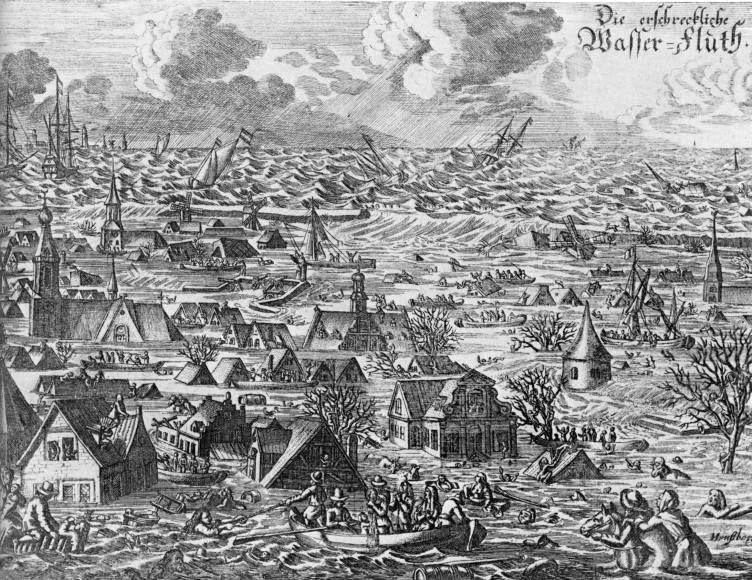
The threat of a wild sea — known among the Nordfrisians as Blanke Hans (‘white Hans’), a name referring to the white foam of a raging sea — did not disappear. As temperatures continued to rise, sea levels kept climbing in front of their impressive high dykes. Moreover, the dykes themselves created an unforeseen negative side effect. During storm surges, water could no longer spread out over the vast areas of former tidal marshland behind the coast. As a result, the average water level during extreme storms was estimated to rise by an additional one and a half metres — no minor increase. With the water trapped between the dykes, the pressure on coastal defences increased considerably. At the same time, the construction of extensive coastal defence systems must also have influenced the dynamics of barrier islands, beaches, and sediment flows, since coastal landscapes function as interconnected systems in which changes in one area inevitably affect others.
The construction of the Afsluitdijk, completed in 1932, had an enormous impact on the entire Wadden Sea region. By cutting off the former Zuiderzee, it removed around 340,000 hectares of tidal storage capacity from the system. It is therefore plausible that this dramatic reduction in available space for water and sediment exchange contributed to changes in the balance of the Wadden Sea, including increased vulnerability of dunes, salt marshes, and other coastal habitats to erosion. The full consequences are complex and continue to be debated, but the principle remains clear: in a connected coastal system, every intervention has consequences. You win some, you lose some, apparently.
Lastly, shortly after the completion of the Golden Ring, the so-called Little Ice Age began in the fourteenth century. The resulting decline in temperatures increased the contrast between the cold Arctic Ocean and the European mainland, which contributed to more frequent and severe storms, predominantly arriving from the west and northwest. These storms hit the Ditmarsians and Frisians particularly hard, putting additional pressure on their already vulnerable coastal landscapes. Taken together, these developments created far from favourable conditions — and the worst was yet to come.
Climate deterioration during the Little Ice Age also brought widespread crop failures, contributing to economic decline and social hardship. Maintaining and strengthening dykes required enormous labour and considerable financial resources. As these became increasingly scarce, maintenance of the Golden Ring was sometimes postponed or neglected. Once a storm surge breached the dykes, the consequences could be devastating: livestock and crops were lost, and saltwater intrusion left the soil unsuitable for cultivation for years afterwards. In times of poverty, communities could simply lack the means to repair and reinforce their coastal defences. This occurred, for example, in the Dollart Bight and the Reiderland region, the border area between the Netherlands and Germany, where after the Saint Marcellus’s Flood of January 1219 the sea gained free access to large areas of land.
However, flooding was not the only factor contributing to land loss. Between approximately 1000 and 1500, extensive commercial peat extraction took place in the coastal hinterland, causing significant subsidence of the land surface. At the same time, increasingly efficient drainage systems lowered groundwater levels and accelerated soil compaction and oxidation, further contributing to land subsidence. Together, peat exploitation, drainage, and rising storm pressures gradually increased the vulnerability of these low-lying coastal regions.
Adding up all things, the land was there for the taking by the sea in the High and Late Middle Ages. Waiting for disaster. This was just what happened. The inland sea Zuiderzee (‘southern sea’), the River Lauwers Inlet, the Jade Bight, and the Dollart Bight were created or enlarged during great storm floods. Above all, most of the land of the region of Nordfriesland was washed away during this time. It went with a massive loss of humans, livestock, farms, and houses. As they say in the region of Land Wursten, die Flut frisst Korn, Vieh und Menschen (‘the flood eats corn, livestock, and people’).
The consequences of major floods extended far beyond the immediate loss of life during the event itself. Secondary casualties caused by famine, disease, and the disruption of livelihoods could be equally devastating. For example, in the summer of 1826, one and a half years after the catastrophic flood of February 1825, many people died from malaria. The outbreak was linked to the combination of a still waterlogged landscape and unusually warm temperatures, which created ideal breeding conditions for malaria mosquitoes (Smith 2025).
Moreover, the extensive loss of land forced many Frisians in Nordfriesland and Ostfriesland, particularly those living on islands and along the vulnerable coastal margins, to abandon their homes and resettle further inland on higher and safer ground. In this sense, some became early examples of environmental refugees — people displaced not by war or political conflict, but by long-term environmental change and the increasing vulnerability of their homeland.
For the third time in history, the people of the southern coast of the North Sea had to make up their minds: “Should I stay, or should I go?” They decided to clash and chose the first option — stay. The Phoenix chose to confront the Waterwolf.
Firstly, the waterfront dwellers invested in better and even higher dykes. A proven good defensive strategy. We are still familiar with the phrase Wer nicht will deichen, muß weichen (‘who does not want to dyke, has to give way’). In the Low-Saxon speech of the province of Groningen the saying goes: Dei nait wil diek’n mout wiek’n. Or in the Oostfreesk speech, also called Platt, in the region of Ostfriesland: De nich will dieken, de mutt wieken.
An illustrative saga from Ostfriesland tells of Häuptling (‘headman’) Tidde Winnengha, who allegedly refused to participate in the construction of dykes. Catastrophic floods followed, and many villages in the Reiderland region, south of the Dollart Bight, were swallowed by the sea. Other legends tell of even darker fears: that children were sacrificed and immured within dykes and sluices, always a highly vulnerable part of any dyke system, when these structures seemed unable to withstand the power of the water. Whether these stories reflect historical events or collective memory, they reveal the profound anxiety and desperation that coastal communities must have experienced when confronted with a seemingly unstoppable sea.
INTERMEZZO
Meaning of Dykes and Their Nature — The word dijk in the Middle Dutch language means both ‘dyke’ as ‘pool or waterhole’. The Old Frisian word dik means ‘dam’, and the Old English word dic means both ‘dam’ as ‘ditch’ or ‘canal.’ Compare modern English dyke/dike and ditch. But also the Middle High German word tich meaning ‘pond.’ From all this, the basic meaning is ‘to dig’, which could be digging a ditch or digging a canal, and with that activity also raising a dam.
Besides its etymology, people in the Netherlands treat a dyke as a living thing. A dyke has a dijklichaam ‘dyke-body,’ which is the core of the dyke. Furthermore, the top of the dyke is called kruin, meaning ‘head/scalp.’ The base of a dyke is called voet meaning ‘foot.’ Lastly, a dyke is always clothed. This is called bekleding which translates as ‘clothing’ or mantel ‘cloak,’ with the purpose to strengthen the surface of the dyke against rain and waves (Freriks & Storms 2022).
In the modern Mid Frisian language the word dyk means both ‘dyke’ and ‘road’ since roads used to be on top of dykes. The rest of the land was too wet for transportation.
Secondly, coastal communities adopted a more assertive and, in a sense, more confrontational strategy: reclaiming land from the sea. By the end of the Middle Ages, inlets, bays, and inland seas were gradually being enclosed and transformed into new land. Around 1500, this piecemeal approach developed into large-scale reclamation projects, with entire areas of seabed being systematically drained and embanked at once. The former tidal flats of ’t Bildt region in the province of Friesland became the first modern, organized, and rationally planned polder (’embanked land’) in European history. It was soon followed by the renowned Beemsterpolder in the province of Noord Holland, now recognized as a UNESCO World Heritage Site. Might UNESCO have overlooked the area of ‘t Bildt, or do the Hollanders have a better sales department?
Anyway, the offensive strategy culminated with the sealing off of the Zuiderzee from the Wadden Sea, in combination with the creation of massive polders, namely the Wieringermeerpolder, the Noordoostpolder, and the Flevopolder. The latter is even the largest polder in the world. Casually, by shutting off the inland sea Zuiderzee, one of the biggest artificial sweet water lakes of Europe was created as well, namely Lake IJsselmeer.
Besides reclaiming lakes and inland seas, from the mid-nineteenth century onward communities all along the Wadden Sea coast built slender dams of brushwood to tame the sea and accelerate the deposition of silt. Known in Dutch as slibvangers — literally, ‘mud catchers’ — these structures trapped sediment carried in by the tides. The mud workers who built them, resembling black ants against the vast tidal flats, began their labour as soon as the tide receded and stopped only when the sea returned. Over time, the dams created new salt marshes, which were then enclosed behind fresh dykes and incorporated into the mainland, adding yet another ring to the expanding coastline. The photogenic traces of this labour remain visible throughout the Wadden Sea to this day.
INTERMEZZO
Saga of the Stenen Man — On the sea dyke near the port town of Harlingen in the province of Friesland stands a memorial to Caspar de Robles (1527-1585), the Spanish governor of the Frisian lands. It is called the Stenen Man, meaning ‘stone man’. There is a tale that says when it hears the clock strike, it turns its head. Harlingen mothers are also said to send their little children there. Perhaps they have no gooseberry bushes for the babies to grow under, and storks only pass by when they are migrating. Young mothers cannot always wait for that.
The monument was erected to express gratitude to this Spaniard because of his energetic battle against the Waterwolf, also known as Rasmus; both names are examples of the personification for the sea being destructive and dangerous. During his time, the dykes along the Frisian coast were thoroughly reinforced. This came at great expense and required a lot of labour.
Once, when a breach had formed in a dyke, the nobles claimed they were not obligated to help — not financially, and certainly not physically. They went to Caspar de Robles with their letters of exemption, showed them to him, and said: “See here, our letters prove that we are free from all burdens.” To which the governor replied: “Then plug the hole with these letters if you can. If you cannot, then you must pay.” The nobles were forced to yield to his unyielding will and contribute to the repair of the dykes. And Caspar de Robles repaired them so well and effectively that people later recognized the importance of his work and built the Stenen Man in his honour.
Franke 1932
Note: This saga shows it was not all ‘mienskip’ or community sense among the Frisians. More like NATO discussions, about contributing to the common defence, and only when the threat gets real, its members start chipping in.
Furthermore, the Stenen Man is the oldest monument in the Netherlands. Already in the year 1576, the monument was placed on this spot. In 1725, it was in such disrepair that it was torn down, but a replica was rebuilt in 1777.
But dykes need maintenance. By the turn of the eighteenth and nineteenth centuries, their condition was poor. In February 1825, a devastating storm hit the southern coast of the North Sea — from southern Scandinavia to Flanders. A heavy north-western storm coincided with spring tide. In the Netherlands, the province of Friesland and the coast of the Zuiderzee were hit notably hard and dykes were breached everywhere. The sea reached the town of Alkmaar in the province of Noord Holland, and two-thirds of the province of Friesland was submerged. The Frisian port towns of Harlingen, Workum, and Stavoren lay in the frontline of the hurricane and barely escaped total destruction. People living at the Noorderhaven (‘northern harbour’) in the port town of Harlingen sought refuge on their roofs (Van der Woud 2022). After the storm, a Frisian farmer wrote in his diary:
Hier en daar dreven lijken van menschen, en het doode vee bedekte, met de groote heuvels van halve woningen, daken en allerlei drijfgoed den uitgestrekten plas; zoo ver het verbijsterend oog reiken konde.
Here and there floated corpses of people, and the dead cattle covered, with the big mounds of decimated houses, roofs and all kind of floating stuff, the extensive water; as far as the perplexing eye could see.
Besides the great tragedies caused by floods and dyke breaches, countless lives were also lost while working at sea. One of the most devastating examples occurred during the night of 5–6 March 1883, when a violent storm struck the fishing fleet of the tiny Frisian village of Peasens-Moddergat. Seventeen of its twenty-two vessels were lost, and eighty-three fishermen drowned. In a single night, almost the entire adult male population of the village was wiped out, leaving sixty-six women widowed.
A decade later, on 1 December 1893, another storm brought similar devastation to the nearby village of Wierum, just east of Peasens-Moddergat. Thirteen of its seventeen fishing boats were lost, and twenty-two fishermen perished. These disasters were not exceptional but only two among the many deadly storms that ravaged the North Sea over the centuries. As the old German saying has it: Die Nordsee ist eine Mordsee — the North Sea is a murderous sea.
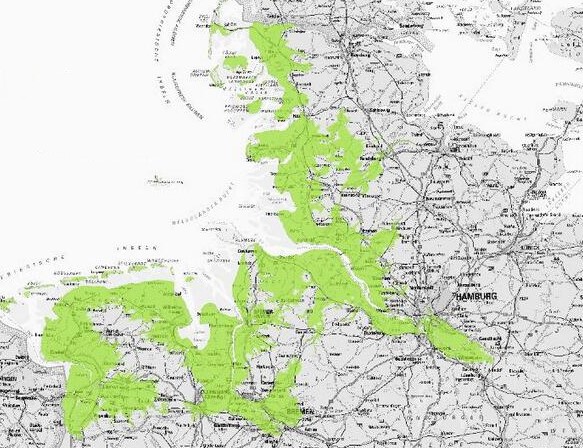
The Second World War threw a spanner in the works. German forces deliberately breached the dykes of the Walcheren peninsula in the province of Zeeland, as well as those protecting the Beemster and Wieringermeer polders in the province of Noord-Holland. In addition, large parts of north-eastern Groningen, between the towns of Delfzijl and Harkstede, were deliberately inundated. Throughout the war, and in the difficult years that followed, dyke maintenance in both Germany and the Netherlands was neglected.
The consequences became tragically clear in February 1953. During a catastrophic storm surge, the dykes of the provinces of Zeeland and Zuid Holland gave way. The resulting flood claimed 1,836 lives, making it one of the deadliest natural disasters in modern Dutch history. The most recent disaster is the flood of February 1962, which flooded much of the northwest of Germany, including the city of Hamburg, and cost the lives of 315 people.
Following these tragedies of 1953 and 1962, both in Germany and the Netherlands, dykes were strengthened, and massive storm surge barriers were built.
Especially in the 1960s and 1970s, belief in a makeable and engineerable world was at its peak. At the same time, the downside became clear: a natural environment that was heavily polluted, with the River Rhine being the horrific symbol of it — a river where once sturgeons and salmon provided fishermen with a living. Pollution had already started before the industrial revolution, with the acidic wastes of tanneries and blacksmiths. By the mid-1940s, it had become evident that the River Rhine had turned into a stinking sewer. The mines of the Ruhr, the potassium mines of Alsace, and the soda industry had turned the Rhine into an almost dead river, with fish covered in ulcers. In 1986, the climax came with the Sandoz disaster at Basel in Switzerland. Tons of insecticides, mercury, and other toxic substances flowed into the river during this incident. Half a million fish died (Hendriksma 2017).
Progress and prosperity had raised their ugly heads. Where the environment had already cracked in the decades before, the belief in the makeable world started to crack slowly as well.
The upcoming environmental concerns also meant the end of the massive land reclamation in the mid-1970s. The tidal marshlands and the Wadden Sea were increasingly appreciated for their environmental value rather than for their economic value. And, as a side remark, at the beginning of the twenty-first century, the tidal marshlands are considered part of the defensive system, too, since they break the energy of the waves before these hit the dykes.
2. A Tight Community of Freeborn Republicans
Although the floods of 1953 and 1962 have not yet disappeared from collective memory, it is often said that traumatic events take three generations to fade away. Yet, this was not the case for Frisians. In the Frisian lands, memories of catastrophic floods were passed down through many generations, and sometimes they were never forgotten at all, as we will she shortly. The question is what our children will remember of these disasters when they grow up. You probably already know the answer. If not, put your tablet or laptop aside for a moment and ask them about 1953 or 1962. Yes, you knew.
The history of the fear of water outlined in this blog post is one of struggle, suffering, and loss. Earlier, we estimated the total number of lives lost along the Wadden Sea coast at around half a million. For generation after generation, the lives of coastal communities revolved around water — and around the deep-seated fear it inspired. They grew anxious when Affricus, the south-westerly wind, Zephyrus, the westerly wind, or Chorus, the north-westerly wind, began to rise in strength, building waves that seemed to plunder the shore. At such moments, coastal inhabitants feared that Neptune himself would break through the dykes and reclaim the land (Jansen & Janse 1991).
This long history of recurring maritime disasters has profoundly shaped the identity of coastal communities and their collective memory. Although the threat posed by the sea seemed to recede into the background in recent decades, due to a temporary faith in the idea that technology could engineer our way out of nature’s dangers, the debate over human-induced climate change has brought these fears back to the surface. And this time, the concern extends far beyond the Ditmarsians and Frisians — it has become a global anxiety.
Rising sea levels could reach unprecedented heights. Popular culture has reflected these fears in films and documentaries such as Waterworld (1995), The Perfect Storm (2000), the documentary Between the Tides (2009), the Dutch drama series Als de dijken breken (If the Dykes Break), also released internationally as The Swell (2016), and the Danish film Qeda (2017). This is only a random selection of many works exploring humanity’s vulnerability in the face of a rising sea.
Are the inhabitants of the southern shores of the North Sea now standing on the threshold of becoming climate refugees themselves?
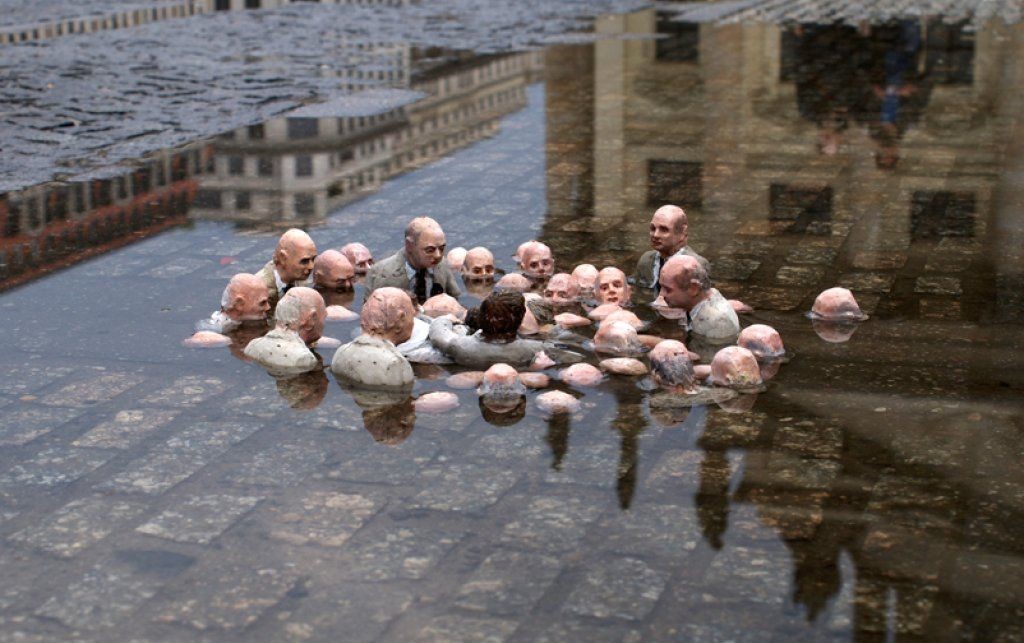
So, we are almost out of malleable-world rehab. Good. It is a beginning. Unfortunately, we have not yet fully come to terms with this new reality. We still seem to be searching for a new opium — or, in the language of coastal dwellers, a beacon to hold on to. Because if we can no longer control nature, what follows? What is the alternative? Should we simply allow the Grim Reaper, or the Sensenmann, to roam freely through our cities and towns, our streets and bedrooms?
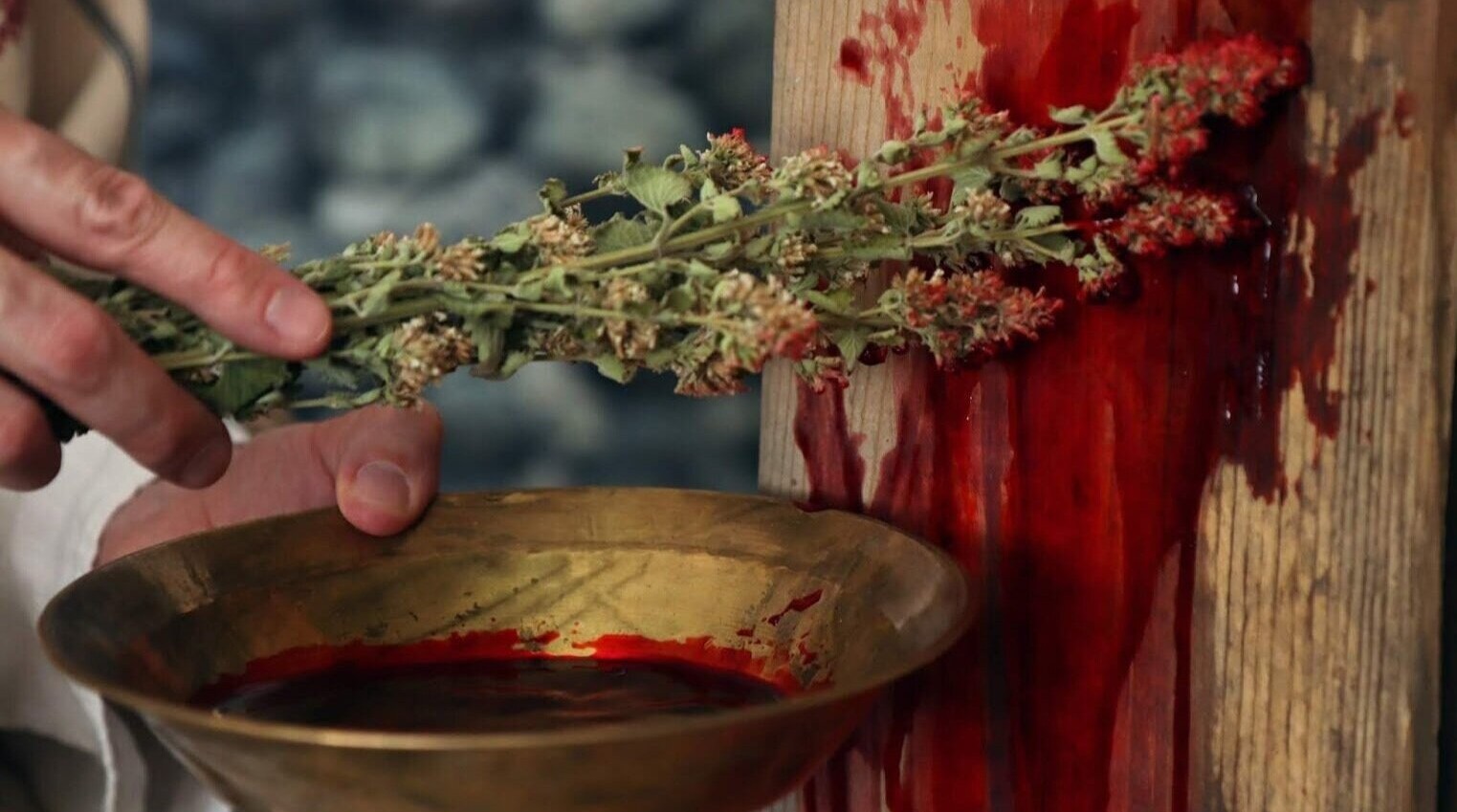
Or should we write C+M+B (Christus Mansionem Benedicat) above our front doors, as people do in parts of the Alps, in the hope of keeping evil at bay? Or perhaps we should smear the blood of the Passover lamb on our doorposts, as described in the Book of Exodus, so that destruction will pass us by? Much like the tradition of painting red doorposts referred to in the featured image of this blog post.
In a way, these practices are a kind of lockdown avant la lettre. The parallels with today’s sudden confrontation with pandemic fears are striking. It is therefore understandable that many people find this new reality deeply confusing.
But the coastal inhabitants of northern Germany and the Netherlands had already understood in the 1970s — long before the current climate change debate — that the power of the sea could never be fully tamed. They did not need scientific models or global projections to tell them this; they simply knew it. Their collective memory, their traditions, and their deep-rooted connection to the landscape had taught them so.
As mentioned earlier, traumatic events generally take three generations to fade from collective memory. The Frisians, however, have preserved memories of catastrophic events for six centuries. That is an extraordinary example when considering the collective memory of a society.
Yet the Nordfrisians continued to pass down the story of the drowned town of Rungholt well into the twentieth century, even though outsiders dismissed it as nothing more than a legend — a myth. That changed shortly before the Second World War, when archaeological discoveries confirmed that Rungholt had indeed existed. The town had been swallowed by the sea, and remarkably, even the very location where generations had said it once stood was preserved in local tradition.
The Frisians may not have been the quickest to forgive the sea — or to forget what it had taken from them — but their ability to preserve such a memory across six centuries is remarkable. For anthropologists studying collective memory, it must be a fascinating case those Frisians. Please speak a little louder, though — we can hardly hear you.
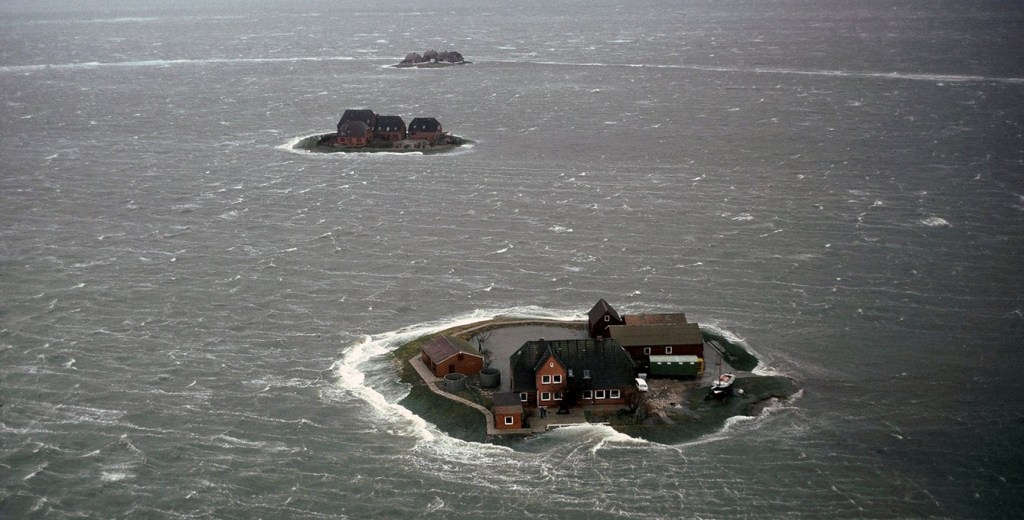
Today, if you tell a Nordfries that she or he lives on a beautiful island, you may well be corrected: It is not an island. It is land. Do not be confused, and certainly do not be alarmed. Your companion is not suffering from hallucinations. To acknowledge that it is an island would be to concede defeat to the sea — to admit that the countless lives lost, the land swallowed by the tides, and the fears endured over generations were ultimately in vain.
The Frisians have perfected the art of repressing tragedy without ever truly forgetting it. Their landscape bears the scars of the sea, and so does their memory. Keep that in mind if you ever decide to marry a Frisian.
INTERMEZZO
Mackerel in Ditches — Little anecdotes fitting within the tradition of the coastal peoples’ memories say that during his childhood, the author was explained how the sea used to appear on the western side of the Slachtedyk one time and on the eastern side of this dyke another time. People were also told by their parents that mackerel from the open sea swam in the sweet water ditches of polders as an omen of a severe storm at hand, while the sun was still shining.
Another defining characteristic of the Frisians is their relatively strong sense of identity and community. Historically — and to some extent still today — they have been a people dispersed across islands, islets, and peninsulas, separated from one another by seas, lakes, and major rivers. Today, Frisian communities are spread across several countries as well.
This geographical fragmentation contributed to an extraordinary diversity of languages and dialects. The number of Frisian dialects was once enormous. Even on some of the smaller Wadden Sea islands, entirely different varieties developed, often so distinct that speakers could barely understand one another.
A striking example is the region of Nordfriesland. Between 4,000-5,000 people still speak the North Frisian language, yet within this relatively small area fifteen highly distinct dialects are/were spoken. As a result, almost every village has, or once had, its own Frisian variety.
Some argue that a distinct, separate language forms the core of a culture or a people (De Vries 2019). According to this view, without a language of one’s own there can be no identity of one’s own. This proposition, however, ignores an obvious fact: many nations speak English without feeling English. The same applies to Arabic, Chinese, French, Spanish, and other widely used languages. One might classify this approach as a form of identity fundamentalism or identity minimalism.
If, for example, the Flemings were confronted with this doctrine, Abe de Vries might well fear for his life. Worse still, were the Irish or Scots to be told that, because they speak English, they are no longer Irish or Scots, Abe de Vries would face certain lynching. For the Frisians, too, a common language is not a decisive characteristic, although it remains an important element of identity as long as some form, however weakened, of the language is still spoken. The Ostfriesen and most Nordfriesen have not spoken Frisian for centuries, yet many still regard Frisian identity as part of who they are. In fact, the broader picture is that most Frisians today do not speak Frisian (properly) at all, including those in the province of Friesland.
Interestingly, the few thousand Ostfriesen who still speak the East Frisian language today — the geographically isolated Saterland Frisians of the Ostfriesland region — were for a long time not even regarded as Frisians by many of their Ostfrisian neighbours. The reason was not linguistic or historical, but religious: the Saterland Frisians were Catholic, whereas the ‘true’ Ostfriesen considered themselves Protestant. Identity, it seems, has always been a complicated matter. Say cheese.
That the concept of community is still alive, was illustrated in the province of Friesland in 2018. That year, the town of Leeuwarden was the cultural capital of Europe and had chosen Iepen Mienskip, meaning ‘open community’, as its central theme. Also, the fact that the inhabitants of the province of Friesland belong to one of the happiest people in the world, despite being relatively economically backward, might have to do with this somewhat stronger sense of identity and community.
Despite the Frisians’ apparent geographical and linguistic fragmentation, their shared struggle against the sea remained the bond that united them. Preserving the fragile, waterlogged Golden Ring that connected their communities mattered far more than speaking the same language. What defined them was not linguistic unity, but the necessity of working together.
The marshlands were difficult for foreign powers to conquer, yet they were fertile and well connected to the outside world through a network of seaways and river estuaries. This unique combination enabled the Ditmarsians and the Frisians to prosper for much of the Middle Ages without central authority or feudal overlords. In essence, every farmer was a free person.
Each extended family occupied its own terp, wierde, or Warft — an artificial dwelling mound — often with its own privately built church. As a result, the density of medieval churches along the Wadden Sea coast is the highest in the world. Monastic life flourished as well. In the late Middle Ages, the region between the River Vlie and the River Weser alone was home to approximately 115 monasteries (De Boer 2017).
A genuinely republican spirit and a deeply self-reliant society therefore emerged. Countless small republics of free farmers formed the building blocks of Frisian society, loosely united through the League of the Seven Sealands. During the High Middle Ages, the Frisian lands formalized their cooperation in the Treaty of Upstalsboom.
Near the present-day town of Aurich in Ostfriesland, delegates gathered at the thing of Upstalsboom to settle disputes, coordinate matters of common interest, and, above all, enact laws binding on the Frisian lands as a whole. The collective right to make their own laws — regarded as the highest and most sacred form of authority — lay at the heart of Frisian republican freedom.
The republican structures formed by the Seven Sealands, as well as the council of forty-eight representatives — the so-called Achttunvierziger of Dithmarschen — were exceptional in medieval Europe, with Switzerland being one of the few comparable examples. This decentralized political landscape meant that cooperation, whether to defend against the sea or to resist external powers, had to be organized from the bottom up. It was not imposed by a ruling authority from above.
For centuries, the Frisians and their neighbours proved remarkably successful in maintaining this form of self-organization. Throughout the region, the ideal of freedom — of the individual as well as of the community — remained a powerful and defining element of identity. Yet, by the Late Middle Ages, the lord-free society of the Seven Sealands gradually began to collapse. After centuries of independence, the free farmer republics of Dithmarschen, Land Wursten, and Frisia were finally brought under the control of territorial rulers, most of them from outside the region.
This myth of freedom extended to the Frisians by Charlemagne himself, was still very much alive in the nineteenth century. A quote illustrates this.
Unseren Vorfahren hat der Kaiser Karl der Grosse zum Lohne für ihre Redlichkeit und Tapferkeit ihre Privilegien gegeben, und von ihm stammen unsere Freiheiten her.
An island North-Frisian, 1849
Even today, being ‘Frisian and Free’ is still a phrase that resonates in all regions of former Frisia. The motto ‘rather dead than slave’ can be heard in many language variations, like Lever dood as slaav, Leafer dea as slaef, or Leewer duad üüs slaav. But also the phrase eala frya Fresena is still being used, meaning ‘stand up free Frisians’.
3. The Psyche of the Coastal People
Unlike many other peoples, the Frisians did not traditionally mark time by referring to great battles or military victories. Instead, they measured the passage of generations through another kind of historical event: the great storm floods that had shaped their land and collective memory.
When the Christmas Flood struck Frisia in 1717, claiming an estimated 14,000 lives, people still remembered an earlier catastrophe: the All Saints’ Flood of 1570, which had taken an estimated 20,000 lives. Many sagas and legends reach back even further, preserving memories of a coastline that once lay much farther to the west — a landscape that modern research has confirmed was indeed real.
The story of Rungholt, mentioned earlier, is perhaps the most striking example: a lost settlement that remained embedded in Frisian collective memory for an extraordinary six centuries. Yet it was not the only such memory. The creation of the Dollart Bay after a devastating storm surge — an inlet that could never again be reclaimed from the sea — as well as the disappearance of the Wadden Sea island of Bosch, remained part of the region’s long historical consciousness. Through these memories, the Frisians preserved not only the record of past disasters, but also their enduring relationship with a constantly changing sea.
This repetitive destruction, repetitive loss of life, livestock, houses, and — indeed — fertile land, has been traumatizing and shaped the psyche and mentality of the coastal dwellers. Turn it around; how could it not have? To get a glimpse of the loss of land and islands, see our blog post Atlantis Found! Wait, There Is Another One, or 7, Wait 12, What? 16 in Total… No, 19!
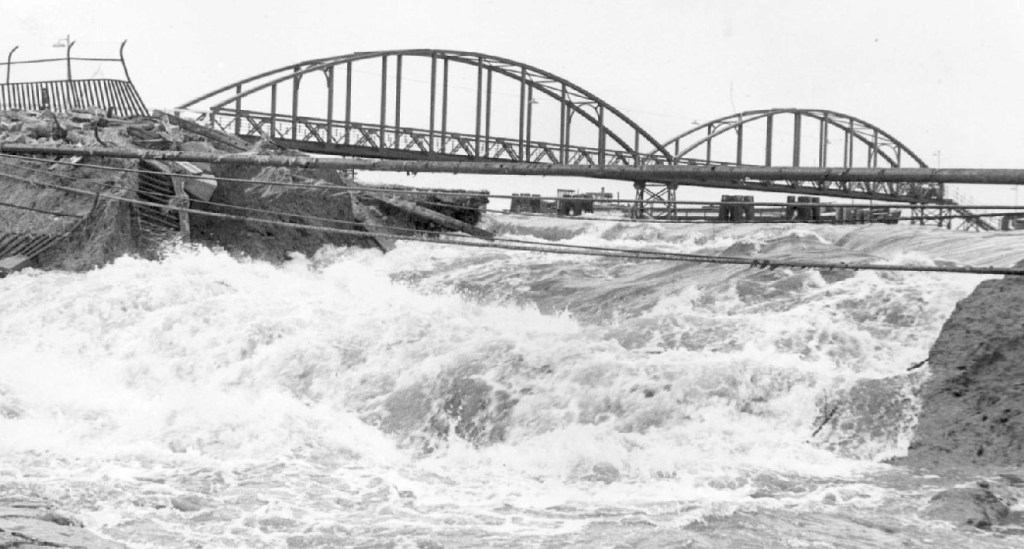
After reading all of the above, one might reasonably ask why, in heaven’s name, people continued to inhabit this low-lying and volatile edge of the North Sea. Why settle in an exposed, barren tidal landscape, even without essential resources such as stone, timber, and fresh water? Two reasons help explain this seemingly irrational choice.
The first reason is that the salt marshes offered exceptionally fertile grazing grounds for livestock, especially cattle and sheep. Further inland, the peatlands provided additional valuable resources, including turf and salt. Beyond these local riches, however, the greatest advantage of this landscape was its position within a vast delta — a natural hub of trade and exchange.
Connected to the wider world by sea and by a network of major rivers — the Scheldt, Meuse, Rhine, Ems, Weser, Jade, Elbe, Eider, and Vidå, to name only the most important ones — the delta functioned as a great crossroads of Europe. Survival in this dynamic environment required particular skills: the ability to adapt to the ever-changing landscape, the knowledge of sailing, and, of course, the possession of ships.
These advantages helped transform the Frisians into key intermediaries of Western European trade during the Early Middle Ages. Centuries later, in the seventeenth and eighteenth centuries, they were still renowned as the freight carriers of Europe, operating extensive shipping networks across the Baltic Sea and along the coasts of France, Britain, and Norway. In other words, despite its dangers, this vulnerable strip of land offered remarkable economic opportunities to those who knew how to live with the sea.
The second reason why these coastal communities remained was unrealistic optimism — a universal human tendency. Psychological research shows that people generally underestimate risks when they concern themselves personally, believing they are better prepared or less vulnerable than others. This illusion of control becomes even stronger when there are clear benefits to be gained. The Frisians and Ditmarsians knew the dangers of the sea, but like people everywhere, they tended to believe that disaster would strike others before it would strike them.
A deeper understanding of the landscape and the psyche of its coastal inhabitants reveals that they were, both physically and mentally, living on the boundary between order and chaos, between creation and destruction.
Wo Es war, soll Ich werden
Sigmund Freud (1933)
Where it [id; unconscious] was, shall I [ego; conscious] be
The boundary is defined with remarkable clarity: the dyke. Behind it lies the inner world of order, culture, and structure, protected by the enclosing ring. Beyond the dyke begins the realm of chaos, governed by the untamed forces of nature: the sea and its destructive power.
In psychological terms, the inner world represents their conscious self — the Ich — while the outer world reflects their unconscious — the Es. A Frisian legend tells of the pagan King Radbod riding his horse across the salt marshes when storms rage and thunder rolls. Climb to the crest of the dyke, look out over the tidal marshes, and wait for this powerful spectacle of fear, violence, and destruction. A glimpse into the world of the unconsciousness, the world of chaos.
By building dykes, the coastal dwellers of the Wadden Sea attempted to control chaos by incorporating it into the realm of human order. In doing so, they sought to culture nature — to cultivate, tame, and transform the wilderness. Each new ring dyke pushed the boundary further into the sea, expanding the domain of human control.
Symbolically, they brought the Ich closer to the Es: enlarging consciousness while reducing the realm of the unconscious. They did not eliminate chaos; they contained it, constantly negotiating the fragile boundary between civilization and the forces of nature. In this respect, Sigmund Freud made a fitting observation:
Es ist Kulturarbeit wie die Trockenlegung der Zuydersee
Sigmund Freud (1933)
It is cultivation labour, like the reclamation of the Zuiderzee
This constant interaction — both physical and psychological — between order and chaos, between cultivation and wilderness, is not unique to the inhabitants of the former tidal marshlands of the Wadden Sea. It reflects a deeper human condition. Human nature is, in a sense, to de-nature itself: to transform, control, and domesticate the wild world around us.
Across the planet, much of the remaining wilderness has been confined to manageable parks and protected reserves, reflecting humanity’s persistent desire to place itself above nature. Yet civilization itself has always emerged from the wilderness. Even the foundation myths of great civilizations reveal this paradox. Romulus and Remus, the legendary founders of Rome, were nurtured by a wild wolf before establishing the Roman Empire. Likewise, the origin myth of the Franks traces their ancestry back to the mysterious Quinotaur, a mythical sea creature said to have fathered Merovech, the ancestor of the Merovingian dynasty.
Wilderness, therefore, is not merely the opposite of civilization; it is one of its deepest sources. True wilderness remains a powerful mirror of humanity, confronting us with the forces we attempt to suppress — the untamed, destructive, and darker impulses that exist within every human being.
In European history, the wolf has been the pre-eminent symbol of this duality: our simultaneous urge to reject and embrace the wild. We fear the wolf, yet we cherish its domesticated counterpart, the dog. Our fear of wilderness is, in part, a fear of the wilderness within ourselves.
The werewolf expresses this contradiction perfectly: a creature that is both vulnerable human and dangerous beast, civilization and savagery at once. It is therefore no coincidence that Freud signed some of his paintings with the name ‘Wolf Man’ (Smeyers 2023). Nor is it accidental that Quentin Tarantino named the character Winston Wolf in Pulp Fiction (1994) — a man called upon to handle the most brutal and chaotic situations. Even the sea itself carries this symbolism: a powerful and unpredictable sea has long been known as the ‘waterwolf.’
The wolf thus remains a compelling metaphor for the fragile boundary between civilization and wilderness, between the controlled world we create and the untamed forces that remain within and around us. See for more background about the wolf and its relation with Frisia our blog post Who’s Afraid of Voracious Woolf? — The Dread Beast Is Back.
A comparable mental code of opposites between chaos and order, between cultivation and wilderness, can also be found in Christianity, a theme touched upon earlier in this post. Early medieval monasticism was driven by the desire to restore a fallen world — to reclaim, in some sense, the harmony of paradise from which humanity had been excluded.
This aspiration motivated monks to work tirelessly to transform wilderness into cultivated landscapes: into arable fields, fertile lands, and enclosed cloister gardens. The landscape, therefore, became a product of both nature and human effort. It was neither purely wild nor purely artificial, but a meeting point between the two.
A revealing example is the Old English word tūn, meaning ‘yard’ or ‘enclosed ground,’ which survives in countless English place names such as Kingston, Wellington, and Southampton. But endless many more. The same linguistic heritage can still be recognized in the modern Mid Frisian word tún, meaning ‘garden.’
Not without significance, the English word landscape derives from the Dutch word landschap. The term expresses the idea of land shaped and cultivated by human hands. It carries a positive connotation: a place where nature and culture exist in harmony, where people experience safety, familiarity, and belonging.
For the inhabitants of the coastal marshlands, the cultivated land protected by the dykes represented a sacred inner world (Knottnerus 2005). The French philosopher Lemaire (1970) argued that human beings have a deep need not to be rejected or overwhelmed by nature. Rather, nature offers shelter and provides a habitable world — a universe shaped on a scale that corresponds to human existence (Freriks & Storms 2022).
The Frisians even have their own saint, namely Saint Walfrid, who transformed the swamp forests around the village of Bedum in the modern province of Groningen into arable land suitable for human habitation. When the destructive forces, the Vikings, came to the land, Walfrid was murdered. Check out our blog post Walfrid, You’ll Never Walk Alone.
In this mental model, a catastrophic storm surge breaching the dykes of the Golden Ring mirrors the profound psychological fracturing of a severe borderline crisis. As the waters break through, all defining contours and structures instantly dissolve. Solid land liquefies into the sea, plunging the world into a state of total chaos, destruction, and disorientation. The civilized landscape is completely erased, allowing untamed wilderness and primal savageness to return. It is, in the most literal sense, profoundly traumatizing.
This psychological collapse closely echoes the apocalyptic visions of the seer Hertje of Wiedingharde in Nordfriesland. According to the sagas she is believed to have lived around the year 1400, and prophesied (Müllenhoff 1845):
It wart een gülden Rink umme Wiedingharde kamen, de wart nene Bestant hebben. Darna werden twe Dämme geschlagen, de enne van Tundern, de ander van Rüttebüll na Brunsot. Dar wert man söven Jaer an macken und wert vel kosten, aber nicht lange bestaen. Na de Tyt wert vel Schande und Laster int Lant kamen und neen Ere meer geachtet werden.
A golden ring will be placed around Wiedingharde, but it will have no permanence. After that, two dams will be built, one from Tønder, the other from Rodenäs to Brunsodde. Men will work on it for seven years and it will cost much, but it will not last long. After that time, much shame and vice will enter the land, and honour will no longer be respected.
For the new kids on the block who find this concept and emotion difficult to grasp, think of The Wall in Game of Thrones: in Season 7, the Wall comes crashing down, allowing the White Walkers and the undead to enter the civilized world. Feel it? Well, that wall or icy dyke likewise separated chaos from order. But think also of incels — short for involuntary celibate, a term now associated with men who harbour resentment towards women and misogynistic beliefs — who, as one study puts it, are “comfortable online and smoking but outside is an entirely different world. Inside they are safe but outside is chaos and uncontrollable” (Duffy et al 2024).
According to psychoanalysis, the Ich and the Es should be brought into closer harmony, while recognizing that they can never be fully reconciled. In this sense, the coastal communities of the southern North Sea understood, long before the contemporary debate on climate change, that the sea could never be completely controlled.
Today, new approaches to water management are emerging that acknowledge and embrace the dynamic nature of water — both fresh and salt — instead of following the traditional impulse to resist and contain it at all costs. These approaches seek to give water more space once again. The mighty River Rhine, once straightened, confined, and channelled between high dykes, is now being allowed, wherever possible, to regain some of its natural freedom.
At the same time, researchers are exploring how coastal agriculture can adapt to an increasingly saline environment that is likely to become an unavoidable reality in the future. Rather than attempting to defeat water, these new strategies seek a more balanced relationship with it.
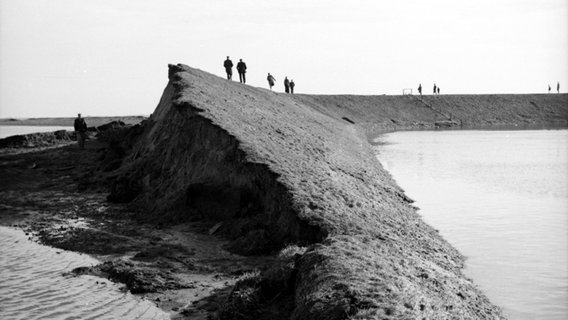
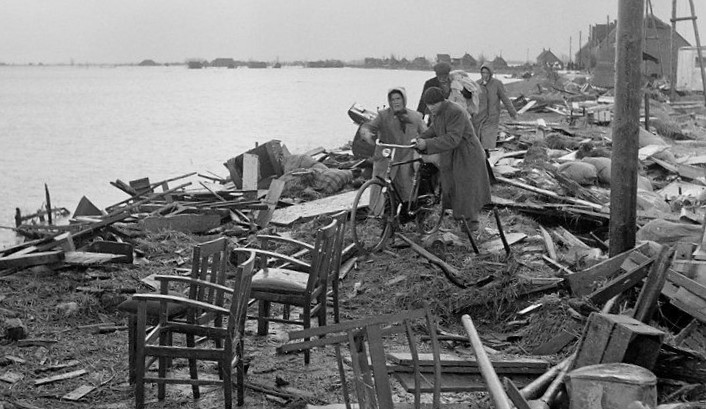
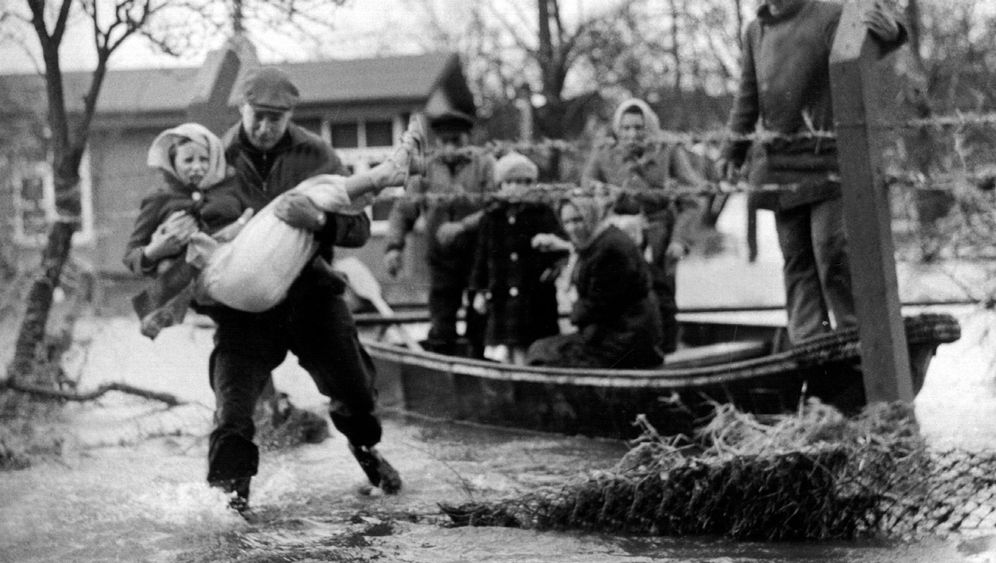
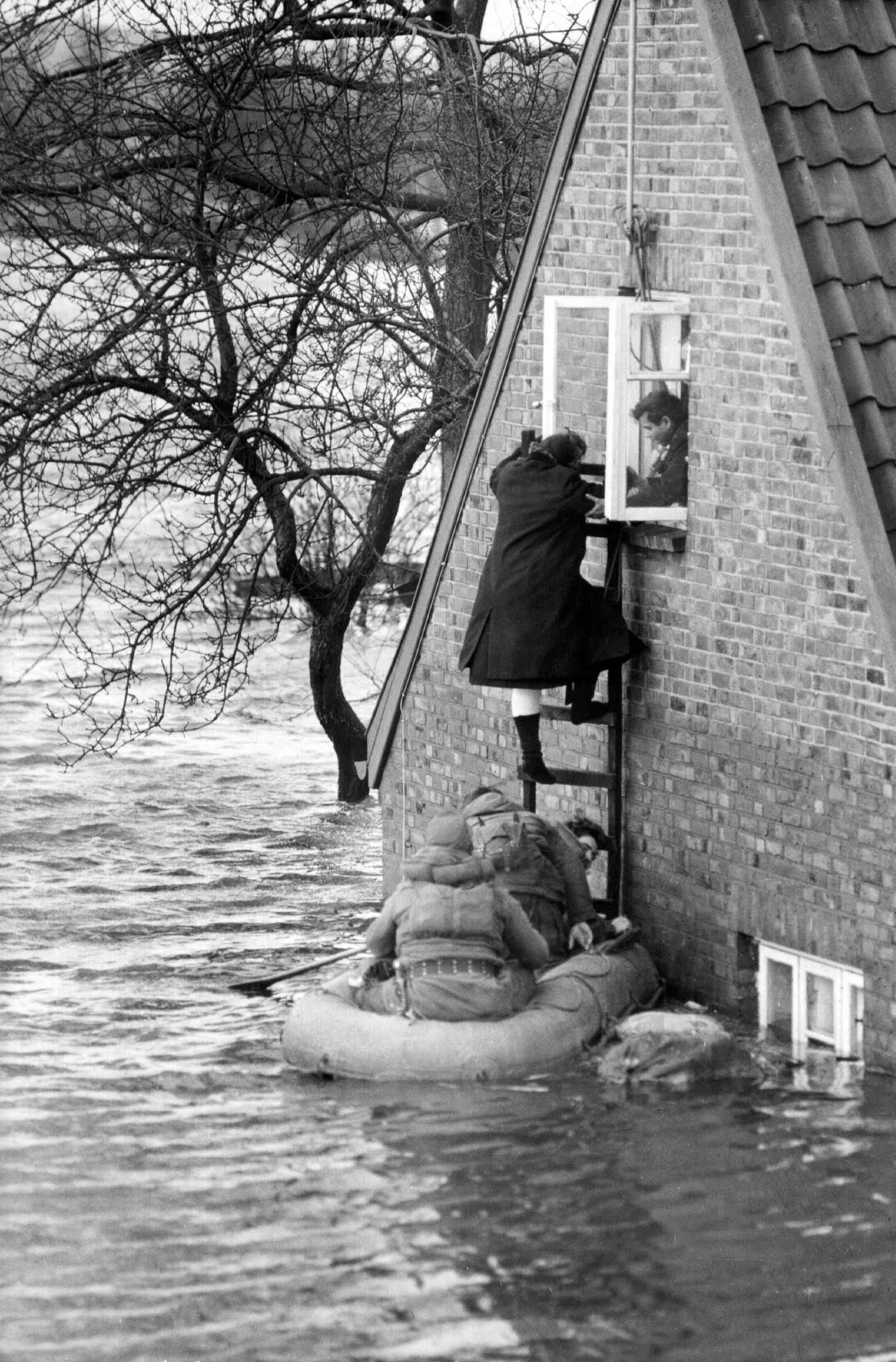
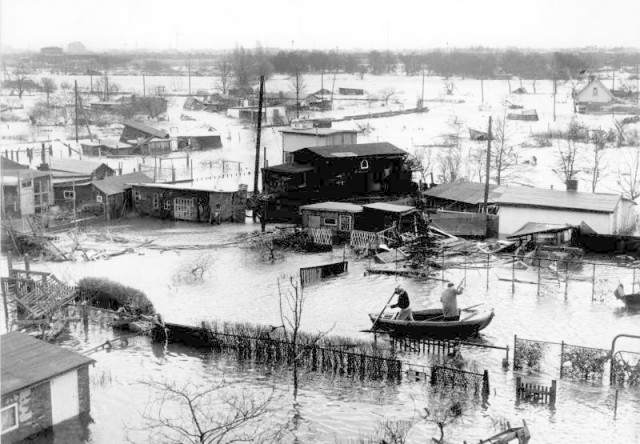
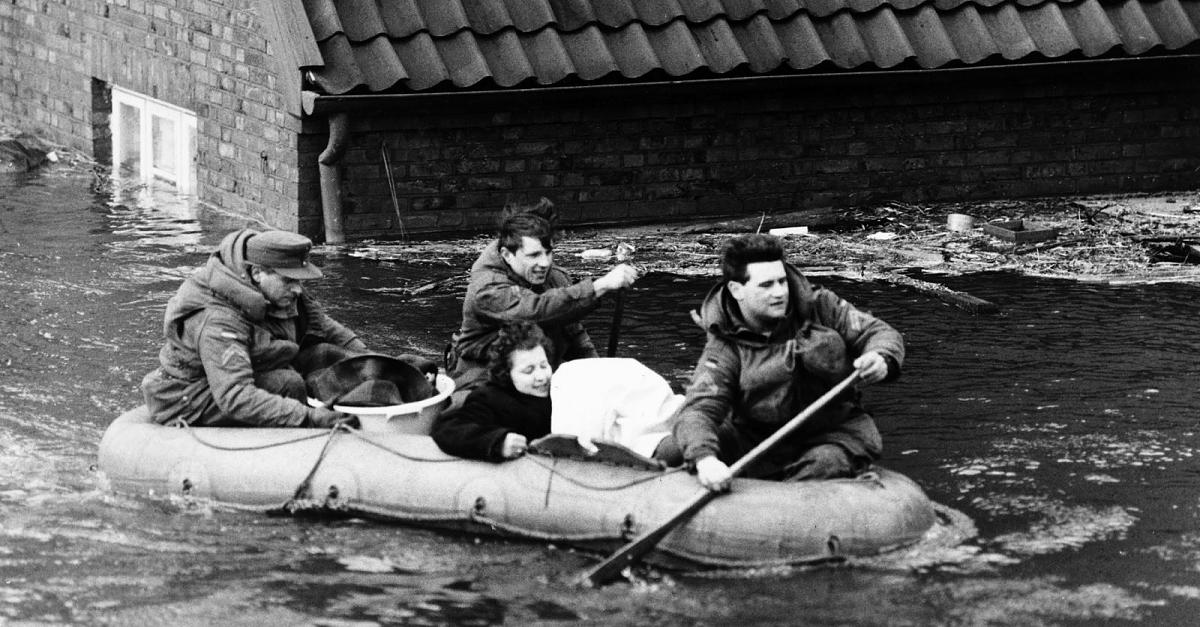
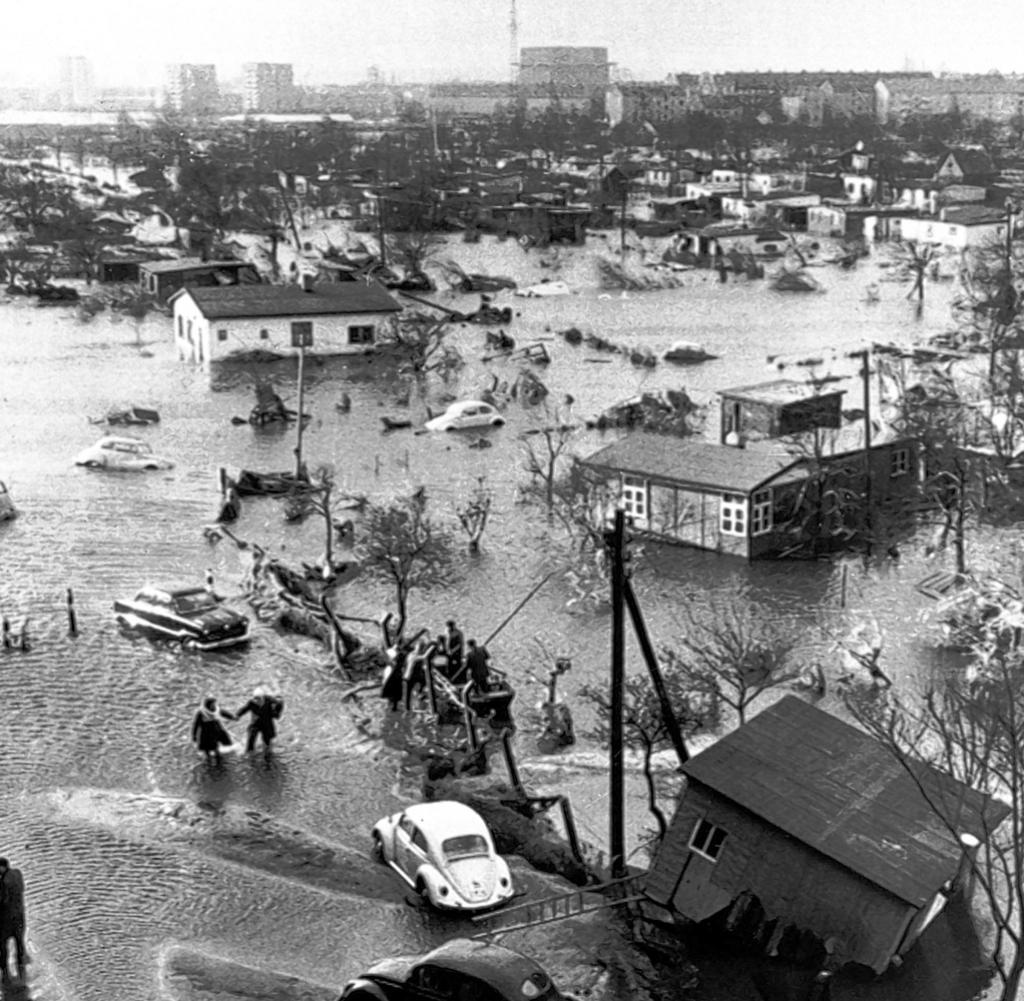
When, as described above, the environmental movement brought an end in the mid-1970s to the centuries-old practice of reclaiming land from the sea, many inhabitants of the provinces of Friesland and Groningen struggled to understand and accept the decision. How could fertile land be deliberately returned to the water — water that had always been regarded as the eternal enemy? Why stop the centuries-long effort to reclaim from the sea what it had once taken away?
These emotions resurfaced even more recently in the province of Zeeland. In 2012, an unprecedented dispute emerged between Belgium and the Netherlands when the latter resisted fulfilling its obligations under a bilateral treaty: restoring the Hedwigepolder to the waters of the Western Scheldt estuary. The proposal touched a deep historical nerve — the centuries-old fear of water and the struggle to defend and expand the land. At the time of writing (2021), the issue had still not been fully resolved.
What emerges from all this is that coastal dwellers developed an acute sensitivity to the interplay of order, chaos, and water. For centuries, they lived face to face with one of nature’s most destructive forces: the sea. This constant exposure fostered remarkable resilience, encouraging increasingly sophisticated coping strategies and forms of collective organization (Arnold 2024).
Yet the sea was never merely an enemy. Together with the great rivers flowing into it, it provided the foundation for trade, communication, and sustenance. Living in this hostile environment, the Frisians also learned to govern it themselves. As relatively free and equal individuals, they organized the management of land and water from the bottom up. For centuries, much of Frisia knew no feudal lords, no kings, no dominant cities, and — not unimportantly — no taxes, and only the shared responsibility of maintaining the land on which everyone depended.
Water itself deserves a closer look. Few natural elements have carried such a rich and ambivalent meaning throughout Western history. In the biblical tradition, water possesses agency and reveals at least two contrasting faces.
On the one hand, water purifies: it washes feet, serves as the medium of baptism, and flows from the Garden of Eden as a symbol of divine life. On the other hand, it also destroys. When humanity became corrupt and violent, God returned the earth to its primordial watery chaos in the Flood, cleansing creation anew. Only Noah, his family, and the animals aboard the Ark survived.
According to Frisian legend, Noah’s grandson, Prince Friso — the son of King Sem — later became the ancestor of the Frisians. Legend aside, the story illustrates how deeply the Frisians embedded themselves in the biblical imagination.
In Christian symbolism, moreover, the ability to remain above the water signifies divine authority over chaos. Jesus walks across the Sea of Galilee, while Moses leads the Israelites safely through the waters as they escape Pharaoh’s army. Water, therefore, is never merely an element of nature. It washes and purifies, but it also punishes, threatens, and tests those who confront it (Rieken 2005, Arnold 2024).
Abbot Emo (ca. 1175–1237) of the monastery of Bloemhof — literally ‘flower garden,’ recalling the Old English tūn or enclosed garden discussed earlier — at the village of Wittewierum in the present-day province of Groningen, described the devastating Marcellus Flood of January 1219 in his Cronica Floridi Horti (‘chronicle of the flower garden’):
Contingit autem dilivium propter scelera nostra, quia scriptum est, quod sub Noe filii Chain abutebantur uxoribus fratrum suorum nimiis fornicationibus, iratusque Dominus peccatis bominum dixit: Penitet me fecisse hominem. Delebo hominem, quem feci; disperdam cum cum terra, videlicet cum fertilitate terrae, terra enim vigorem suum et fertilitatem perdidit per diluvium.
Cronica Floridi Horti, first half thirteenth century
A great flood, however, takes place because of our crimes, because it is written that the sons of Cain in the time of Noah often indulged in shameful fornication with the wives of their brothers. Being angry at the sins of mankind, the Lord said: “I repent that I have created mankind. I will destroy mankind I created. I will destroy it together with the earth,” that is, with the fruitfulness of the earth; for the earth lost its fertility and strength during the great flood.
A more practical, contemporary explanation for why Frisia was so severely affected by the destructive Marcellus Flood can be found in the writings of Abbot Menko of the monastery of Bloemhof. According to Menko, the Frisians had failed to pay their religious taxes, the so-called tienden (‘tenths’) and eerstelingen (‘first fruits’), and the flood was therefore interpreted as a form of divine punishment. The wrath of God.
From a modern perspective, this may seem rather foolish: had the Frisians simply paid these dues, they would have received a fourfold return. According to the Church Father Augustine, those who gave a tenth of their harvest to the Church could expect divine reward in return — not only abundant crops, but also the blessing of good physical health.
The fact that a great storm flood was a punishment from God shaped the minds of the coastal people, too, over the last thousand years or so. Think of the incalculable Frisian sagas concerning drowned or sunken towns or villages like Bense, Rungholt, Weene, Esonstad, Westeel, Torum, and many more. These often have as a theme that the citizens were filthy rich and flouted God and his Commandments, and for that, they were heavily punished. Not seldom the whole village would disappear in the waves and only the bells of churches could still be heard on a quiet day at sea.
In a way, the notion of punishment gave meaning to people after catastrophe struck once again. Until the great flood of 1953 in the Dutch province of Zeeland — the Watersnoodramp (‘flood disaster’) — major storm floods were traditionally named after the Catholic Saint’s Day on which they occurred. There had to be a reason, an explanation for such devastation to befall humanity, and the association with a saint provided a symbolic framework through which total destruction could be understood. Similar social reflexes were observed during the COVID-19 pandemic in Brazil: a collective search for the source of evil when life-threatening disasters occur (Simõesa et al 2020). There must be an explanation, some form of relief, a way out, and, ultimately, an end to it all.
Be it an imagined vengeful God or an imagined, disgruntled Nature punishing humanity for its transgressions by unleashing the COVID-19 pandemic, the idea of retribution provides a way for people to make sense of and cope with deadly, uncontrollable catastrophes. Meaninglessness is even harder to bear than punishment itself. Ora et labora (‘pray and work’) captures this impulse to seek meaning while carrying on with life.
This may also explain why the story of Moby-Dick has remained rooted in our collective memory for more than 170 years. The wild white whale that kills Captain Ahab at sea does so only after giving the vengeful, one-legged captain three clear warnings to abandon his pursuit. Ultimately, the forces of nature restore disorder when they are challenged or disregarded. Revenge against nature is, in the end, revenge against oneself.
It is worth noting that the author of Moby-Dick, Herman Melville (1819–1891), was of Dutch ancestry and thus connected, in a sense, to a long maritime tradition. He too was shaped by the ancient psyche of the southern North Sea coast. Consider only the famous opening lines of his novel:
Call me Ishmael. Some years ago — never mind how long precisely — having little or no money in my purse, and nothing particular to interest me on shore, I thought I would sail about a little and see the watery part of the world.
Herman Melville 1851
Hunting whales, by the way, is something Frisians passionately did in the Arctic during the early modern period. See our blog post Happy Hunting Grounds in the Arctic. The Way the Whale’s Doom Was Sealed and learn that the Frisians are more than anyone else to blame for the (near) extinctions of the whale in the northern ice seas.
4. Conclusion
Besides being driven by individual profit, republican in spirit, invested in the illusion of controlling risk, and highly sensitive to the need for order and structure, communities shaped by repeated natural catastrophes have also developed a strong sense of self-reliance, solidarity, and collective memory. Indeed, out of averting the inevitable an unruly community was born.
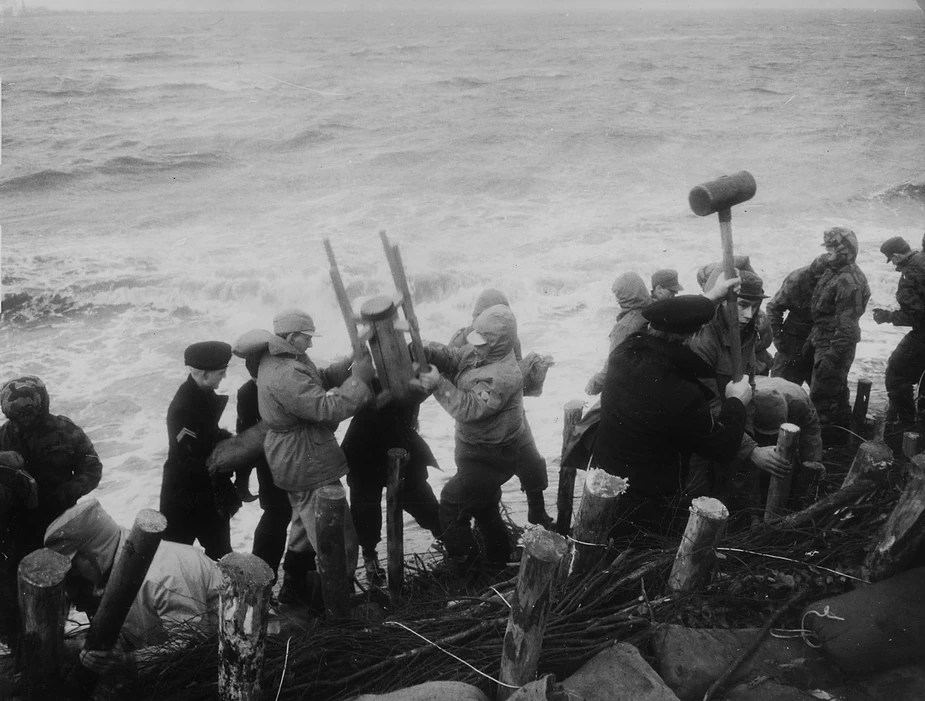
Note — Another fear has profoundly reshaped much of the Dutch landscape: the fear of hunger. During the Second World War, the Netherlands experienced severe food shortages, leaving a lasting imprint on the national consciousness. One of the figures who embodied the response to this trauma was Sicco Mansholt (1909–1995), a resistance hero and farmer from the Wadden Sea coast in the province of Groningen. After the war, he became one of the most influential agricultural policymakers in Europe. Guided by the conviction that the Netherlands should “never suffer hunger again,” he transformed agriculture into a system of large-scale, industrial production.
At the end, Mansholt understood that nature was suffering too much under his policies, and that a healthy nature is a prerequisite for life as such. Or, in the frame of Moby-Dick and Sigmund Freud, be ahead of nature’s revenge because then everything will disintegrate into chaos again. It is also a lesson we can internalise when it comes how to act on climate change.
See our blog post Golden Calves, or Bursting Udders on Bony Legs? for more on Sicco Mansholt.
Annex
Bernd Rieken took in his book Nordsee ist Mordsee the mentality theory a deep step further. He explains that in the psychology the primary object of love is the mother, and that mother and water are similar, exchangeable. Out of water one is born. It nourishes, gives protection, connection and harmony. With that also comes the wish to merge with the mother or return to the water. Especially, if someone is in a state of crisis. A poem of Philip Booth illustrates this feeling.
Lie back daughter, let your head
Philip Booth
be tipped back in the cup of my hand.
Gently, and I will hold you. Spread
your arms wide, lie out on the stream
and look high at the gulls. A dead-
man’s float is face down. You will dive
and swim soon enough where this tidewater
ebbs to the sea. Daughter, believe
me, when you tire on the long thrash
to your island, lie up, and survive.
As you float now, where I held you
and let go, remember when fear
cramps your heart what I told you:
lie gently and wide to the light-year
stars, lie back, and the sea will hold you.
According to Rieken this is what the fascism movement offered the people: to merge into the greater whole. A concept very much in line with the mentality of the coastal people. That is the reason why the Nationalsozialistische Deutsche Arbeiterpartei (NSDAP) received more than average support from the Frisians, again, according to Rieken. The paradox that most ‘freien Friesen‘ in Germany supported in the years 1932 and 1933 the enemy of freedom, the NSDAP (Steensen 2020).
To our opinion, extending the individual need to merge with the mother/water for security, which is a well-known theory, to an identical need of a collective, is a big step too far.
Furthermore, if you look at the Frisians living in the Netherlands before and during the war, there was little support for the fascism movement. The Dutch equivalent of the NSDAP, the Nationaal-Socialistische Beweging (NSB) secured only one seat in the regional parliament Provinciale Staten of Friesland in 1935. In 1939 the number of seats dropped to zero again. Despite specific interest of derailed personalities like Seys Inquart and Heinrich Himmler, aka Reichsheini, for the Frisian people supposedly being a pure Arian race, the Friese Beweging (‘Frisian movement’) did not took much interest either. Seys Inquart and Reichsführer Himmler even visited the province of Friesland immediately after the invasion of the Netherlands.
However, the two organizations forming the Friese Beweging (namely Selskip foar Fryske Tael en Skriftekennisse, and Kristlik Frysk Selskip) díd start a cooperation with the fascist Fryske Folkspartij (FFP) in the so-called driemanschap (‘triumvirate’). But this cooperation went awry soon. The FFP, by the way, only had about thirty members.
Everything taken together, for us reason to think the difference in support for fascism between the Frisians in Germany and those in the Netherlands had other causes and cannot be explained with the psycho-analytical explanation of ‘Frisians wanting to return to their water, to return to their mama’. We must dig deeper. Maybe the modern history of the region of Nordfriesland of being yo-yoed between the realms of Denmark, the House of Habsburg and Prussia, and the empty promises made by these empires to the Nordfriesen for more autonomy, might have had something to do with it. Who knows. Just saying.
Suggested music
- Led Zeppelin, When the Levee Breaks (1971)
- Peggy Lee, Fever (1958)
- Udo Lindenbergs & das Panik-Orchester, Ich Träume Oft Davon, Ein Segelboot Zu Klau’n (1976)
- Titanic Orchestra, Alexander’s Ragtime Band (1912)
Further reading
- Arnold, E.F., Medieval Riverscapes. Environment and Memory in Northwest Europe, c. 300-1100 (2024)
- Boer, de D.E.H., Emo’s reis. Een historisch culturele ontdekkingstocht door Europa in 1212 (2017)
- Cohen, P.N., Pandemic-related decline in injuries related to women wearing high-heeled shoes: Analysis of U.S. data for 2016-2020 (2021)
- Deen, M., De Wadden. Een geschiedenis (2013)
- Dengang, Stormflud — som Guds straf? (2019)
- Delfstra, T., Allerheiligenvloed 1570. Ramp voor Oostdongeradeel? (2020)
- Döring, M. & Ratter, B., “I show you my coast…” A relational study of coastscapes in the North Frisian Wadden Sea (2021)
- Duffy, C., El-Salahi, Z., Horsburgh, K. & Wartnaby, J., Many Good Men. Young Scots’ experiences of online misogynistic extremism and radicalisation (2024)
- Franke, S., Sagen en legenden rond de Zuiderzee (1932)
- Freriks, K. & Storms, M., Grensverkenningen. Langs oude grenzen in Nederland (2022)
- Heijden, van der P., Pandemieën in de oudheid (2024)
- Hendriksma, M., De Rijn. Biografie van een rivier (2017)
- Huisman, K., Penjumer Halsbân (1994)
- Jansen, H.P.H. & Janse, A. (transl.), Kroniek van het klooster Bloemhof te Wittewierum (1991)
- Jensen, L., Floods as shapers of Dutch cultural identity: media, theories and practices (2021)
- Jensen, L., Hoe de strijd tegen het water de Nederlandse identiteit vormde (2021)
- Knottnerus, O.S., History of human settlement, cultural change and interference with the marine environment (2005)
- Knottnerus, O.S., Van Waddenland tot Waddenzee, of: Hoe de dijk tot scheidslijn werd (2023)
- Kok, A., Randland. Portret van de Friese en Groningse kuststrook (2001)
- Loveluck, C. & Tys, D., Coastal societies, exchange and identity along the Channel and southern North Sea shores of Europe, AD 600–1000 (2006)
- Melville, H., Moby-Dick or The Whale (1851)
- Mingren, W., Startling Similarity between Hindu Flood Legend of Manu and the Biblical Account of Noah (2015)
- Monster, T., De Nederlandse identiteit. Het historiografisch debat ontleed (2022)
- Müllenhoff, K., Sagen, Märchen und Lieder der herzogtümer Schleswig, Holstein und Lauenburg (1845)
- Nijmeijer, B., En God voor ons allen. In het buitenland bezoeken we al die kerken terwijl ze thuis aan je voeten liggen (2020)
- Penning, Y., Stormvloed. De spectaculaire ondergang van het waddeneiland Bosch in het begin van de 80-jarige oorlog (2007)
- Phoa, A.L. & Schaaf, van der M., Drinkbare rivieren (2021)
- Pleijster, E.J., Veeken, van der C. & Jongerius, R., Dijken van Nederland (2014)
- Post, J., Zoden aan de dijk. Dijken rondom en overal / Diken by ‘t soad. Seadden oan de dyk. De waterstaat voor 1500 in Friesland opnieuw bekeken, met uitlopen tot 1600 en 1700, aan de hand van onderzoeken, opgravingen en toevallige ontdekkingen (2020).
- Rieken, B., Nordsee ist Mordsee. Sturmfluten und ihre Bedeutung für die Mentalitätsgeschichte der Friesen (2005)
- Rijcken, T., Het water komt, maar wees niet bang (2022)
- Rooijendijk, C., Waterwolven. Een geschiedenis van stormvloeden, dijkenbouwers en droogmakers (2009)
- Siefkes, W., Ostfriesische Sagen und sagenhafte Geschichten (1963)
- Simõesa, S.S., Blanchette T.G., Murray L., & Silvaac, da A.P., The prostitute, the city, and the virus (2020)
- Smeyers, K., Wolf. Wildernisgeschiedenis (2023)
- Smith, R., In 1825 stond Groningen onder water, maar de echte ramp gebeurde een jaar later (2025)
- Steensen, T., Die Friesen. Menschen am Meer (2020)
- Stoob, H., Landausbau und Gemeindebildung an der Nordseeküste im Mittelalter (1964)
- Teetied & Rosinenbrot (podcast), Die Weihnachtsflut 1717 — wer schützt heute die Deiche? (2021)
- Vriend, E., Eens ging de zee hier tekeer (2020)
- Vries, O., Friezen en Fascisten (year unknown)
- Vries, de A., De Brykfryske Mienskip. Lêzing hâlden foar de Jongfryske Mienskip, Oerterp, 1 November 2019, blog Seedyksterfeartfisk (2019)
- Winsemius, P., Het koningsvaandel. Reis door het verleden van Friesland (2014)
- Woud, van der A., De Nederlanden. Het lege land 1800-1850 (2022)

