
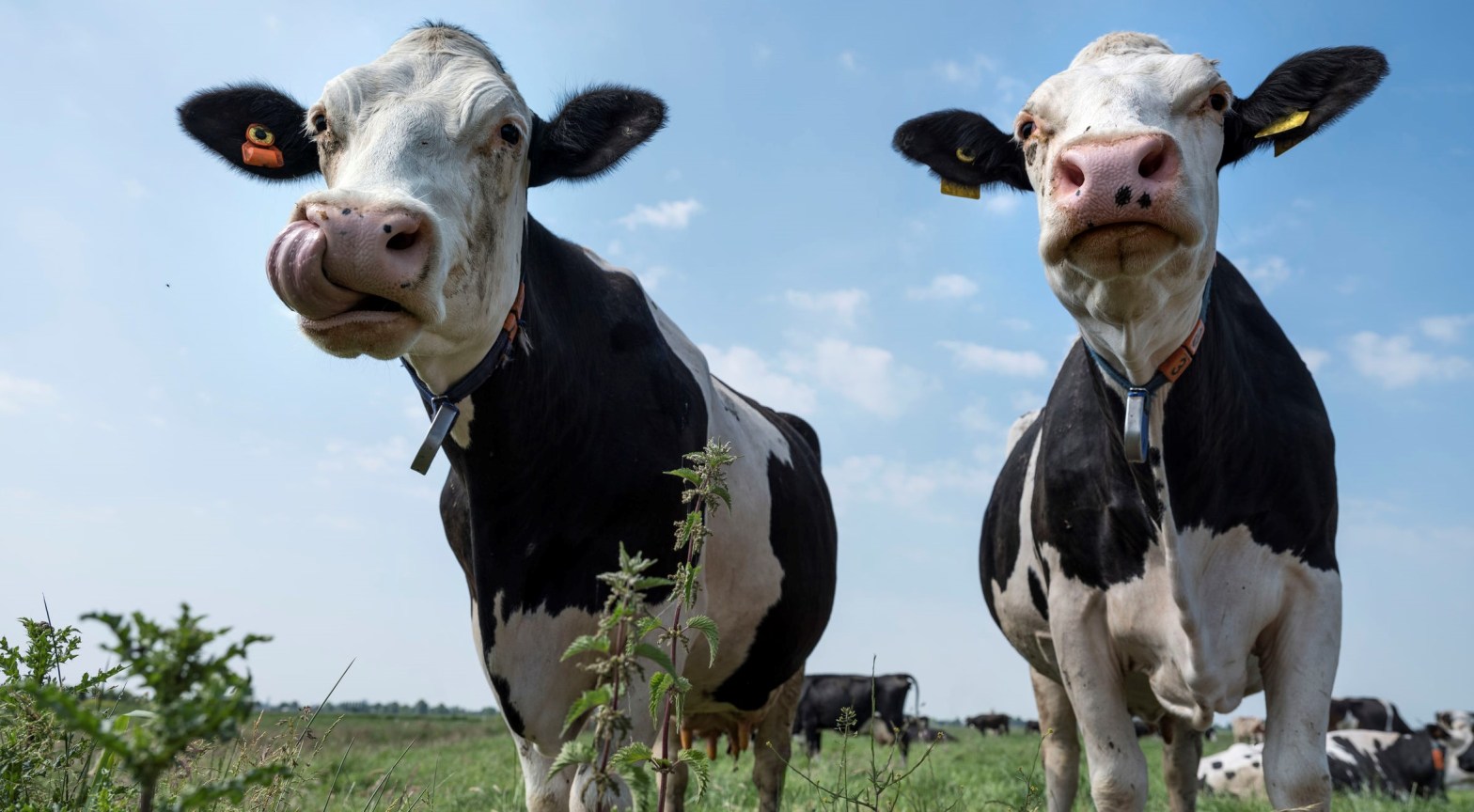
How do Frisians spend their time off? Frisians in the Netherlands must have plenty of it, as job prospects are among the lowest in the country. In addition, those who do have a job do not lose precious hours to traffic jams every day, unlike people in the cities further south.
Inhabitants of the province of Friesland are among the poorest in the Netherlands and face the highest unemployment rate. Yet, surprisingly, they rank as the happiest people in the country. This finding is supported by research from Statistics Netherlands (CBS, 2017) and the Frisian Planning Bureau (FSP, 2019, 2023). This phenomenon is often referred to as the Frisian Paradox. Curious to learn more? See our blog post The Giants of Twilight Land. Creatures of the Rim to understand more about this paradox.
In this blog post, we explore two traditional leisure activities rooted in the endless, flat grasslands of the north — landscapes often referred to as the groene woestijn (‘green desert’). Familiarity with these rural pastimes is essential, especially for retired city dwellers dreaming of a quiet life in a hamlet or, more ambitiously, a remote old farm.
Before making any move to the northwest of Germany or the northern Netherlands, make sure you truly learn to appreciate these ways of spending time. Otherwise, you might end up like a well-known Dutch TV host who left the lively streets of Amsterdam for the peaceful village of Achlum — only to wither away in solitude. To understand his disillusionment, see our blog post There Is No Dealing With the Wheels of Fortune — A Celtic-Frisian Heritage.
Anyhow, nothing much happens on the soft grasslands until spring arrives. In winter, everything is wet, cold, windy — and closed. The landscape lies still, much like the tidal marshlands: grey, lifeless, and bare. But come spring and summer, both burst into colour, teeming with wildflowers and greenery. So in the meantime, just watch some television or dive into a good book from the local library.
Unless… it starts to freeze. When canals, ditches, rivers, and lakes are frozen, everyone will be ice skating. Just as many sell cake, pea soup and hot chocolate. Sadly, it has not much use spending many more words on ice skating ‘in the wild’ because it never or rarely freezes anymore, anyway. There are indoor ice-skating halls in, for example, the towns of Groningen, Heerenveen, and Oldenburg where you can learn to skate. For just in case. One advice. Buy skates in advance because once it does freeze, it is close to impossible to obtain them.
1. Ljipaaisykje
In springtime things are really kicking off. It is ljipaaisykje time! Try to pronounce this verb at your own risk. Some people choked on it. To ljipaaisykje can be broken down into ljip (peewit), aai (egg), and sykje (to seek). Pronounce it like: ljip-ie-(as in ‘to die’)-seek-yuh, and everything as deep in your throat as humanly possible.
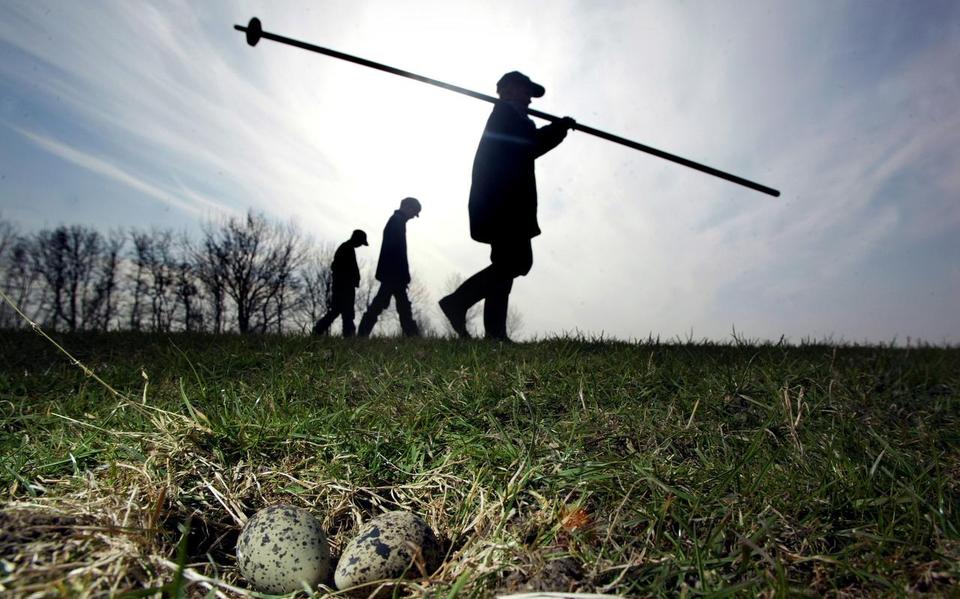
Seeking the eggs of the peewit, also known as the lapwing, is an emotional tradition for Frisians in the province of Friesland. This pastime was once unrestricted, but concerned environmentalists have since succeeded in limiting it due to the sharp decline of the peewit population in the Netherlands over recent decades.
Each year, Frisians attempt through court rulings to preserve their tradition of searching for peewit nests, but they are steadily losing ground. Today, the practice is virtually banned. While the environmentalists’ concerns are understandable, the restrictions leave jobless, traffic-free Frisians with even more spare time to fill on their endless grasslands.
Local bird-watch associations have taken over the role of searching for peewit nests — and those of other endangered birds. Birdwatchers carefully mark the nests so farmers can avoid them while working the land with their New Holland tractors and other heavy machinery.
Unsurprisingly, these bird-watch groups quickly became very popular among Frisians. Many who once sought peewit eggs have joined the associations, and the movement went viral. In this way, becoming a licensed ‘birdwatcher’ offers a perfect excuse to keep wandering the green desert — looking for nests (and — quietly — eggs).
Another increasingly popular wolf-in-sheep’s-clothing disguise among egg hunters, whether peewits, geese, or ducks, is pretending you are picking up cans, beer bottles, plastic packaging, etc. Pretending you are an environmentally concerned and responsible citizen. Just take a garbage bag filled with some pieces of plastic, and perhaps even invest in buying a waste gripper, and pretend you are searching for trash. Your garbage bag serves as your bag for eggs as well. More and more people collect trash during weekends, so you will perfectly stay under the radar.
INTERMEZZO
Walking winch — The modern Mid Frisian word ljip and the English lapwing (peewit) are similar. The Old English word is lǣpwince, thus leap-winch. Leave out winch, and leap and ljip are nearly the same (Kerkhof 2022).
Despite all environmental efforts and restrictions, the population of peewits — and other pasture birds — is still declining in the Netherlands. Interestingly, peewits are not endangered across Europe, so this remains somewhat of a mystery. The Frisians have genuinely tried to create beautiful, well-maintained fields, growing exclusively English ryegrass.
They inject dung directly into the soil instead of spreading it on the surface, aiming to prevent insect and worm infestations as well as unpleasant odours. Additionally, they mow their fields about six times a year — compared to just twice a few decades ago.
So why is this sterile, scentless, toxin-free green turf unappealing to birds? The Frisians are truly scratching their heads, searching for answers.
For the record, here’s some good news — without implying any direct connection: populations of foxes, birds of prey, and feral cats have all increased. At the same time, the number of insects has declined dramatically.
In the weeds, the Frisian Humpty Dumptys are. Why peewits and godwits disappear — they are lost in the weeds.
2. Fierljeppe
Besides to ljipaaisykje, the other hip and happening thing to do at the grasslands, especially for high-school kids, is roaming the land with a leaping pole to jump ditches and trenches. Now, how cool is that?
The activity is called to fierljeppe in the Mid Frisian language, and literally translates to ‘to far-leap’. It is called klootstockspringen on the peninsula of Eiderstedt in the region of Nordfriesland, Kluvstock-Springen in the region of Land Wursten, pultstockspringen or padstokspringen in the region of Ostfriesland, and stavspring in the region of southwest Jutland, where the pole is called æ kluestaw. The trick is not to fall in the water, and at the same time to stretch your limits by jumping each time an even broader trench or ditch. If you make it home dry, you did not grasp the essence of this activity. Try again!
Notice, by the way, the English and Frisian language similarities between ljip (peewit/lapwing), ljeppe, and ‘to leap’.
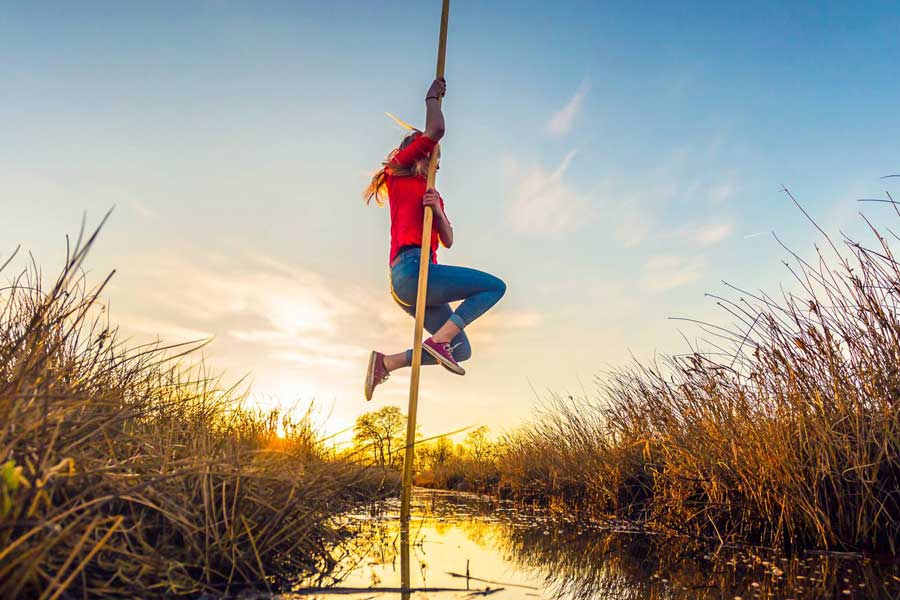
There are three basic techniques how to leap.
The first technique is reserved for famkes (girls). You place the pole in the water and jump with it between your legs. If you do not quite make it to the other side with your feet, the pole might still reach — leaving you sitting awkwardly on the pole above the murky water. That is manageable for a girl, but if you are a boy, there is a certain sensitive spot that is bound to protest. Do not say we did not warn you. This technique is definitely reserved for famkes.
The second technique is the most common one (see picture above). You place the pole carefully in the ditch and, optionally, walk two meters or so backward. Then you grab the pole and jump with both legs on one side of the pole. The trick is to take off in a straight line, and with just enough force and speed. Too little velocity: you are hanging as dead weight clamped to your pole in the middle of the ditch, trying to delay the inevitable. Too much velocity: you have no time to stretch your legs and body reaching forward. You will crash against the opposite ditch side with your body up to your waist in the water. If by mistake you take off diagonally and not in a straight line, the water distance to cover might be too demanding. You can predict and visualize the consequences.
The third technique is the most thrilling and is called boerenplons, meaning ‘farmer’s splash’. When walking in the fields, from a distance you spot a new trench; you lift the four-meter-long pole in the air and start running fast. Keep looking in front of you because there may be another ditch you overlooked. The rule is to never stop running. When you reach the ditch, continue with the same speed. Place the pole while running in the ditch and jump in one elegant flow.
Because with this technique you have not inspected the ditch beforehand and you simply started to run, the thrill of the boerenplons technique is twofold. Firstly, you have no idea how broad exactly the ditch is going to be when you start running. Secondly, you have no idea how deep the pole will sink into the black, smelly mud. So, in the worst-case scenario, the ditch turns out to be three meters or more wide, and your pole sinks at least two meters under the water surface. Two meters of pole left to bridge three meters of water. Forget it. Ain’t gonna happen. At least you go down with a big plons ‘splash’, made contact with nature, and, importantly, you grasped the essence of fierljeppe.
Of course, the real boss is King Radbod of Frisia. According to legends he did not need a pole at all to cross water. With his white horse he even jumped the River Ems. It happened with so much force, a hole in the shape of a horseshoe was left behind, which filled itself with water and became the Dollart Bight as we know it today. Really!
Note that the boerenplons is not to be confused with the brinco canario or herder’s jump, as done by the Guangxes people on the Canary Islands. The two to four meters long wooden pole is called an avara and used to cross rocky, uneven terrain instead of soft grasslands.
3. And much more
Beside to ljipaaisykje and to fierljeppe more thrilling activities take place on the flat grasslands, especially sports like angling fishing and to kaatsen. The latter is a version of Basque pelote or vice versa, also called Frisian pelote.
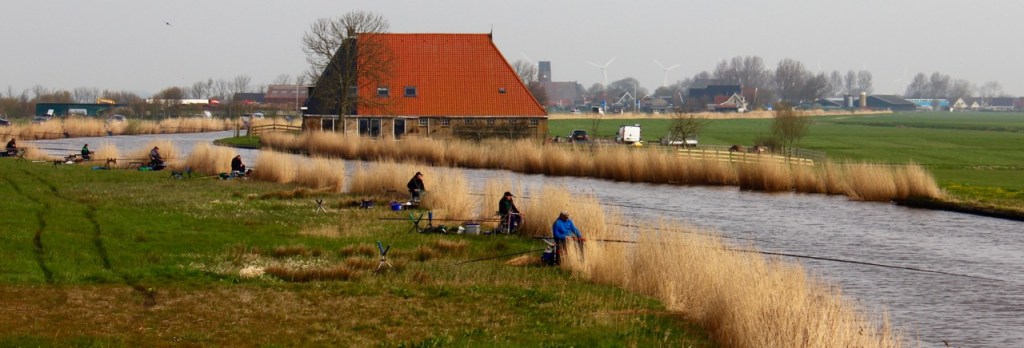
Sport fishing can be done in all seasons. To manage expectations upfront: ‘fishing’ and ‘catching fish’ are two totally different things and have nothing in common. The same goes for ljipaaisykje, by the way. Seeking eggs and finding eggs are two totally different things, too. Or, as the late blind Frisian poet Tsjêbbe Hettinga (1949-2013) would say: “Yn dat sykjen sûnder finen” (‘in that searching without finding’).
Trying to explain to the reader the rules of the kaatsen game is almost impossible. Only a few people in the province of Friesland understand it. Therefore, the people who play kaatsen are truly intelligent. Besides that, they are sporty too. A curious thing about the kaatsen game is that the best player is chosen as king or queen. If you think this is weird, realize that these kings or queens at least have some kind of (yearly) exam before becoming king or queen. If you spot (old) garlands hanging on doors or walls of houses and farmsteads, it means they were earned for the achievements during a kaatsen tournament. We dedicated a separate blog post to this bouncing sport in Donkey King of the Paulme Game. From Kaatsen to Tennis and Jai-alai.
Additionally, in the regions of Ostfriesland and Butjadingen, they have some eyebrow-frowning sports, too. Take, for example, boßeln, called Boßelball in Landkreis Nordfriesland, and klootschießen. When hiking the Frisia Coast Trail near the village of Tettens, even official traffic signs warn that Am Deich Rd is a Boßeln course as well.
Lastly, like in the provinces of Friesland and Groningen, a great way of killing your spare time in the region of Ostfriesland is playing with mud, too. Frisians everywhere along the shores of the Wadden Sea have a lot of mud to their disposal. Question is, how to give meaning to that much mud? Therefore, a sport they practice on the mudflats is silt-sled racing, called sliksleeracen in the Netherlands, and kreierrennen in the region of Ostfriesland. See our blog post Racing the Wadden Sea With a Silt Sled for more information.
Note 1 — If interested in fierljeppe know there is even a Fierljep Museum in the village of Noardburgum in the province of Friesland.
Note 2 — We have not mentioned the sport skûtsjesilen yet. It is a sailing competition of the traditional skûtsje boats. A skûtsje is a Dutch barge ship-type. These cargo boats were built from the eighteenth century onward. Skippers started racing for price money in the nineteenth century. already. There are two competitions: the Sintrale Kommisje Skûtsjesilen (‘central committee skûtsje sailing’ SKS), and the Iepen Fryske Kampioenskippen Skûtsjesilen (‘open Frisian championship skûtsje sailing’ IFKS). SKS was founded in 1945, and is limited to a fixed group of fourteen ships, and often the same skipper families. IFKS was founded in 1981 and is an open competition, and not as traditional as SKS.
Note 3 — You would think playing frisbee is something the Frisians would like, but that is not the case. Probably because of the often windy weather.
Note 4 — If you want to know how to communicate with the people of the grasslands, check the instructions in our blog post Grassland Conversation. Where Less Is More.
Suggested music
- Van Halen, Jump (1984)
Further reading
- Federacíon de Salto Pastor Canario, Brinco Canario (website)
- Plantinga, R., Wit goud, groene woestijn. Zuivelproductie en het Friese landschap na 1945 (2022)
- Vandenbussche, H.& Casella, R., Human Playground. Why We Play (2022)
 Frisia Coast Trail