
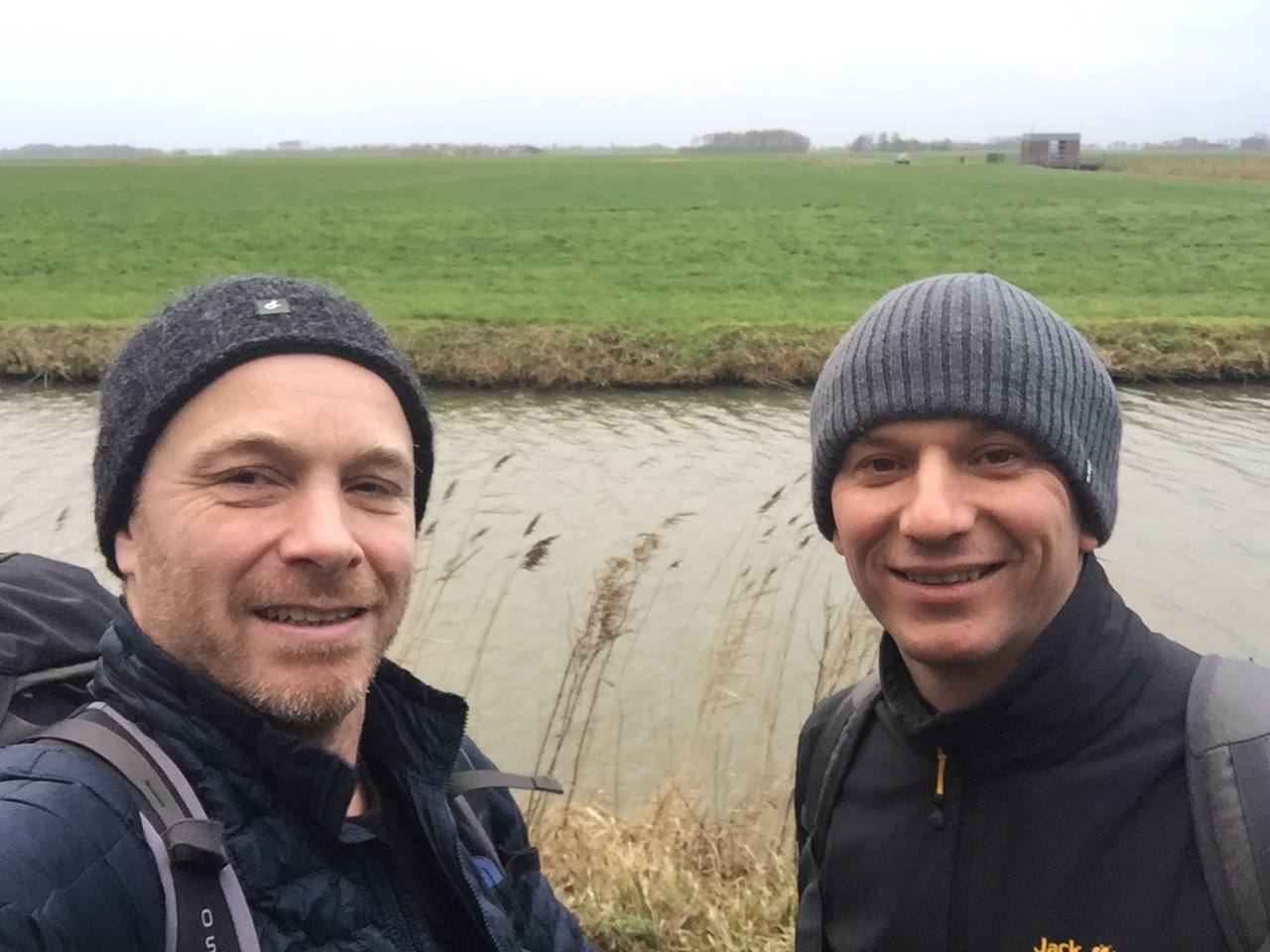
Two Frisian Bastards
Wut? Did you just call yourselves bastards? Yes, we did. Just like the grape variety Bastardo (see note 2). Because that’s the best way to sum up this hike: the Frisia Coast Trail. Besides, the title Frisii soli spes decusque — ‘hope and glory of Frisian soil’ — has already been claimed by someone else.
HWA EN ÔÐERIS HVS.UT NID. ÐENE RÂDA HÔN ANSTEKÐ. NIS NÊN FRYAS. HI IS EN HORNING MIÐ BASTERDE BLOD.
Oera Linda Book
If any man sets fire to another’s house, he is no Frisian, he is a whoreson with bastard blood.
(transl. after Daughters of Frya — Oera Linda Order of Priestesses, by Goffe Jensma).
This long trek spans four modern countries — Belgium, the Netherlands, Germany, and Denmark — or, in terms of historical regions: West Flanders, Zeeland, Holland and Westfriesland, Friesland, Groningen, Ostfriesland, Butjadingen and Stadland, Land Wursten, Land Hadeln, the Elbe marshes, Dithmarschen, Nordfriesland, and southwestern Jutland. This stretch of Europe has always been a harsh and perilous place to live. Land and sea have long played a high-stakes game: lakes appeared, rivers shifted course, islands drifted across the sea, dunes disappeared only to re-emerge elsewhere, man-made villages and towns were swept away overnight, and dykes were shattered by the wild muddy sea.
Living at sea level is no easy feat — especially when the sea itself behaves like a diva, rising and falling unpredictably over time.
The trail spans 1,000 miles and unveils 2,000 years of coastal history. Trust us — no single century has left this landscape unchanged. Over the millennia, many peoples settled in this harsh, wet, and windy region, while others merely passed through: the Cananefates, the Batavians, the Chauci, the Angles, the (Old) Saxons, the Jutes, the Geats, the Romans, the Salian Franks, the Vikings, the French, the Spanish, the Germans, and many more.
Oh yes — let’s not forget the Frisians. Some migrated further west, to Flanders and England, settling in places like Kent and the Fenlands. Others stayed put along this rugged coastline, mingling with the passers-by. Since the two of us belong to the stayers, we are bona fide bastards: carrying traces of blood from all the peoples mentioned above. But do not worry — we do not go around torching houses!
A taste of hiking stories of the bastards and trail encounters:
- Andalusia: Naranjas and Reservoir Dogs — Hiking the Coast to Coast Walk in Andalusia
- Corsica: Presence of Mind to Ask the Right Question — Hiking the GR20
- Corsica: Support for the Corsican Cause in Jeopardy — Hiking the GR20
- Corsica: “The Man Wants Another Steak!” She Snapped at the Waitress — Hiking the GR20
- Friesland: Expelled from Regal Grounds, the Soils of Wijnaldum
- Groningen: A Wadden Sea Guide and His Twelve Disciples — Hiking on the Sea
- Groningen: More Flying ‘Dutchmen’. Learnings From a Simple Innkeeper
- Scotland: “My God, the Germans Bought All the Bread!” Cried Moira — Hiking the Cape Wrat Trail
- Scotland: A Horsewoman from Harlingen in the Highlands — Hiking the Cape Wrath Trail
- Turkey: The Old Couple and the Sea — Hiking the Lycian Way
- Portugal: Surf on Someone Else’s Turf — Hiking the Rota Vicentina
- Wales: Croeso i Gerddwyr — Hiking the Pembrokeshire Coast Path
- West Australia: The Waugal, Protector of Fresh Water and New Life — Hiking the Bibbulmun Track
Note 1 — Besides bastards, other nicknames given to Frisians in history are predones ‘robbers’, piratas ‘pirates’, praedatores ‘looters’, and, for the Westfriezen in particular, bestias ‘beasts’. More recent and cuddlier nicknames are Meeresmenschen ‘sea humans’ and Fryske wetterotters ‘Frisian water otters’.
Note 2 — Bastardo is also a red wine grape known by many names, reflecting its complex history and ‘identity crisis.’ In France, it’s called Trousseau, in Portugal Bastardo, and in Spain Merenzao or Verdejo Negro. For centuries, winemakers and ampelographers thought these were separate varieties because the grape produces very different wines depending on climate and winemaking style. DNA analysis has revealed that they are all the same variety, yet its multiple regional identities and varied expressions have left it with a reputation as a grape that never quite settles on a single personality. This grape history illustrates exactly why naming ourselves ‘bastards’ is well-chosen.
Note 3 — If the reader feels our blog posts about the history of Frisia are biased, we plead guilty immediately. Having said that, we are still trying to find a history book without any. The question, therefore, is not whether it’s biased, but whether it’s honest about its bias. Neither is the question: Is it true? No, the question surely is: How wrong? Take this into account when reading and walking our stuff, and we wish all readers and hikers happy time travels!
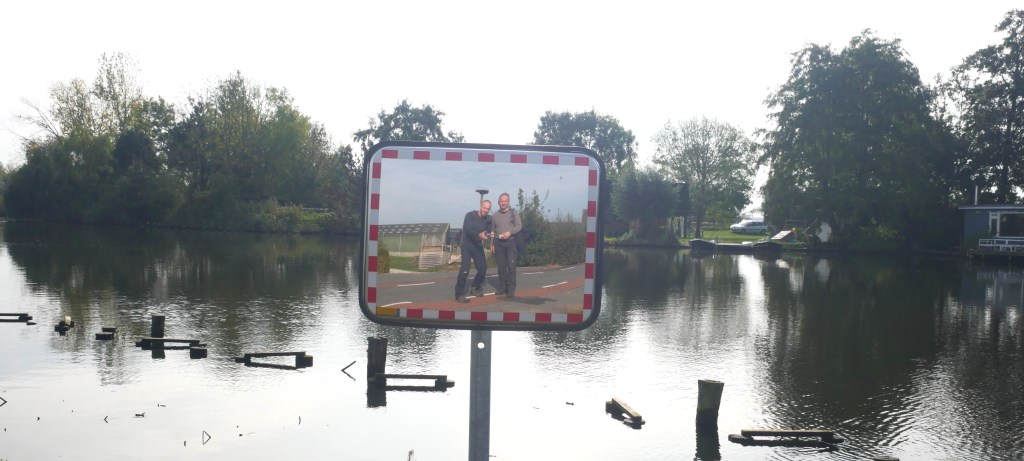
Who is who?
Frans Riemersma
Hikes, paints and writes. Marketing Technologist and founder Boardview. His late grandfather’s desk is his Fleet Command. From Amsterdam he steers the world.
Frans prefers the joint-bastard initials FH for Frans & Hans, an abbreviation which happens to stand for the once superior black and white Friesian Holland cattle breed as well. Either way, like any other pedigree cattle, the Friesian Holland cow is a crossbred, hence a bastard, too.
Graffiti tag: Roxy
Hans Faber
Hikes, reads and writes. Works by accident as a civil servant in London. “Tries not to die during the many sessions in boring meeting rooms” (Japke-d Douma).
Hans prefers the joint-bastard initials HF for Hans & Frans, an abbreviation which happens to stand for todays superior black and white Holstein Friesian cattle breed as well. Either way, like any other pedigree cattle, the Holstein-Friesian cow is a crossbred, hence a bastard, too.
Graffiti tag: Second
Suggested music
- Talking Heads, Burning Down the House (1983)
- Motörhead, Greedy Bastards (1993)
- Jenny Talia, The Bastard Song (2003)
- Joost Klein, Ski Aggu & Otto Waalkes, Friesenjung (2023)
 Frisia Coast Trail