
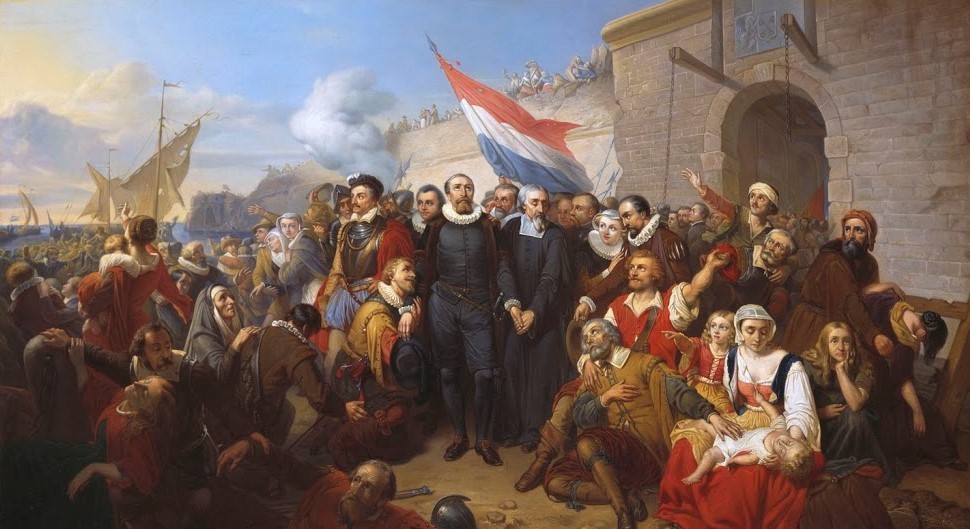
At the end of the seventeenth century, during the Nine Years’ War, the privateers commissioned by the Dutch Republic and operating from the Province of Zeeland captured booty that surpassed even that of the infamous corsairs of Dunkirk and St. Malo — amounting to some 24 million florins. These Zeeland privateers were known as the Pixaringos.
Together with the Wadden Sea area, privateering and piracy were most entrenched, popular, and supported in the Province of Zeeland. The province had long roots in the practice, dating back at least to the fifteenth century. Around 1600, privateers from the towns of Vlissingen and Middelburg — also located on the island of Walcheren, once a famous Viking stronghold — were especially active in Spanish America, including the Caribbean. Southern Europeans referred to these privateers as the Pechelingues, or indeed the Pixaringos, a corruption of the word ‘Vlissingen.’
According to contemporaries, the Zeeland caper ships were ever willing, able, and prepared to privateer, ready to set sail the minute the government issued letters of commission. Contemporaries also reported that the Zeeland privateers were known for their aggressiveness and were even declared outright devils.
They cloaked themselves in pious religiosity but were, in fact, thieves of heaven, church rogues, disgraces to religion, scandalous, ungodly, et cetera.
For readers who think piracy and privateering were entirely different, the answer is yes and no. Legally, they were. In practice, however, the authorities of the Dutch Republic were extremely pragmatic. They followed a policy of tolerance, you might say. Sometimes pirates were convicted, sometimes not. If convicted, their punishment could be severe, up to death as prescribed by law. More often, however, admiralties and judges were far more lenient, despite the explicit statutes. Even notorious pirates, after careers roaming the seas from the Coromandel Coast to the Caribbean, plundering ships of friendly nations and even of the Republic itself, could eventually re-establish themselves in Dutch high society.
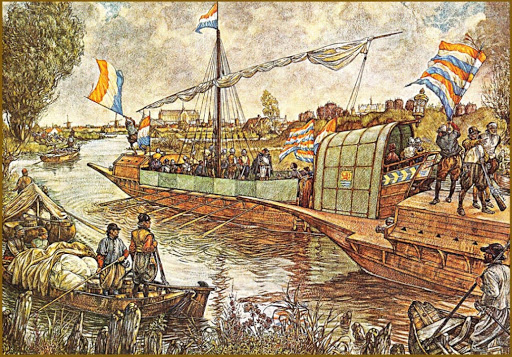
The reason behind this pragmatic approach of the Dutch authorities was that capers were needed to maintain Dutch hegemony at sea. But it was also because pirates were a central symbol of freedom and part of the national psyche. It was the pirates called the Watergeuzen — ‘water brigands’ or ‘water beggars’ — who successfully led the struggle for freedom against Spain. In the mid-sixteenth century, the Geuzen were little more than a band of pirates operating in the Wadden Sea region of Friesland and Groningen, and in the region of Ostfriesland, controlling the trade through the sea straits between the Wadden Sea islands. The Watergeuzen also operated from the region of Westfriesland in the province of Noord Holland, controlling the Zuiderzee, the ‘southern sea.’
Note — Check out our blog posts Yet Another Wayward Archipelago — The Wadden Sea, Our Civilization — It All Began With Piracy, and Walcheren Island. Once the Sodom and Gomorrah of the North Sea, and you will understand the coast and history of (former) Frisia is to a large extent one of hardcore piracy.
Further reading
- Houter, J.J. & Doedens, A., De Watergeuzen. Een vergeten geschiedenis, 1568-1575 (2020)
- Lunsford, V.W., Piracy and Privateering in the Golden Age Netherlands (2005)
 Frisia Coast Trail